
In the United States, the new year follows the Gregorian calendar and January 1st is when we turn the page to a clean slate. Resolutions are made to improve ourselves, and fresh thoughts of new beginnings fill the air. If you, like many, didn’t stick to your resolutions this year, don’t fret. Chinese New Year is only a few days away and you can use the chance to start again!
The Chinese follow a lunisolar calendar, which is a combination of lunar and solar cycles. The Spring Festival, or New Year as we know it, is celebrated on the first new moon that falls between January 21 and February 20. Along with the date shift, each year follows the five elements of traditional Chinese medicine and the zodiac animals. 2025 was the year of the Wood Snake, a slower paced time full of shedding layers and letting go. If life has felt slow for you, get ready because 2026 is the Fire Horse. Energies that have felt slow and sluggish are going to pick up speed and start moving again next week. This might be the ideal time to start those resolutions back up again! To celebrate, please enjoy the following stories of Chinese needlework.
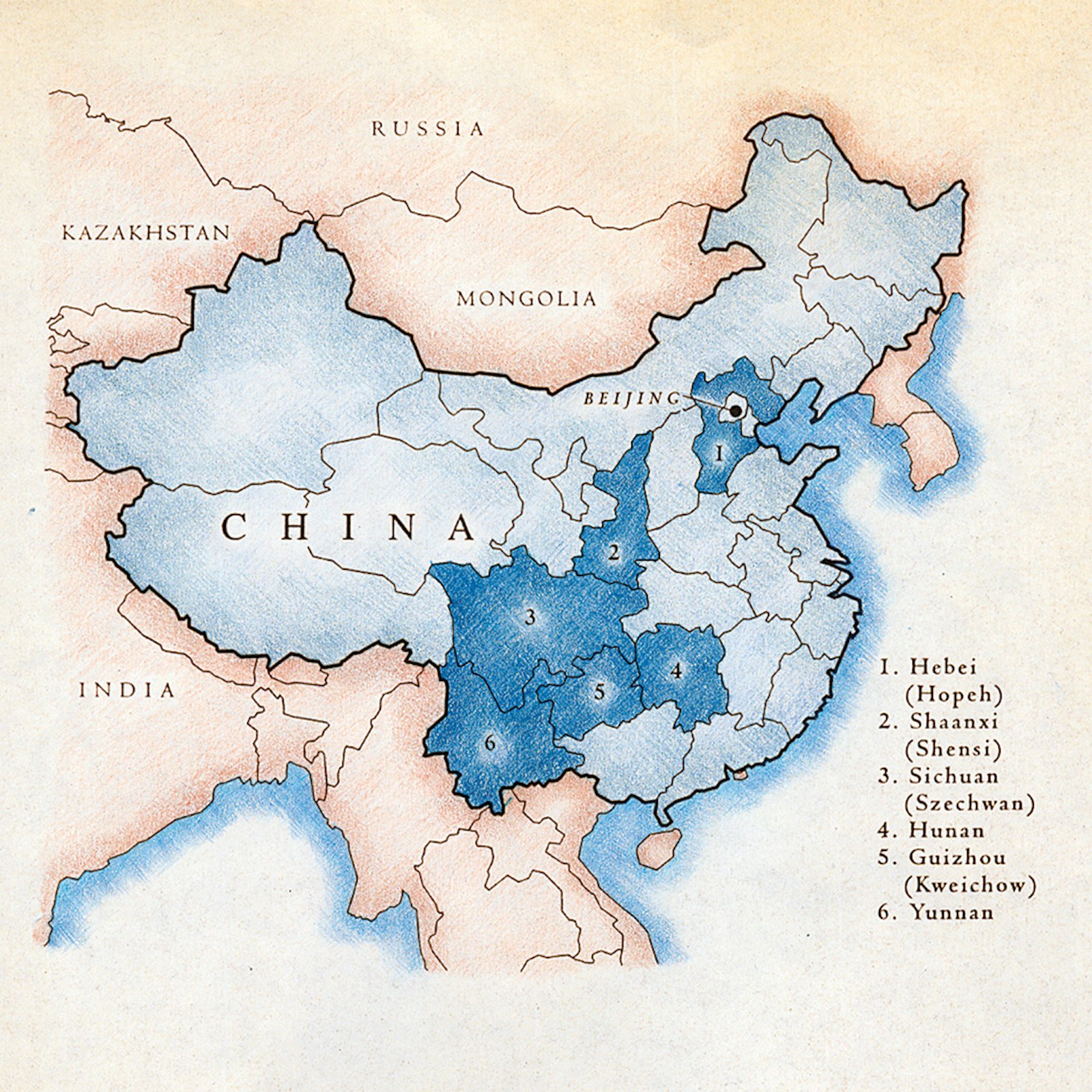
Explore the rural areas of China and their traditions of blue and white needlework with Sue Lenthe.
The Blue-and-White Embroidery of China
 The graceful designs of these cross-stitch motifs by Marie Vescial Risbeck capture symbols important to the lives of the rural Chinese of who embroidered them. Photo by Joe Coca
Travel to Boston with our editor, Karen Elting Brock, for an exhibit of Chinese patchwork. Celebrating the Art of Chinese Patchwork: One Hundred Stitches, One Hundred Villages
 Li Jiyin with her grandchild and a sleeping mat she made in the 1990s. Photography © Lois Conner. Courtesy Museum of Fine Arts, Boston
Get out a magnifiying glass and check out the remarkable, tiny stitches of Miao cross-stitch with Linda Ligon.
Wee Work: Tiny Embroidery Stitches
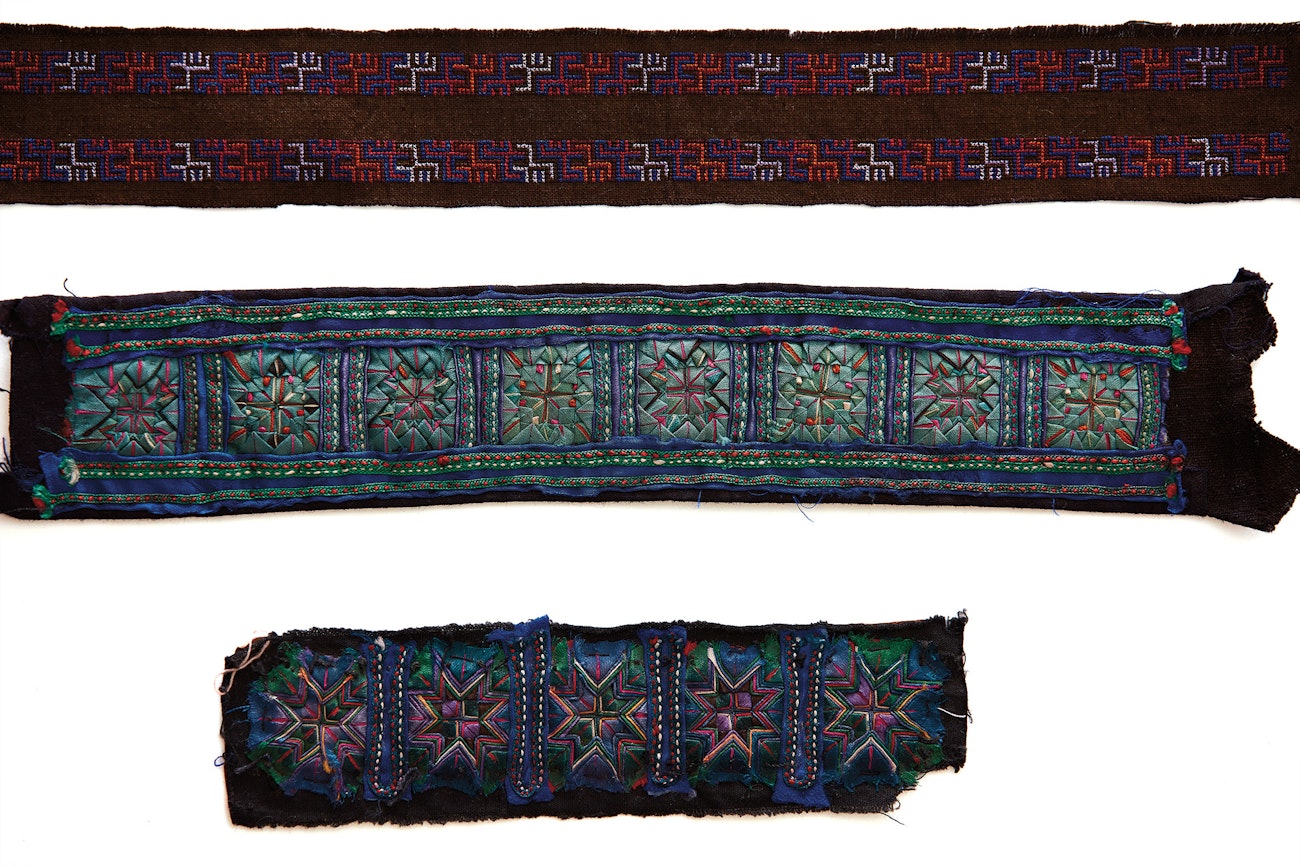 These pieces are worked by Miao women in the Guizhou province of China. The example at top is cross-stitch; the other two are folded cloth piecework. In all four, the stitches are so tiny, they are almost imperceptible.
I hope these stories inspire you to try something new in your stitching for this year and beyond!
Enjoy!
Katrina