
What’s not to love about Schiaparelli's Shawl? Fun stripes? Check. Super-easy lace? Check. Speckled-but-not-too-speckled yarn? And check.
This menswear-inspired pullover is knit with Rowan Hemp Tweed, a luxurious wooly-hemp blend with beautiful tweedy-flecks that really pop in the texture section of this sweater, and add dimension to the cabled panel.
This lightweight but warm piece is everything I look for in a cardigan: it’s figure-flattering but not skin-tight, comfortable, and versatile, and it has interesting details that make it fun to knit and wear.
This bottom-up sweater pays homage not only to sailor’s uniforms, but also to the “New Woman” of the early twentieth century who adopted a dress version of the iconic top.
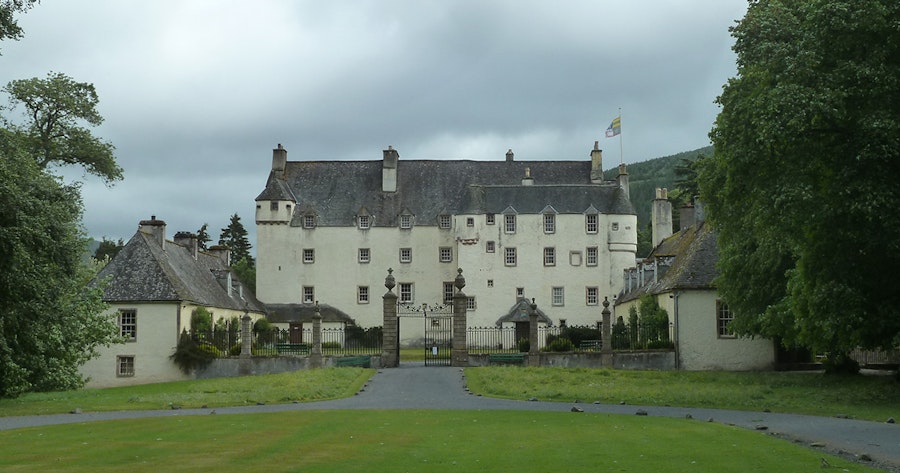
Traquair House is renowned for its collection of embroideries, which were stitched by needlewomen whose descendants still live in the house today.
The knitting stitch, a double row of straight stitches slanting in opposite directions, forms a solidly stitched, braidlike pattern on a canvas or fabric surface, and resembles true knitting.
Surprisingly, the upright cross-stitch, which resembles the common plus sign, has been either ignored or overlooked in many reference books on needlework stitches.
PieceWork is thrilled to welcome Deanna Hall West back to our A Stitch in Time blog post series. Here are her latest four elegant embroidery stitches.
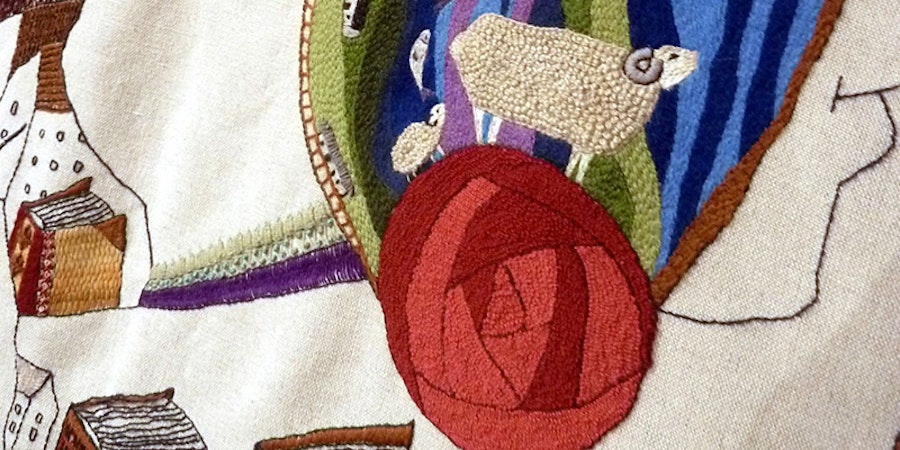
Scotland has a long and colorful history—143 meters (469.2 ft) long, to be precise! That’s the overall length of the 160 embroidered panels of The Great Tapestry of Scotland.
If you were limited to just one way to shape the toe of knitted socks, what method would you choose? I will occasionally ask myself silly questions like this one to promote entertaining the possibility of trying a new technique.