
A confession: I might (probably do) spend too much time browsing online textile and costume collections from museums around the world. I’ll be drawn to an object, such as Eleonora di Toledo’s reconstructed burial dress at the Palazzo Pitti Costume Gallery (so many questions!) or an eighteenth-century whalebone corset at the Brussels Fashion and Lace Museum, and suddenly a couple of hours have passed. And I can spend an inordinate amount of time getting lost in the vast collections of the Metropolitan Museum of Art or the Rijksmuseum, uncovering treasures such as Indonesian ikats or seventeenth-century Dutch whaling caps.
I love to follow the evolution of fashion styles, learn what influences the changes, and think about how some of those fashion trends from several hundred years ago are still popular today. So, when I happened onto this dress at the Cornwall Museum’s online costume collection, I was completely wowed.
Another confession: Brown, in all its shades, is one of my favorite colors—but that’s only one of the reasons this lovely brown silk ensemble caught my fancy. Those outrageous sleeves are so fun, so impractical. Yes, I have questions! Primarily, Why?
 A brwon silk dress in the Cornwall Museum's collection features leg-of mutton sleeves. Cornwall, circa 1830s. Photo courtesy of Cornwall Museum. Visit the museum's website to see more photos and the history of the complete ensemble
The Leg-of-Mutton Backstory
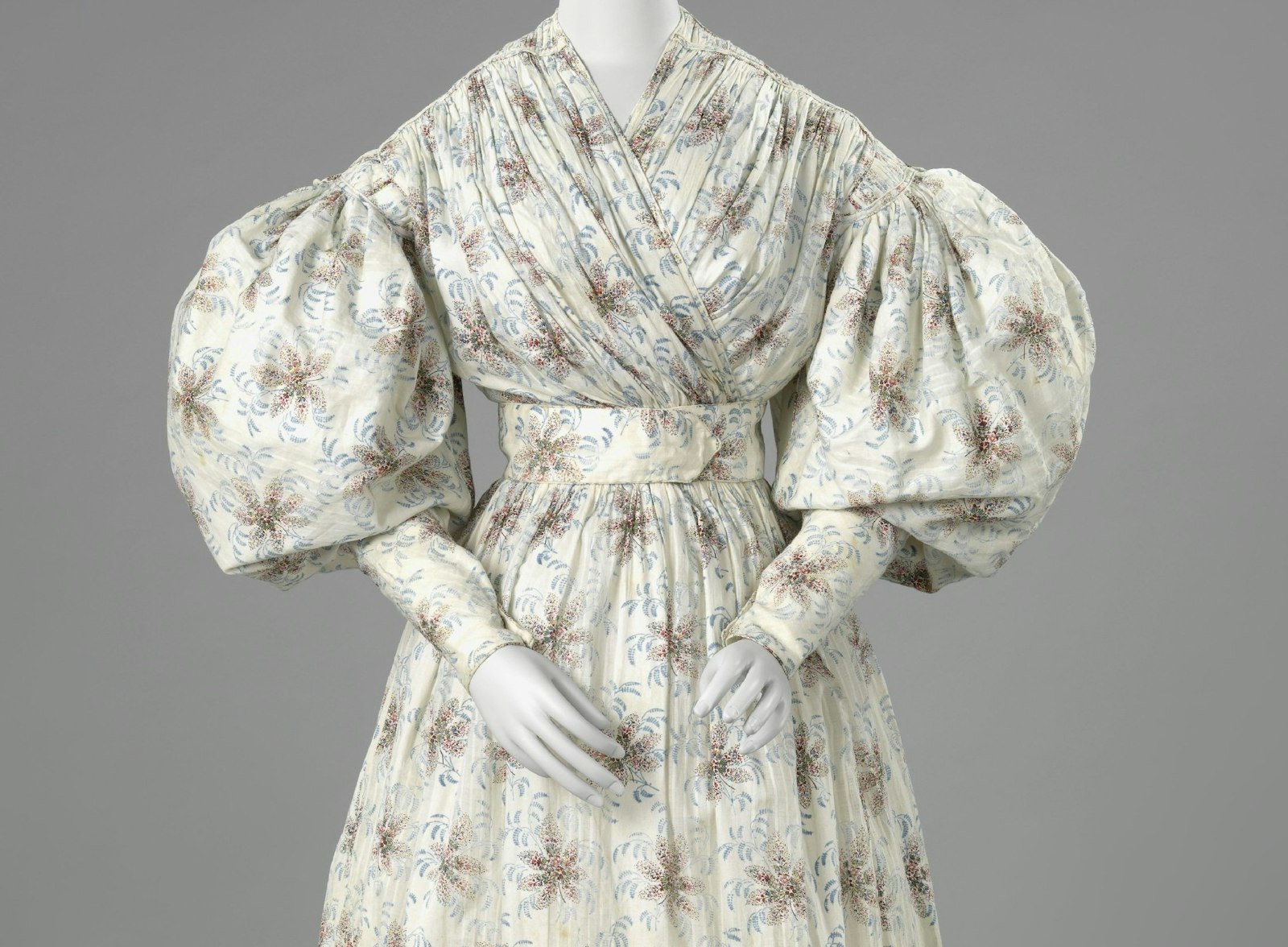
This sleeve style is known as the gigot, or “leg-of-mutton,” sleeve—named for its resemblance to a cut of meat, which feels both accurate and slightly unfair. Huge and rounded from shoulder to elbow, then tapering to the wrist, the silhouette has been making dramatic appearances since the Renaissance. Think Henry VIII or Elizabeth I in their famously extravagant attire: sleeves weren’t just decorative, they signaled power, wealth, and presence. Then once again in the 1830s and 40s, sleeves began to balloon out to match the widening silhouettes of dresses. Sometimes, leg-of-mutton sleeves were secured with padded whalebone supports; other times, they were built directly into the dress and stiffened with horsehair, down filling, or starch. These enormous sleeves resurfaced yet again in the 1890s, when the ideal silhouette seemed to be a kind of Victorian linebacker.
Click on the images below to get a closer view and to learn more.
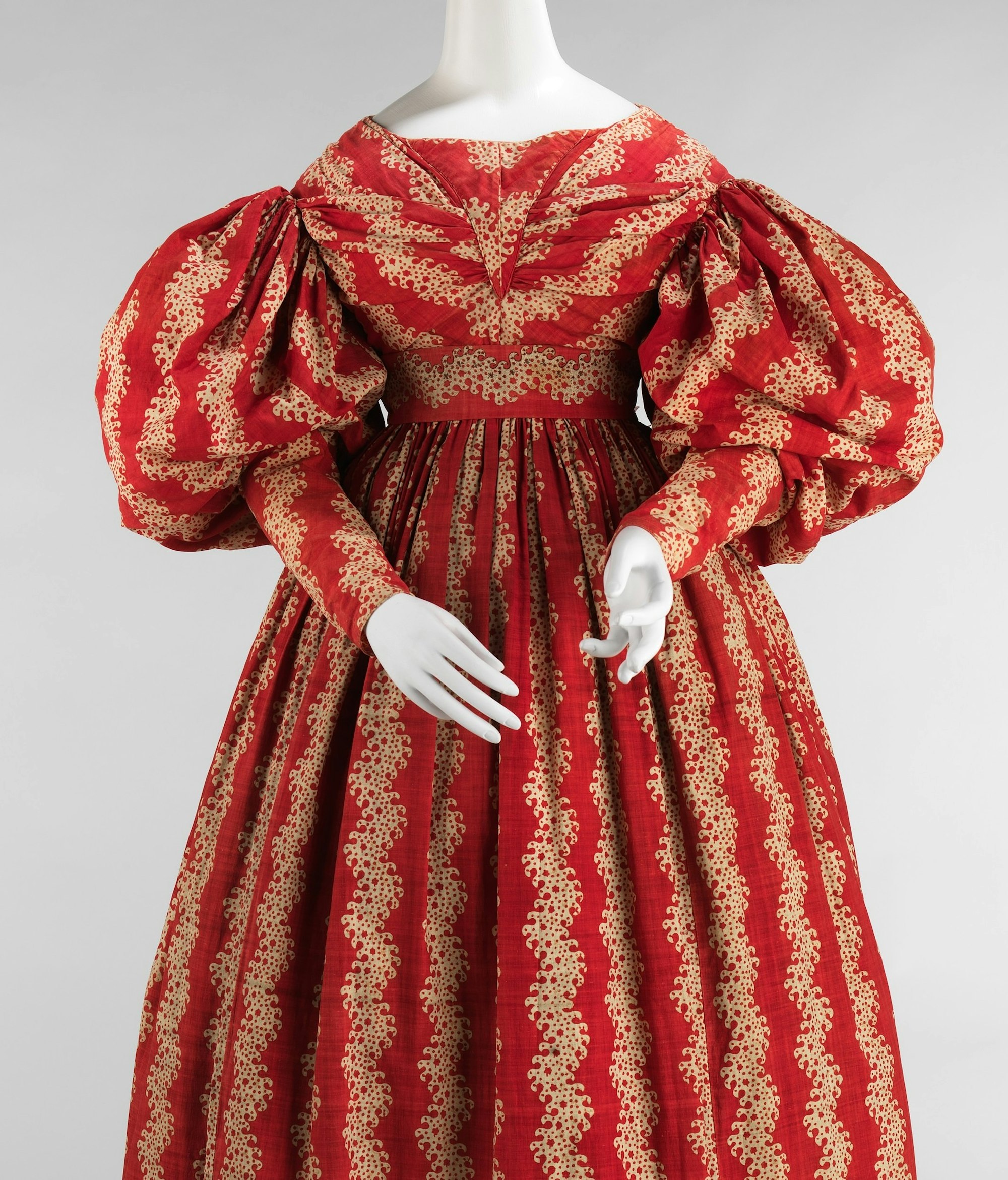
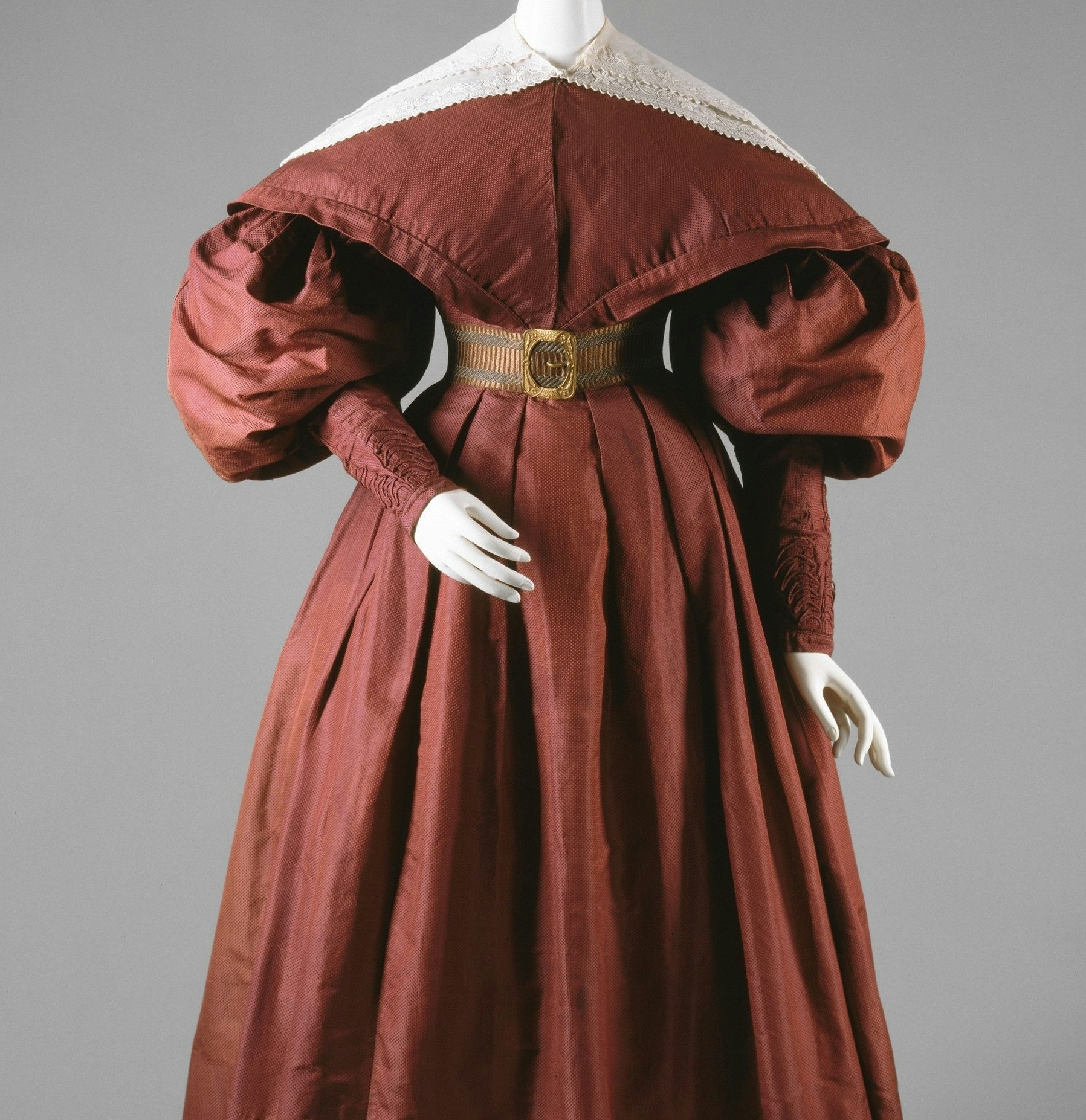
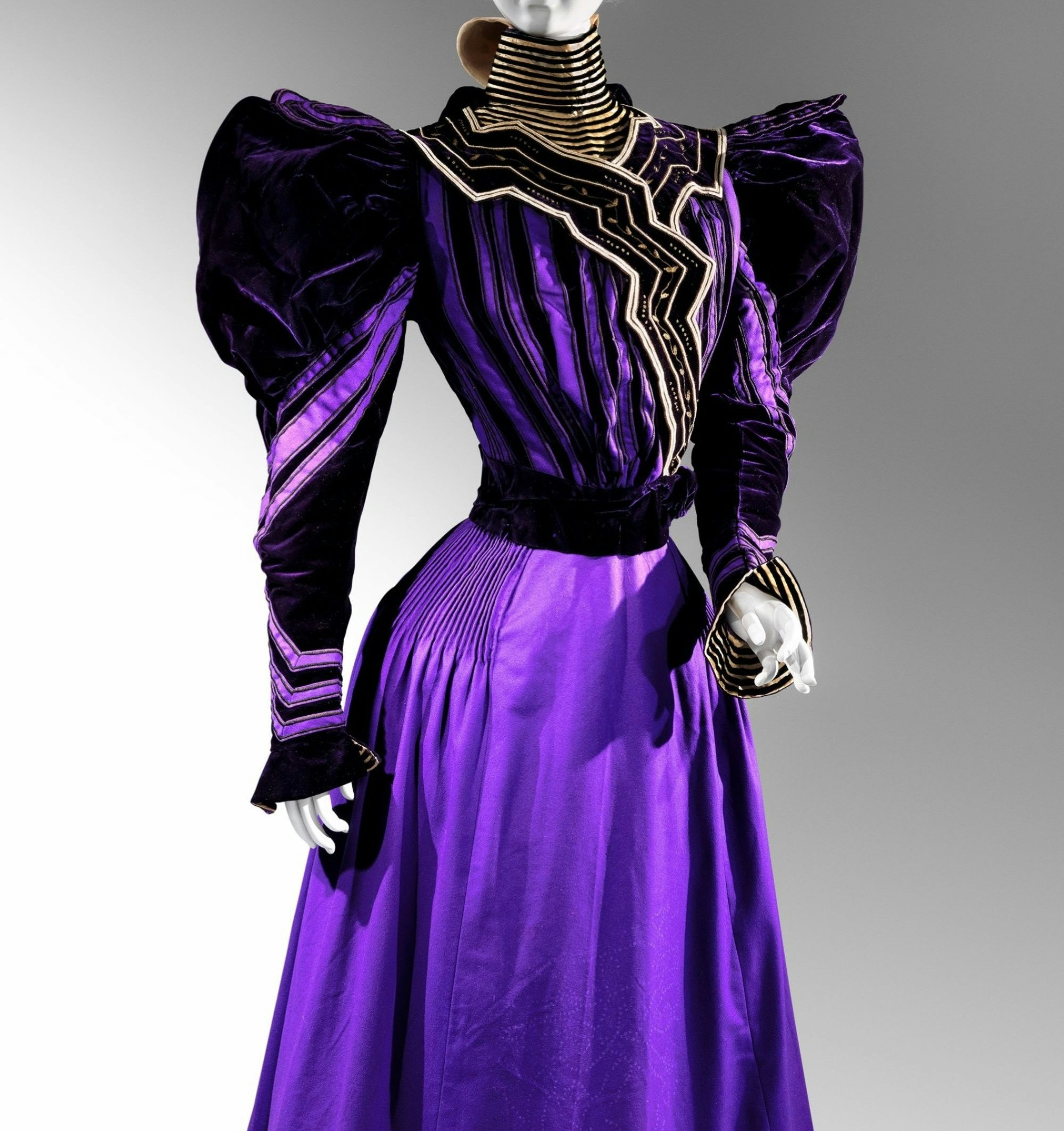
The leg-of-mutton sleeve has never really gone away. They may not be quite as outrageous as they were during the Renaissance or in the nineteenth century, when women reportedly struggled to fit their sleeves through a doorway, but they’re alive and well. Remember the power jackets of the 1980s? Fashion designers over the past few decades have continued to incorporate subtle and not-so-subtle versions of the puffy sleeve. Today, it’s easy to find sewing tutorials showing you how to add your own leg-of-mutton sleeve to a blouse for extra glamour. I love it.
 Wool sweater, likely American, circa 1895. Brooklyn Museum Costume Collection at The Metropolitan Museum of Art, Gift of the Brooklyn Museum, 2009; Gift of Mrs. John Hubbard, 1938. 2009.300.1111. Photo courtesy of the Metropolitan Museum of Art
So, I’ll keep scrolling, clicking, and wondering. Because somewhere between a sixteenth-century burial gown and a nineteenth-century sleeve that’s too large for a doorway is a continuous thread: our enduring desire to shape identity, communicate status, and delight in a little bit of excess.
Resources
Boucher, François. 20,000 Years of Fashion: The History of Costume and Personal Adornment. Expanded ed. New York: H.N. Abrams, 1987.
Cornwall Museum and Art Gallery Costume Collection
Hill, Daniel Delis. History of World Costume and Fashion. New Jersey: Pearson Prentice Hall, 2011.
Happy viewing!
Karen