
I grew up in a small Greek village where new clothes were a luxury my family rarely afforded. Old garments were never discarded; instead, we constantly repaired, reshaped, and altered them. As a child, I often wore hand-me-downs from my cousins and adapted outdated pieces to suit me. On the rare occasions I bought or made something new, I treasured it and cared for it carefully. I sewed most of my own clothes and knitted my sweaters—and I continue to do so today. In my household, I repair and upcycle textiles, saving every scrap of fabric to create patchwork quilts, pet beds, toiletry bags, table runners, blankets, and potholders.
My wardrobe consists of several valued pieces of clothing I’ve had since my teenage years: the first pullover I knitted with fuchsia yarn that a friend had gifted me; the linen skirt that I relined when the original lining fell apart at the seams; my grandmother’s embroidered handkerchiefs; the leather handbag I carried on my first flight to the United States. These pieces have withstood the wear and tear of time because of mending, repurposing, and caring for them.
 Harikleia's toiletry bags made from scrap fabrics. Photo by the author
Mending, Memory, and Community
Mending is a valuable skill that not only extends the life of clothes but also reduces waste and consumption—and teaches self-reliance. In Greece, particularly in farming and fishing areas where people made a living from manual labor like my father did, mending clothes and linens was a daily activity for women that was taught in every generation. It was also a way for women to socialize, to gather and chat over a cup of coffee. People repaired their clothes because they could not afford to buy new ones. By doing so, not only did they economize, but they also learned much-needed practical skills, gained self-confidence, and created community.
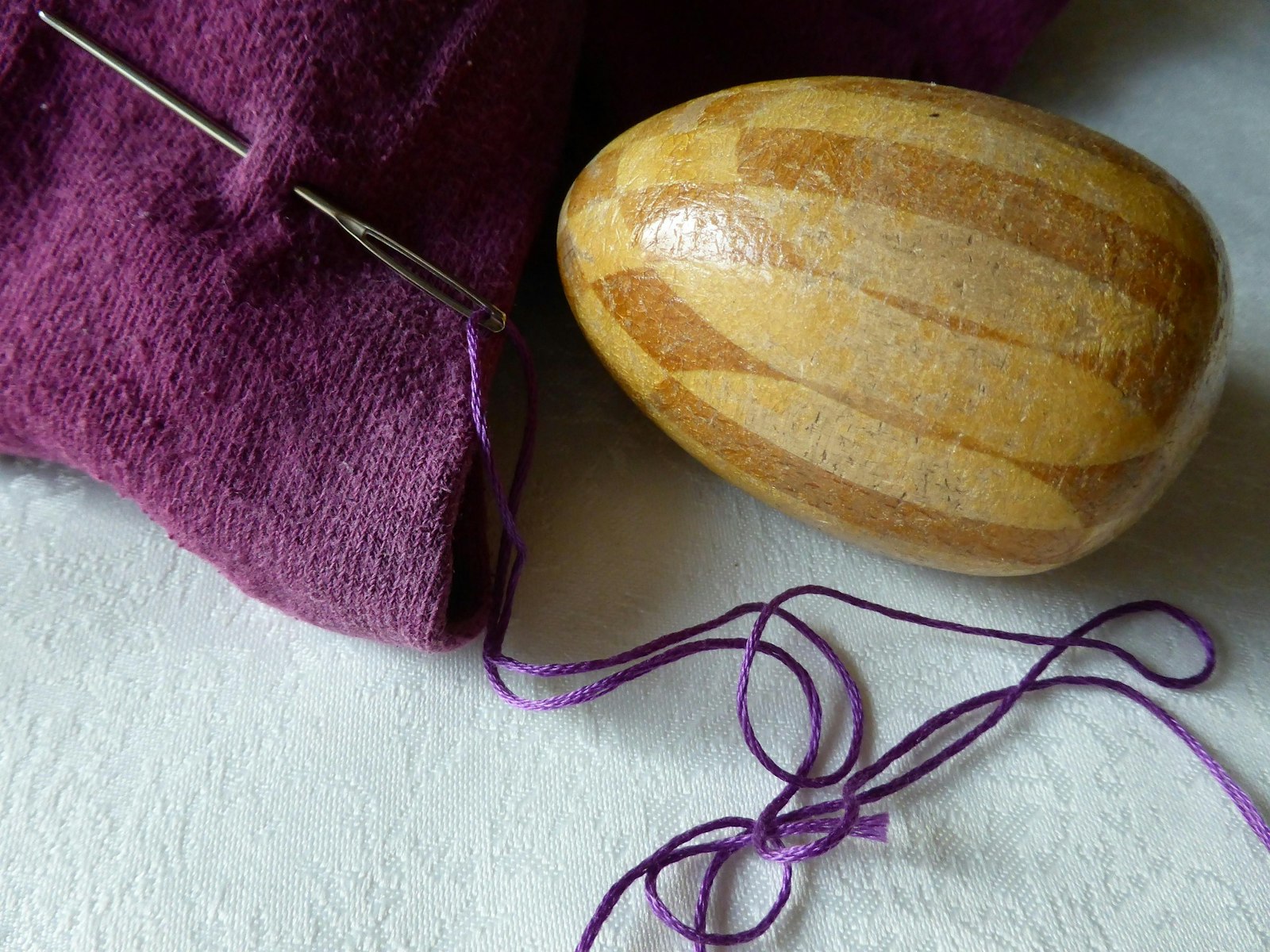
In our Greek household, mending clothes was a daily chore. My mother stored essential sewing notions inside a tin box: everything from pins on a pin cushion, to a wooden darning egg, spare buttons, scrap fabric, and so much more. She taught me basic sewing stitches and techniques such as sewing on a button, restitching a ripped seam, making a rolled hem for a tea towel, and securing hooks and eyes on skirts. My father, a blacksmith, wore out his clothes quickly. Every day, he would come home with missing or broken buttons on his shirt, myriad tiny holes on his socks and pullover, and ripped seams and tears on his jeans. We would get to work: sewing on lost buttons, darning holes, restitching seams, and patching tears—bringing battered garments back to life with our own hands.
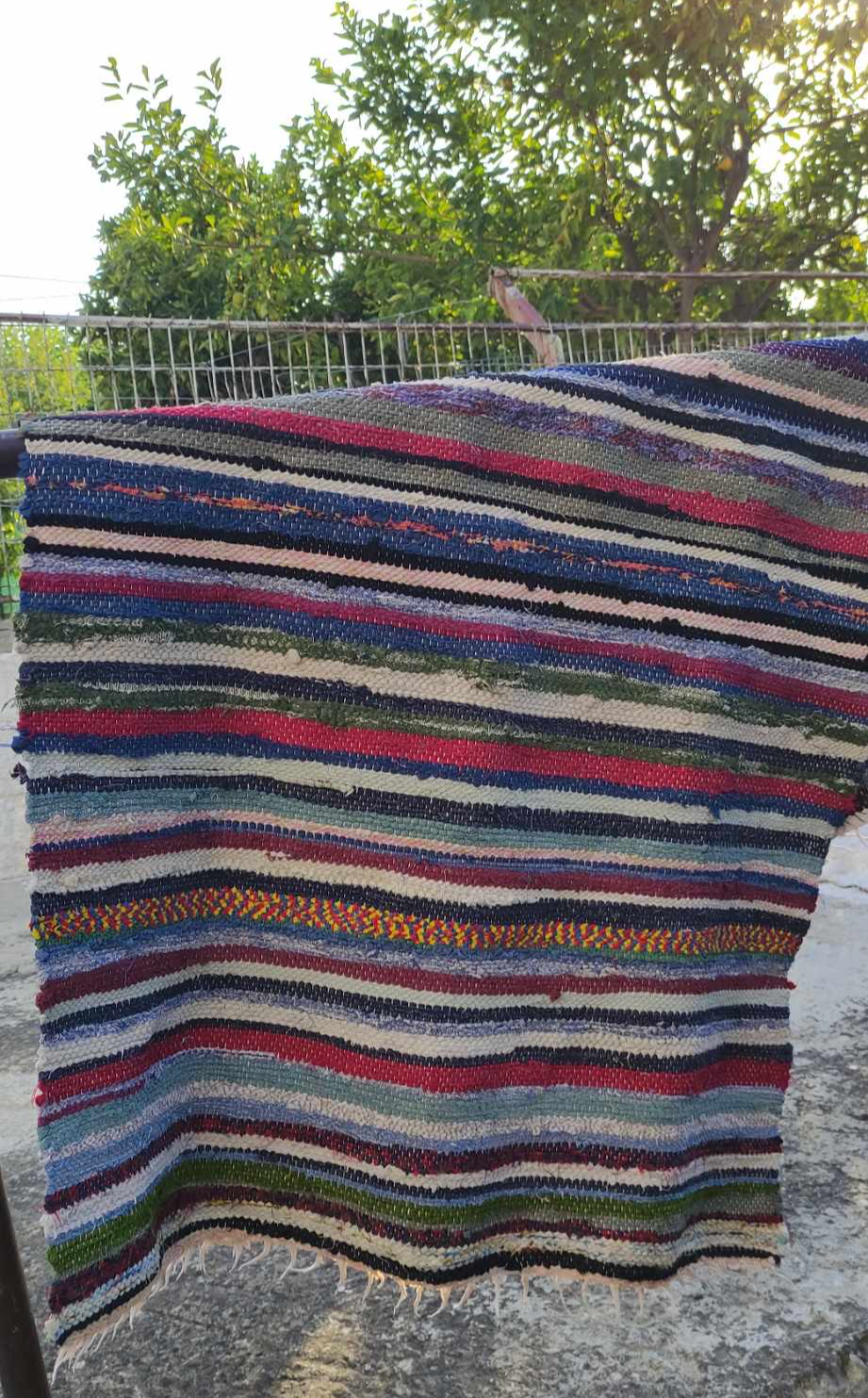 One of the author's Koureloudes, a rag rug, made from repurposed fabric. Photo by the author
When our clothes and home accessories such as curtains and linens were damaged beyond repair, we repurposed them. We removed any reusable notions such as buttons and zippers, and then we cut and sewed the strongest parts of the fabrics into tea towels, accessories, and items such as aprons, pillowcases, and fabric bags. I remember when I made two pairs of Bermuda shorts from old curtain panels. We used the weakest parts of fabrics for housecleaning, or we wove rag rugs or koureloudes. (The name comes from the word koureli, which means “rag.”) To make rag rugs, we would cut wide strips of scrap fabrics, handstitch one strip to another to form one long piece of fabric yarn, and wind it into a ball. After we gathered several balls of fabric yarn, a local weaver would weave them into the koureloudes that covered the floors of every room in our house.
Mindful Mending
In my home, repairing and transforming worn clothing has always felt like the most natural path. I’m grateful for the sewing skills I’ve learned and love passing them on to others. Mending not only fosters creativity and thoughtful making, but also champions slow fashion. By caring for and repurposing the clothes we already have, we resist the cycle of fast fashion, reduce waste and pollution, and deepen our understanding of a garment’s full journey—from raw fibers and dyeing to cutting, sewing, and finishing.
—Harikleia Sirmans