
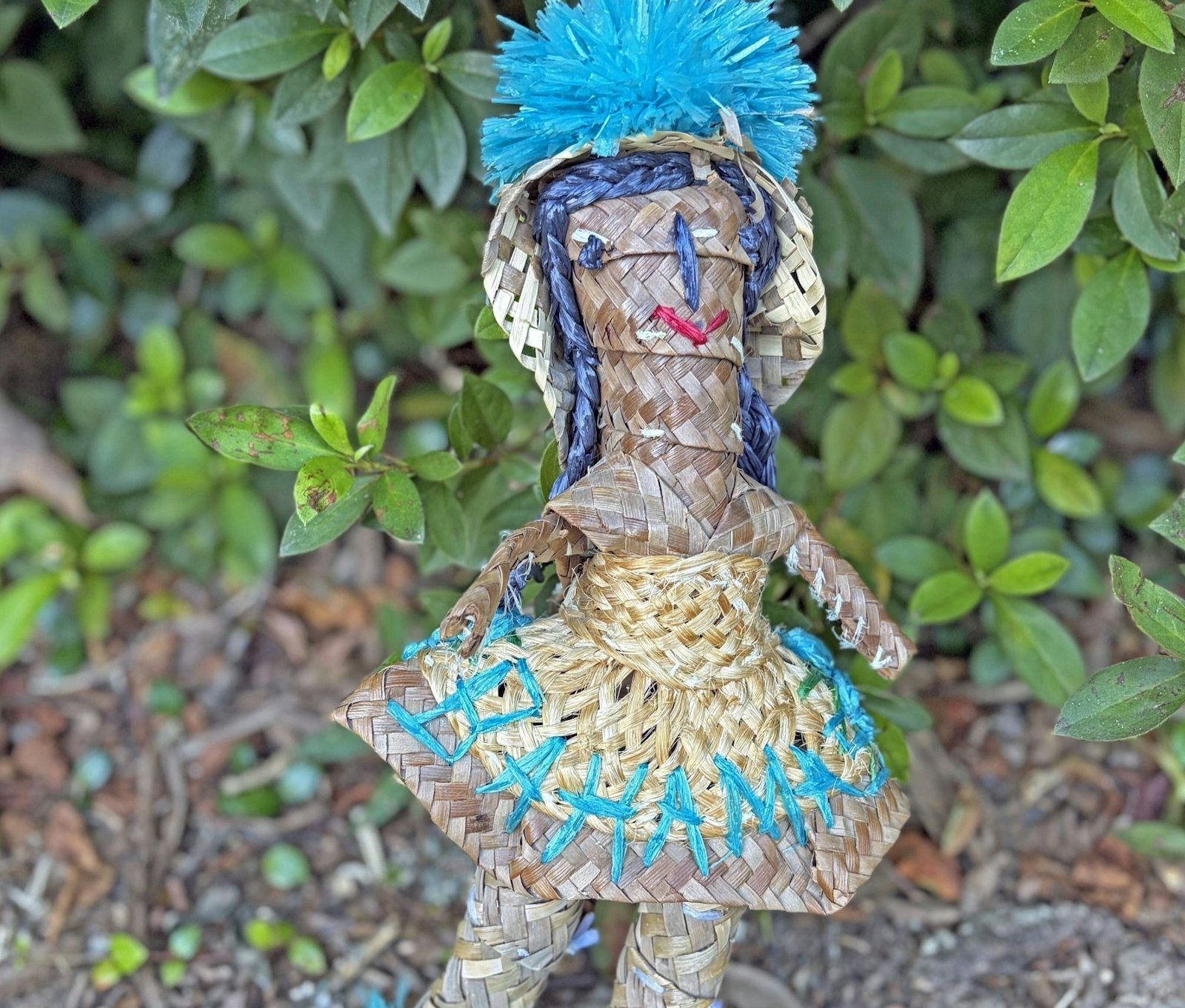
A coastal breeze drifted through the stalls of Grand Bahama’s Lucaya Market, ruffling brightly colored T shirts, purses, and souvenirs displayed for visitors to the island. I chatted with the men and women running the kiosks as I followed my kids, who were dashing from stall to stall and begging to buy two or three animals from every shelf. As we walked, something caught my eye.
Perched on a shiny counter, a woven doll gazed out at the passersby. Its arms, legs, and head were made from plaited raffia. The doll also had braided raffia hair and embroidered raffia clothing. Less than a foot tall, the handmade figure was a powerful symbol not only of a Bahamian economy recovering from recent hurricanes, but also of the resilient and creative people who call these islands home.
History Woven into Island Life
The Bahamas comprise a chain of roughly 700 islands, only about 30 of which are currently inhabited. Long a British colony, the country achieved independence in 1973. Before European contact, Indigenous people known as the Lucayans—a branch of the Taíno—survived from the natural resources gathered on surrounding land and sea. Tragically, enslavement, disease, and forced migration decimated their population, effectively wiping the Lucayans from the Bahamas—though Lucayan communities survived on other Caribbean islands. Centuries later, after the Revolutionary War, British loyalists fled the newly formed United States and resettled in the Bahamas, bringing enslaved people with them. Slavery ended in the Bahamas in the 1830s; according to the African American Registry, “The Bahamas became a haven for freed African slaves—Africans liberated from illegal slave ships were resettled on the islands by the Royal Navy.”
As Seminoles in Florida faced increasing pressure from European-descended settlers and the military, a group escaped and resettled in the Bahamas as well. Freed slaves, their descendants, and Indigenous Seminoles brought with them their history, skills, and cultural traditions—including plaiting, sewing, and weaving. Using grasses and palm fronds, they created baskets, mats, rugs, dolls, and more, a tradition now known as “straw work.”
 "Hurricane Trina" a master straw weavers keeps the Bahamian tradition of straw weaving alive.
A Master Straw Weaver Keeping Tradition Alive
A few days after my visit to the Lucaya Market, I headed to Garden of the Groves, a botanical garden and birding hotspot. Garden of the Groves has its own vendors, and it was there that I met Trina (she likes to call herself “Hurricane Trina”). She sewed a plaited hat as she chatted, surrounded by her dolls, handbags, rugs, and mats. Trina is an artist, and she refuses to put price tags on her work—each piece is priced individually based on the dyes, the complexity of the patterning, and the size.
A fifth-generation Bahamian and a third-generation straw work artisan, Trina remembers stories from her grandmother, who wove basic household goods. Not allowed to sell her work for money, she traded her pieces for sugar, coffee, and other staples the family couldn’t gather or grow. As the Bahamas became a tourist destination—and a tourism dependent economy—in the twentieth century, straw workers shifted production from essential household items to goods made for visitors.
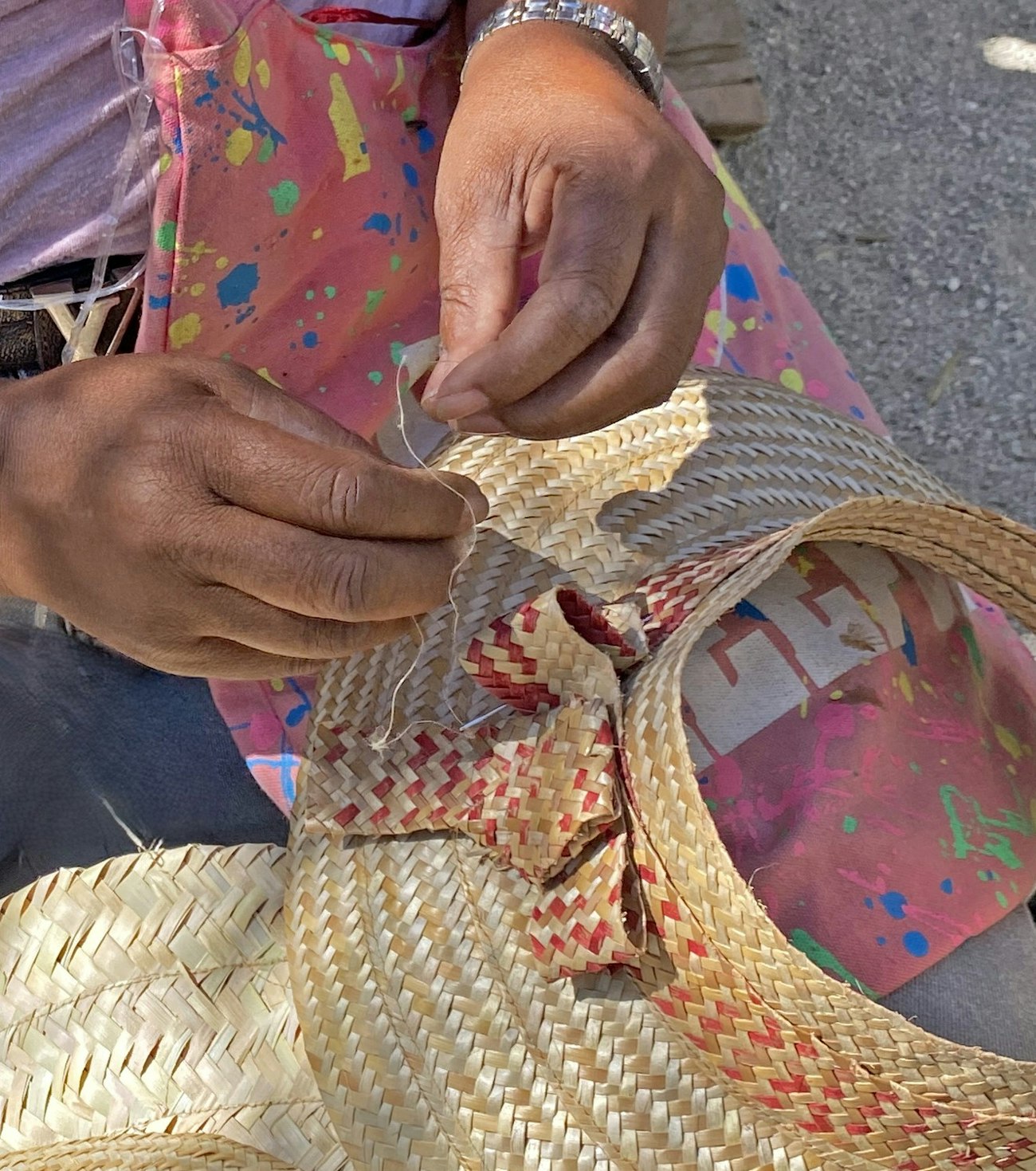
Trina, a third-generation straw artist, stitches braided ribbon to a straw hat at the Lucaya Market.
Trina told me she had once been featured on a popular postcard sold in her mother’s straw work stall, and back home in Florida I ordered two vintage postcards she might have been referencing. While in the Bahamas, I bought an amazing hat from Trina, which she sized for me. And she gifted me a small woven doll, which I treasure.
A Threatened Tradition
As with many handcrafts, straw work—a legacy of those who built new lives in the Bahamas—is at risk of decline. Cheap imports rather than locally made products are sold to tourists. Hurricanes threaten infrastructure and drive visitors away. Cruise ships create their own docking stations and markets, keeping some artisans out. And the next generation is less interested in making a living from straw work, which requires long, hot hours not only to create the pieces but also to sell them in market stalls. None of Trina’s children, for example, plan to pursue straw work professionally.
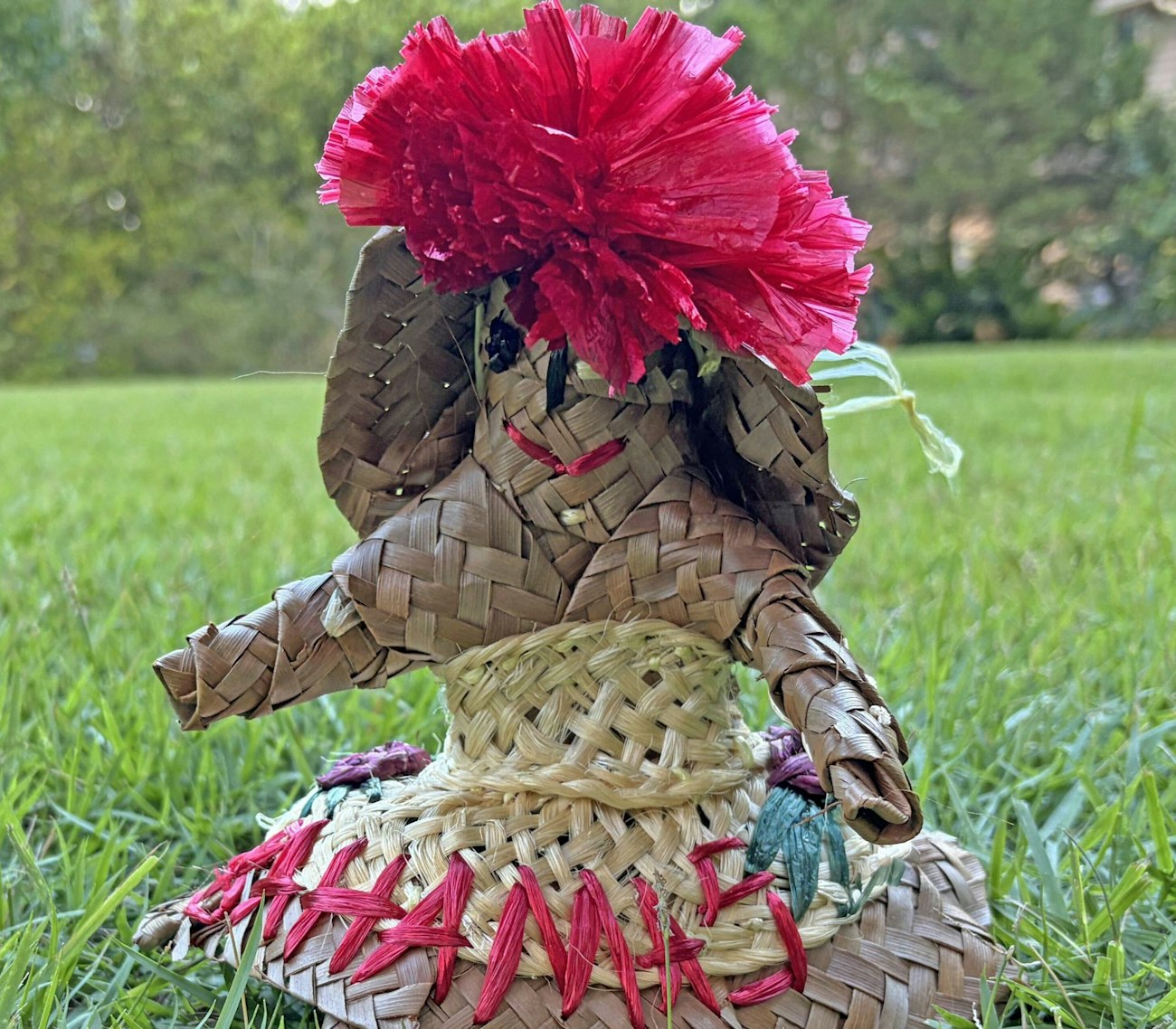
One of Trina's hand-plaited dolls, now in the collection of the author.
Today, leaders in the Bahamas are working to inspire new artists to specialize in straw work and to boost the visibility of this art form around the world. My two straw work figures sit on a shelf in my kitchen as a reminder of a beautiful country and a resilient community of fiber artists.