
George Washington Carver combined a lifelong love of handiwork with a remarkable career as an agricultural scientist. Even during his busiest years at Tuskegee, he kept his hands occupied with knitting, crocheting, embroidery, weaving, and natural dyeing, a practice he described in 1931: “If I had leisure time from roaming the woods and fields, I put it in knitting, crocheting, and other forms of fancy work.” (see note 1)
A Carver Trifecta
A few months ago, we shared a Nancy Nehring article about Carver's work, “The Scientist Who Crocheted: George Washington Carver’s Unexpected Legacy,” along with a free set of several of his filet crochet designs for lace edgings, insertions, and trims.
Then our friends at Spin Off magazine shared the second installment of Nancy’s article, “Nature’s Colors in the Hands of George Washington Carver” about his work with natural dyes.
Anne Merrow followed that up with a fun Long Thread podcast interview with Park Ranger Curtis Gregory at the George Washington Carver National Monument who shared more about Carver’s extraordinary life.
Enduring Admiration
Perhaps it’s because of the way he took discarded materials and made them into something beautiful and practical or maybe because of the thoughtful integration of his agricultural and textile work, or just because of the surprise in discovering that a man famous for his scientific contributions was also an ardent needleworker, but PieceWork readers have loved learning about George Washington Carver.
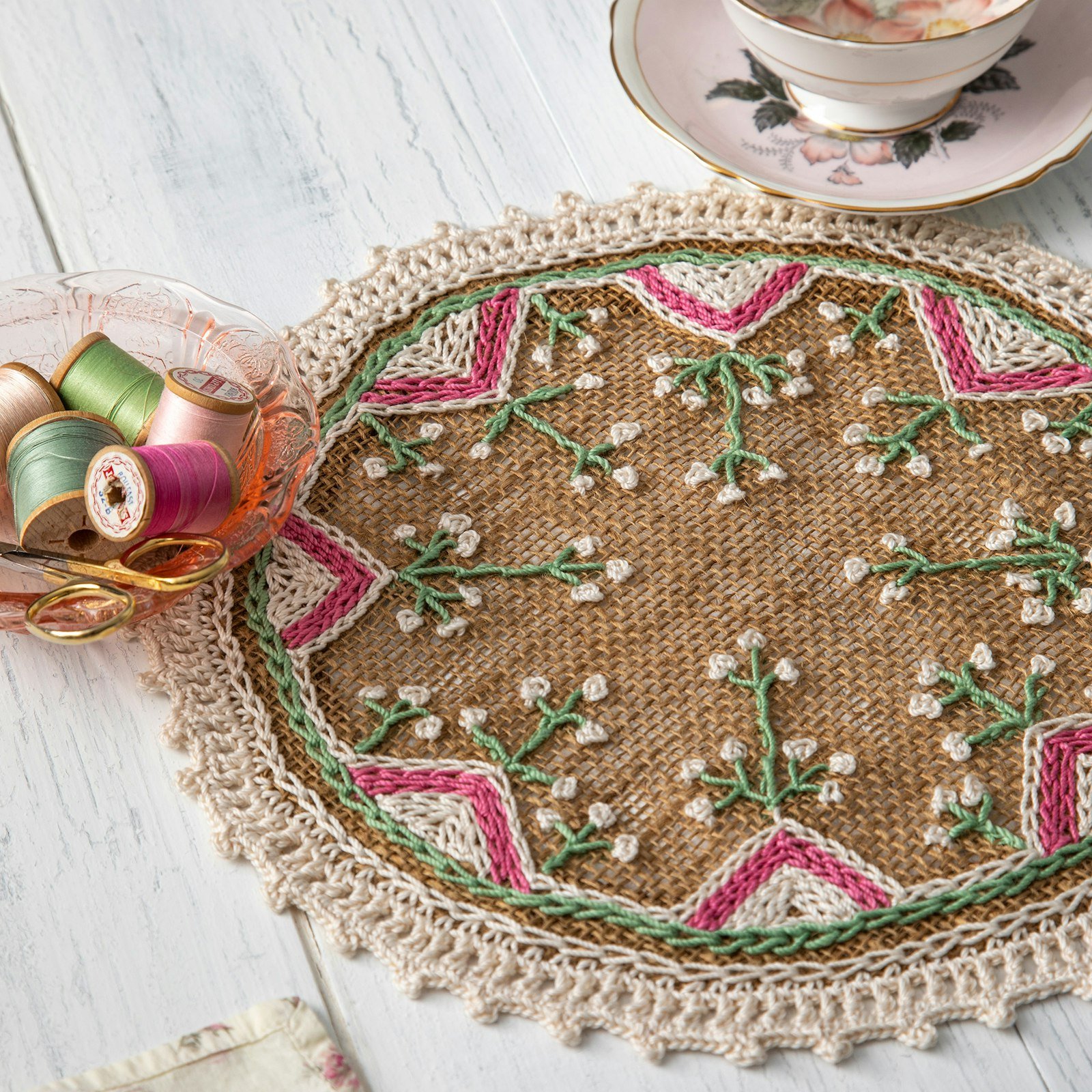
And now we’re delighted to share a Carver-inspired pattern: Cotton Field Doily.
 Simple stitches, such as chain and stem stitch, are used to create the
field and cotton-plant motifs.
Simple stitches, such as chain and stem stitch, are used to create the
field and cotton-plant motifs.
Cotton Field Doily is Nancy Nehring’s re-creation of an original, unnamed design by Carver. The original is in the collection of Tuskegee Institute National Historic Site, U.S. National Park Service. Nancy visited the collection several years ago and learned more about the original doily that Carver made as model—along with several others—for his extension demonstrations. The original doily would have been made from recycled materials: burlap from worn-out cotton or tobacco shipping bags and string used to stitch flour sacks. The entire embroidery pattern uses only three stitches: chain, split, and blanket stitches.
Notes
- Kremer, Gary R., ed., George Washington Carver in His Own Words (Columbia, Missouri: University of Missouri Press, 1987), 128.
Subscribers can learn more about how Nancy created her inspired design and download the Cotton Field Doily instructions and embroidery diagrams from the PieceWork library.
Not a subscriber yet? Learn how to join the PieceWork community here. We look forward to having you with us!
Happy stitching,
Karen