
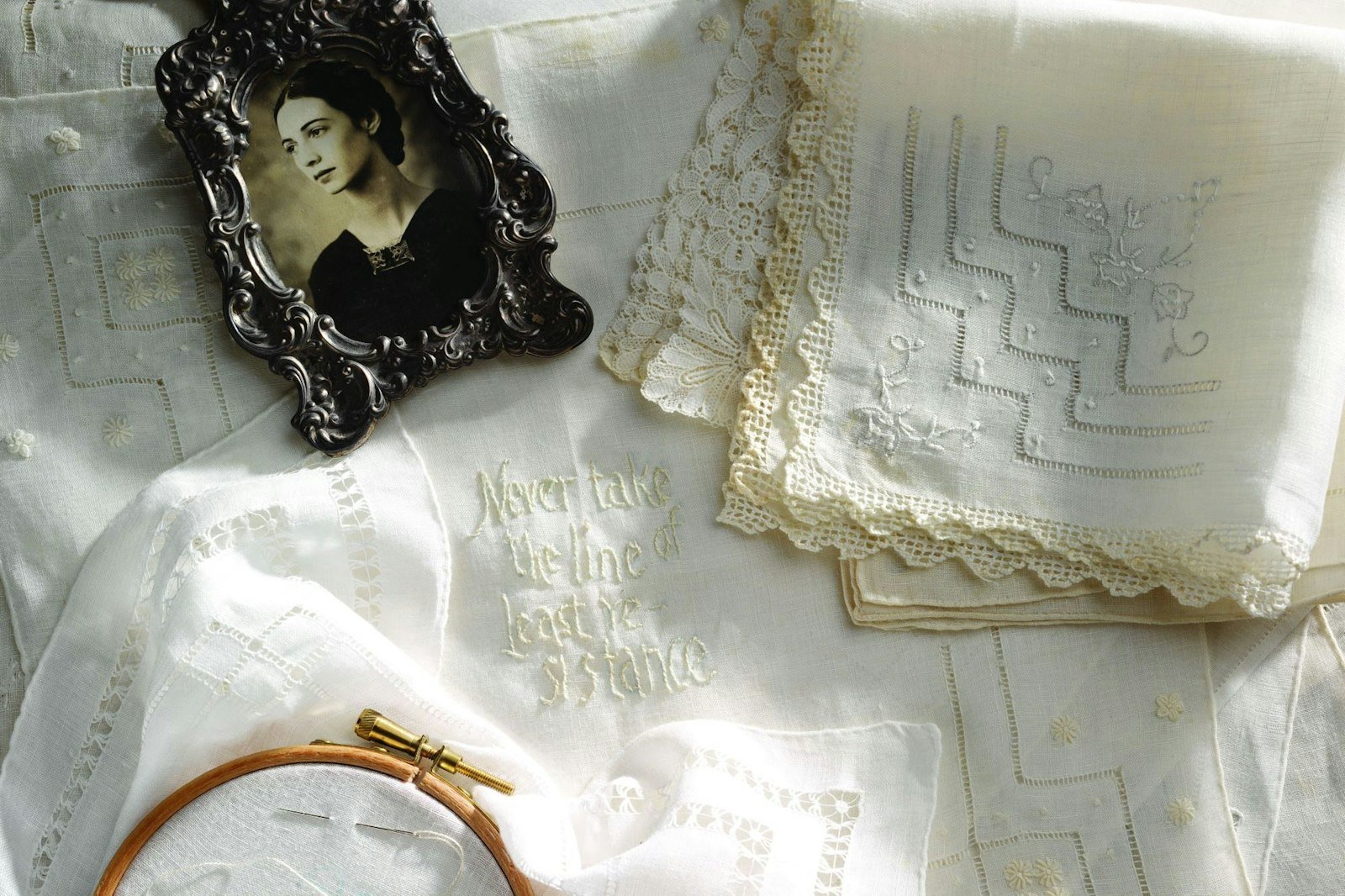
I’ve been helping my mother scale down her craft stash lately. She is a woman who has dabbled in everything from wheat weaving and leatherwork to knitting, embroidery, and making pine needle baskets. We have sifted through piles of yarn, mismatched needles, a daisy loom (more on that soon!), the free world’s supply of embroidery thread, and enough fabric scraps to stitch several quilts. We have a terrific "creative re-use center" in my town which has gladly accepted Mom's goodies—those I didn't keep for myself! But then there are the other little delights. The crocheted lace doilies, handkerchiefs, the knitted caps that are too special to give away. So what can we do with these inherited needlework treasures? We write often about making new projects, but recently I've been thinking as much about needlework we already have, what we’ve inherited. For advice, I turned to the wise words of PieceWork's founder Linda Ligon, who wrote about inheriting her own mother's handkerchiefs years ago. —Karen
Stitching a Tribute
What do you do with a drawerful of handkerchiefs in these times of the ubiquitous disposable tissue? The handkerchiefs in question belonged to my mother. There was no occasion on which she didn’t have a white linen handkerchief in her purse and a floral-print cotton one in her pocket, maybe another one up her sleeve as well. They were for sniffles, smudgy faces, lipstick smears, random dust, tears. As I cleaned out her house, I was astonished at how many there were. Dozens? Scores? Maybe a gross.
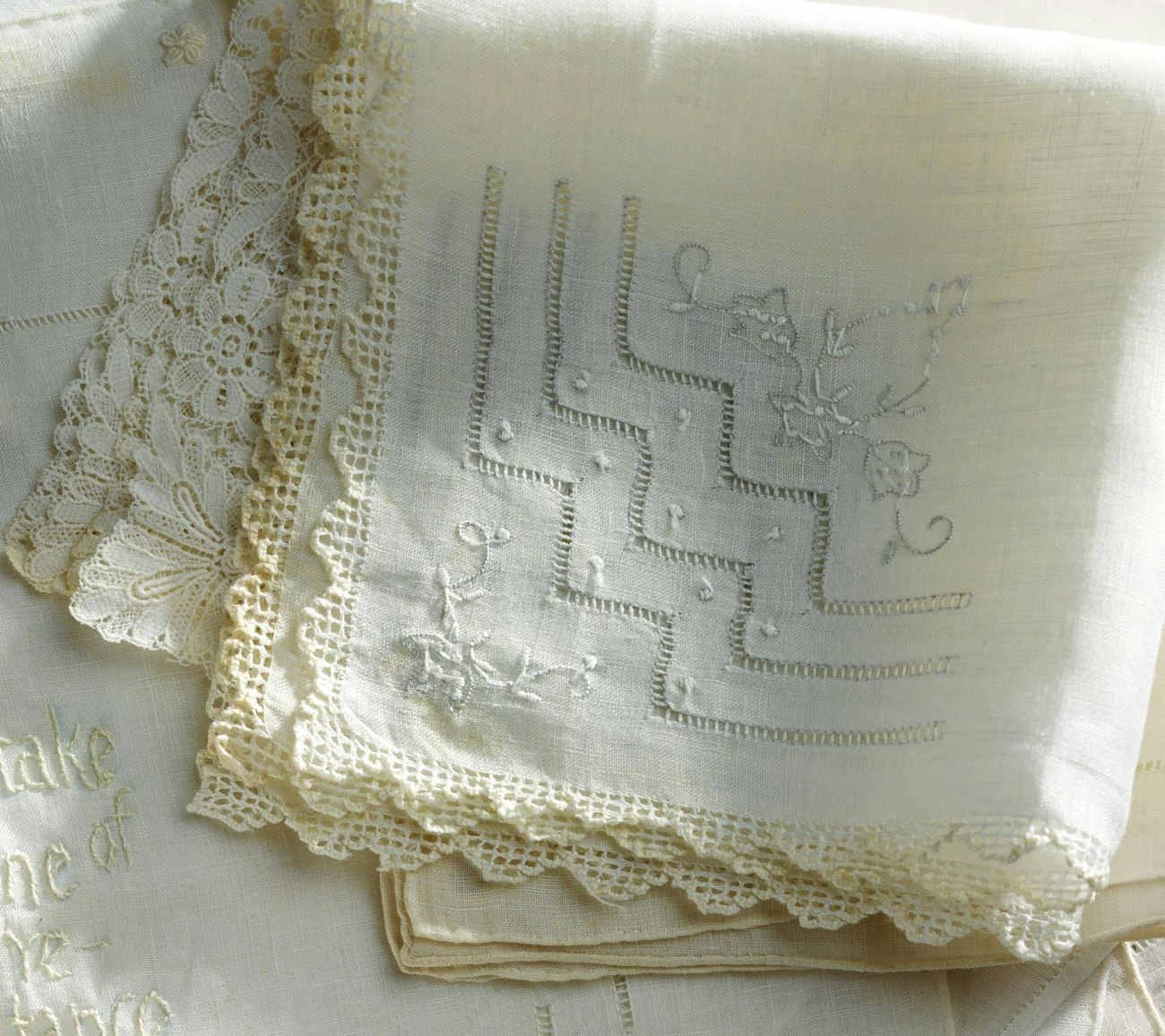
A few handkerchiefs that belonged to Linda's mother. Photograph by Joe Coca
But as I sort through them, I remember my mother. She was a fine contradiction of tough discipline and gentle propriety. “You can put mind over matter,” she would say with certainty. “How can you be bored? Go read a book.” And her favorite dictum, the one she lived her life by, “Never take the line of least resistance.” She applied it to everything—schoolwork, housework, personal grooming, child rearing. If something was easy, it was suspect. I am not my mother, and I sometimes delight in taking the line of least resistance. But her aphorisms endure in her stash of proper hankies, and they have told me what to do with them. If I embroider each one with a few of her words, it will become a tribute and a memory. I can bind them into a soft book, I can hang them like prayer flags, I can give them one by one to all her granddaughters. I can carry one in my pocket—an affirmation and a reminder against life’s little challenges.
All it takes is a small embroidery hoop, a fine-point washable fabric marker, white or off-white embroidery floss (from which to use a single strand), and a wee needle. And, of course, those adages that echo through time.
—Linda