
Contents
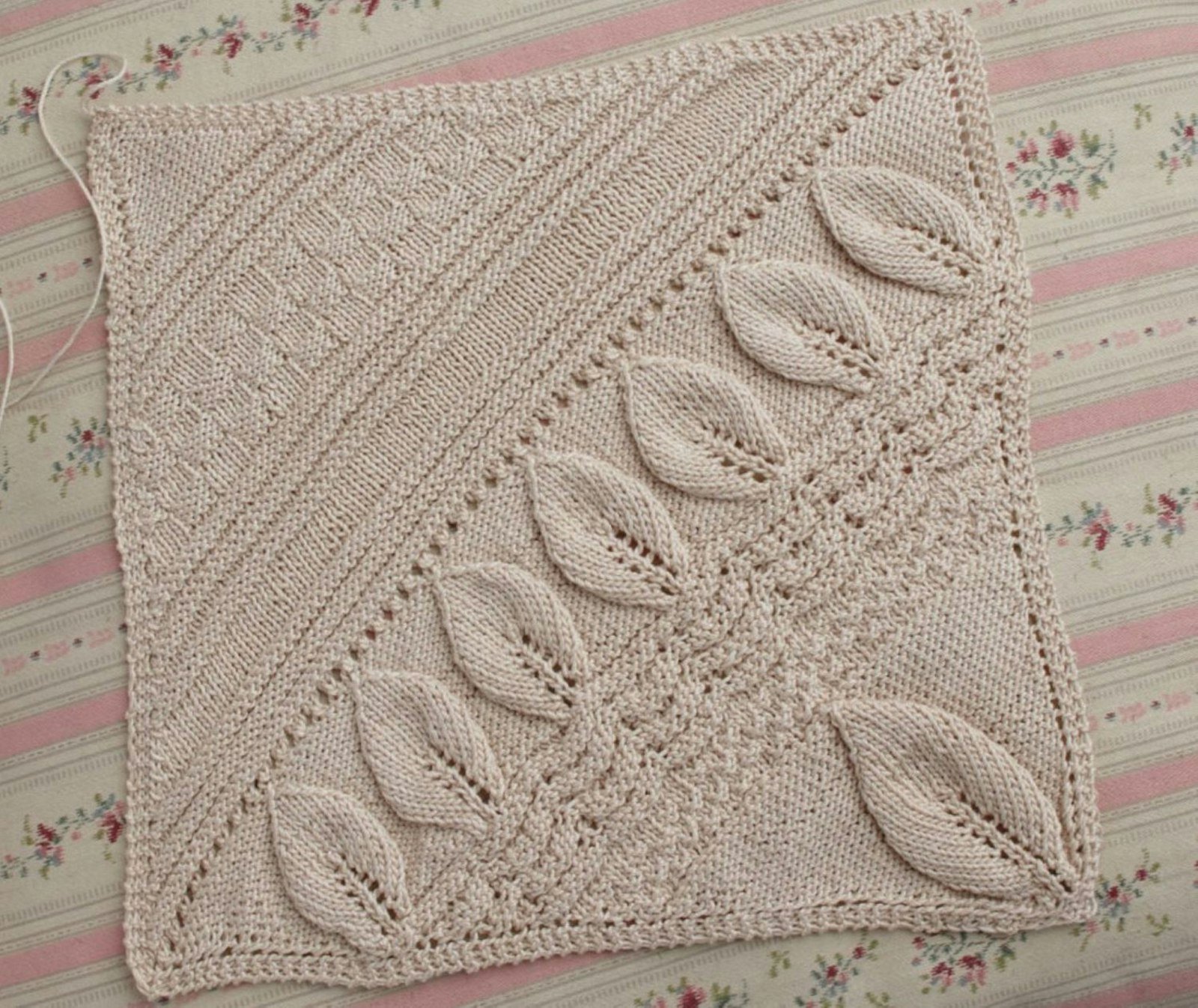
As we mark the 250th anniversary of the signing of the Declaration of Independence, PieceWork is getting a head start on the celebration. All year long, we’ll be sharing articles, projects, resources—and an entire magazine issue—to help you stitch your own way into the festivities. We begin with a collection adapted from our archives, exploring the needlework of three remarkable First Ladies, along with a pattern for a beloved knitted counterpane.
You will read about
- Martha Washington’s exquisite embroidery work
- Colonial Revival fervor of the 1920s, when Americans eagerly romanticized Revolutionary-Era domestic crafts—regardless of accuracy!
- America’s “First Knitter,” Eleanor Roosevelt
- Grace Coolidge’s knitted counterpane pattern
If you have a PieceWork All Access membership, you can get it all by logging in to your account below. Not an All Access Subscriber yet? Join the community here! We hope you’ll enjoy this inspiring collection ready to celebrate needlework in America.
—Karen Elting Brock
Sewing with Martha Washington
 Martha Washington. Inscribed: “Drawn by W. Oliver Stone after the original by Woolaston.” (No recorded date.) Photo courtesy of the Library of Congress Prints and Photographs Division
“I am still determined to be cheerful and happy, in whatever situation I may be; for I have also learnt from experiance that the greater part of our happiness or misary depends upon our dispositions, and not upon our circumstances; we carry the seeds of the one, or the other about with us, in our minds, wherever we go.” So wrote Martha Washington from New York to her friend Mercy Otis Warren (1728–1814) in December 1789. Martha held this view throughout her life and lived by it. Aside from her family, what made her happy was her fine needlework. Martha created beautiful and intricate detailed works that are nothing short of pure artistry and provide us with a glimpse of eighteenth-century American needlework.
Martha was taught how to sew from an early age. It was common for a girl as young as five to begin sewing by making her first sampler, called a marking sampler. These samplers taught the child basic embroidery skills, alphabets, numbers, and instruction in the Christian faith. By making her own marking sampler, Martha would have learned how to keep track of her work by marking it in cross-stich with a number and her initials.
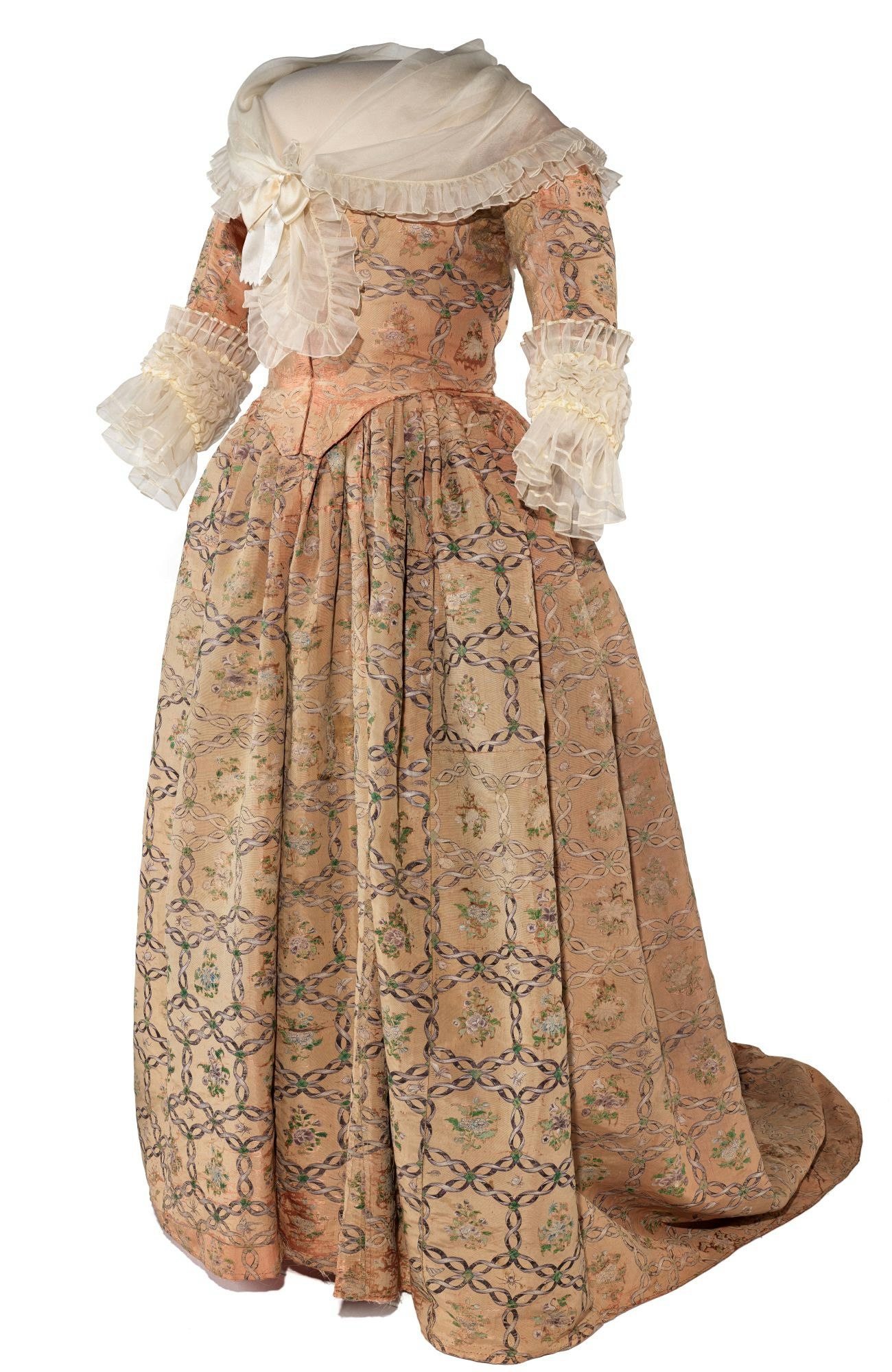
A Silk dress worn by Martha Washington. The gown's basic style is typical of the early 1780s. The painted pattern on the silk taffeta is a repeat of four floral bouquets and 58 different creatures within the spaces between the ribbon-trellis pattern. The collar and cuffs are reproductions. Gift of Mrs. John McFarland Bergland and Mrs. Asher Abbott White, courtesy of the Smithsonian, American History Museum
Martha continued her needlework education at home under the supervision of her mother. After mastering the marking sampler, she would have graduated to making either a