
All Access
| Project Type | Home, Rug |
|---|---|
| Categories | Rug Hooking |
| Collections | PieceWork Fall 2026 |
| Author | Judith Copeland |
| Format | Project/Pattern |
This requires an 'All Access Subscription' to view. Log in to access or subscribe today to unlock all of the premium content available.
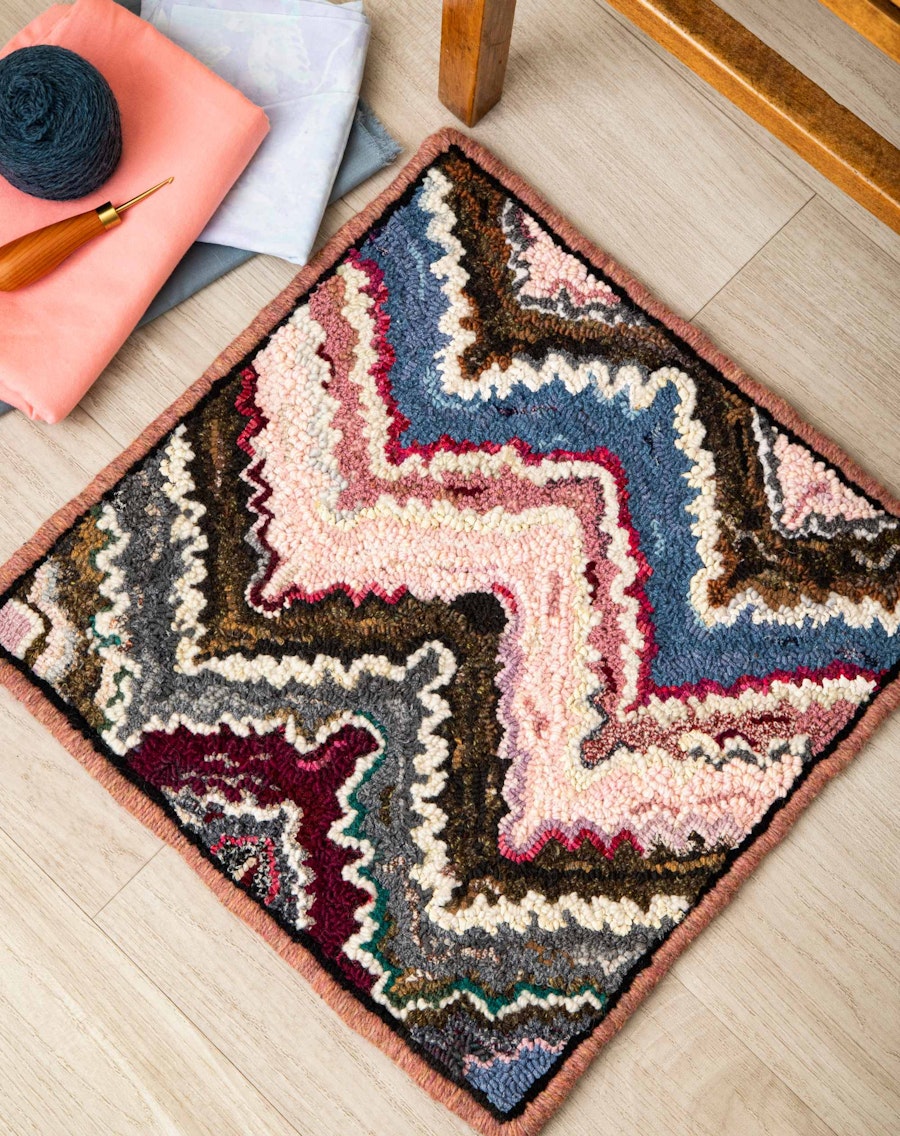
LoginInspired by a stunning Colonial Revival-style rug on display at the historic Hamilton House—a Georgian mansion in Maine—this charming mat brings a piece of American design history into your home. Perfect for beginners and eco-friendly, this project just like the original, is crafted using repurposed materials wherever possible.
You can read more about the designer's discovery in "Hooked on History: The Surprising Collection of Hamilton House Rugs."
Materials
Finished size: 14" (35.6 cm) square.
About: A onetime handspinner and knitter whose main focus has turned to embroidery, Judith Copeland was introduced to rug hooking by members of her embroidery guild (the Southern Maine Chapter of the Embroiderers’ Guild of America) and was drawn to it for the way it allows for rich explorations of color. Judith lives in New Hampshire and is a member of the White Mountain Woolen Magic Rug Hooking Guild.
All items in the library are intended for personal use. Please do not distribute without written approval.