
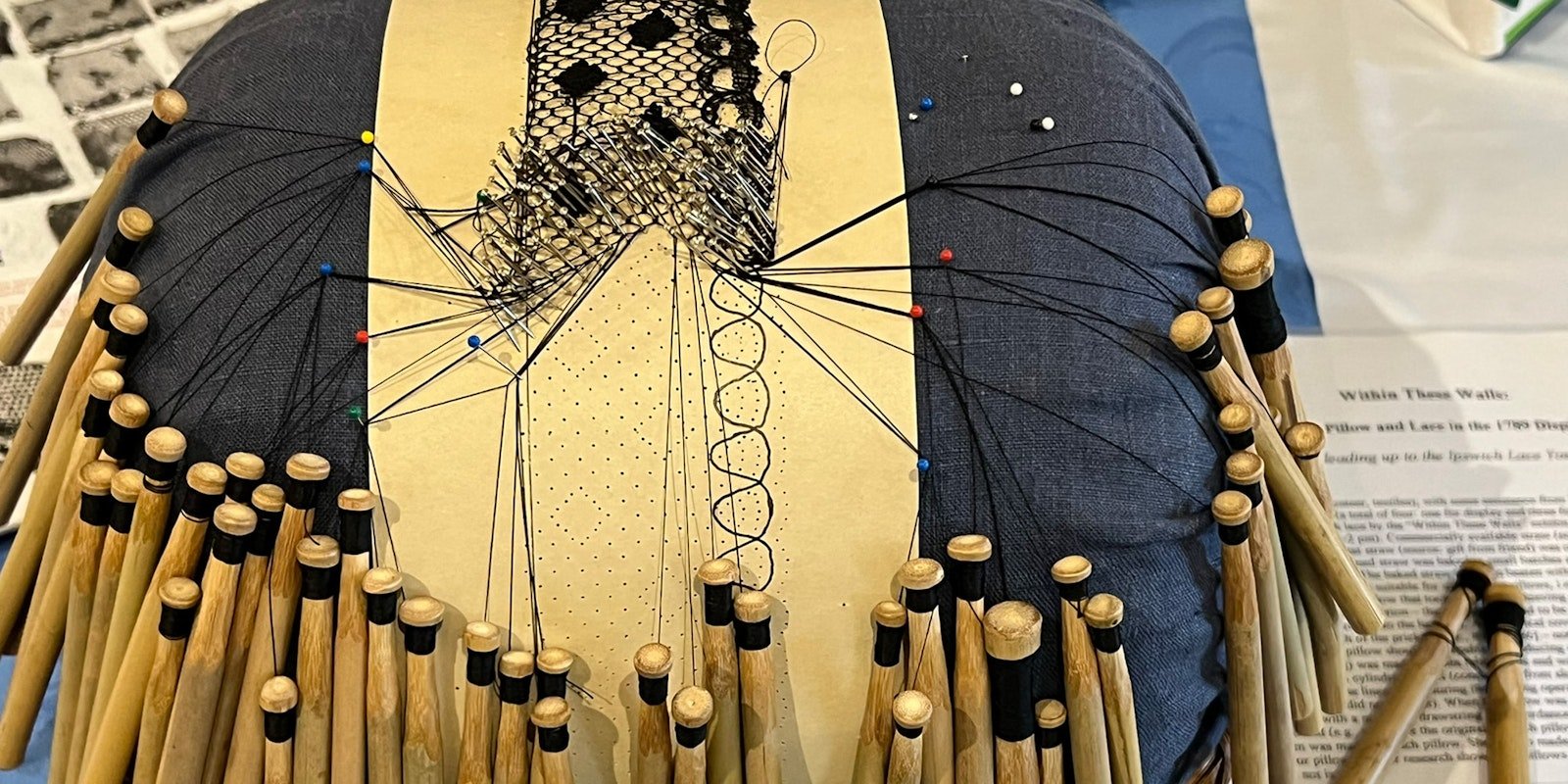
In “Unforgotten Revolutionary Lacemakers of Ipswich,” PieceWork Spring 2026, Mary E. Mangan and fellow members of the New England Lace Group introduce us to the group’s pandemic-era research project that evolved into a mobile Ipswich lace display. They presented this display at historic houses and fairs, wanting to share the enduring story of Ipswich lace and its makers. In April 2025, the group further elevated this American needlework legacy with an all-day lacemaking event: Weaving Threads of Lace History. We asked them to share more about this remarkable event. —Karen Elting Brock
Connecting Past and Present: Lace History Comes Alive
In April 2025, members of the Boston-area textile community organized the Gather fiber symposium, a series of events celebrating local artists and regional textile history. The symposium organizers invited the New England Lace Group (NELG) to participate, and the Ipswich Museum agreed to host NELG’s program, Weaving Threads of Lace History. The event was also registered as one of Massachusetts 250’s many commemorations recognizing the Commonwealth’s role in the American Revolution. Bringing together textile artists and organizations and threads of history, the Gather fiber symposium elevated the work of today’s makers and connected us with each other and with makers of the past.
Weaving Threads of Lace History highlighted the families of the Ipswich, Massachusetts, area who produced lace to support their households in the early American republic. Hundreds of women in Ipswich made and traded bobbin lace, creating a thriving lace industry—a uniquely American craft nearly lost to history. In a single year, more than 40,000 yards of lace were produced, adorning fashionable black lace shawls worn by American women, including Martha Washington.
Get a closer look! Click any image in the gallery below to open it in full-screen mode and read the detailed caption.
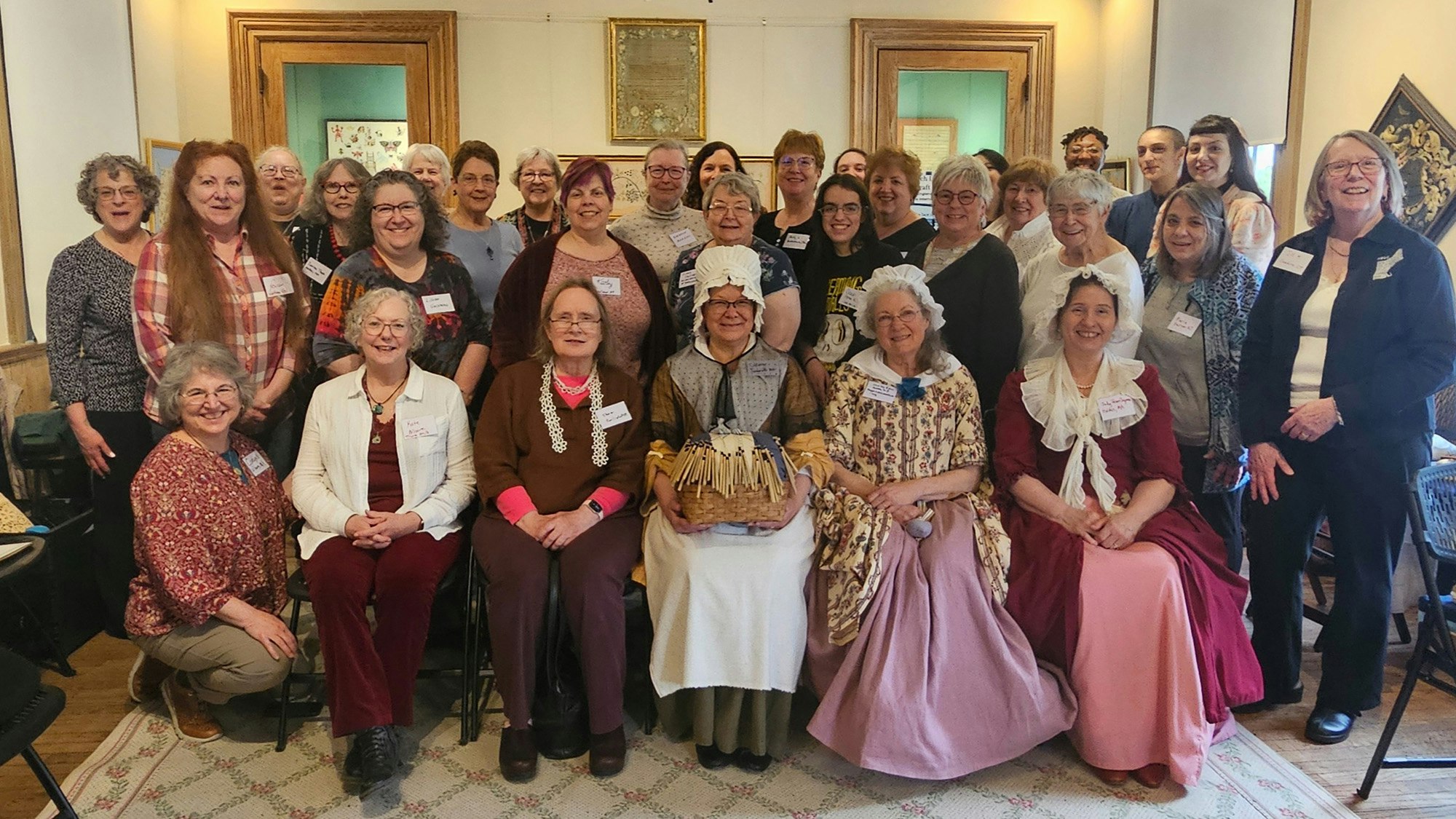
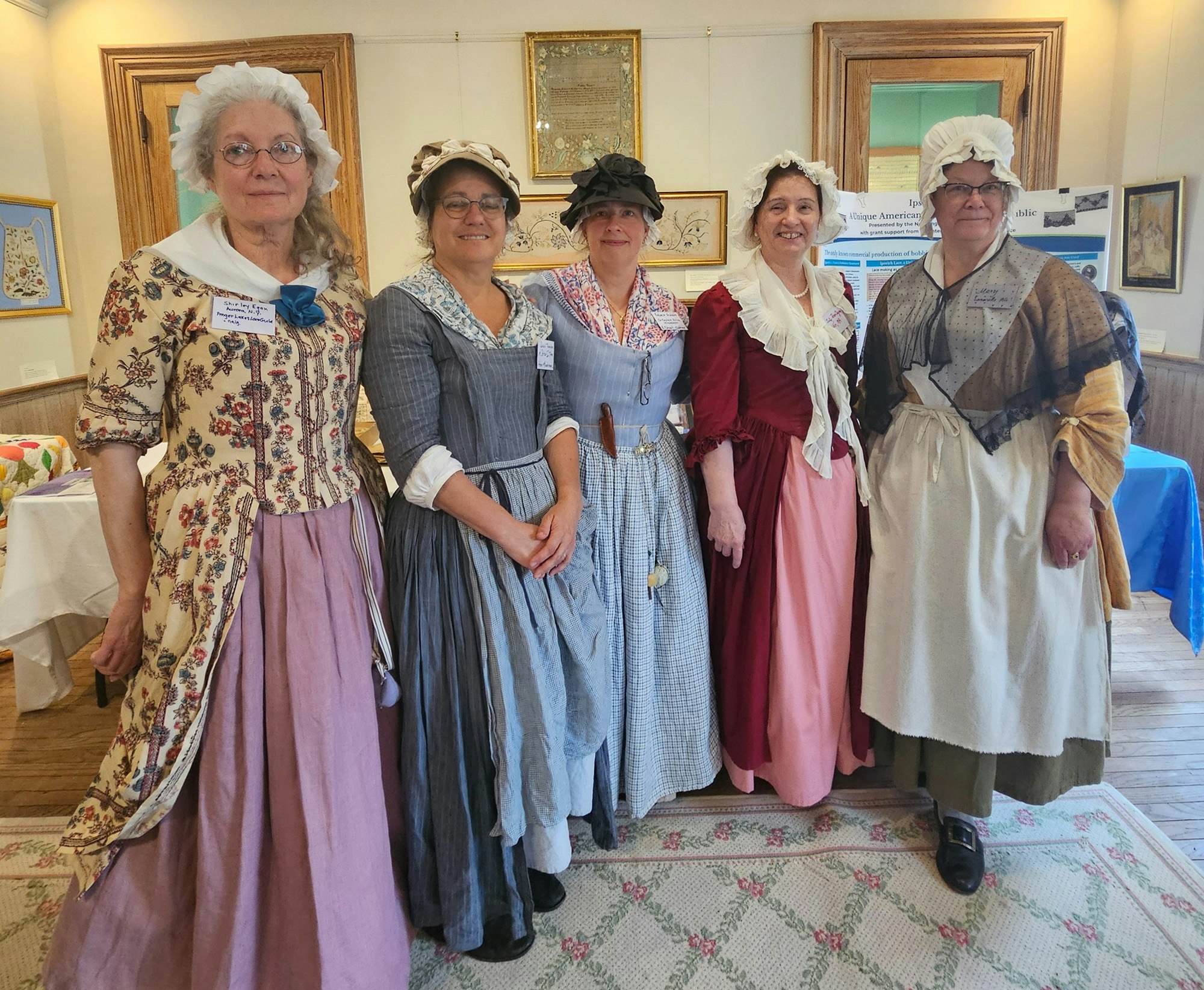
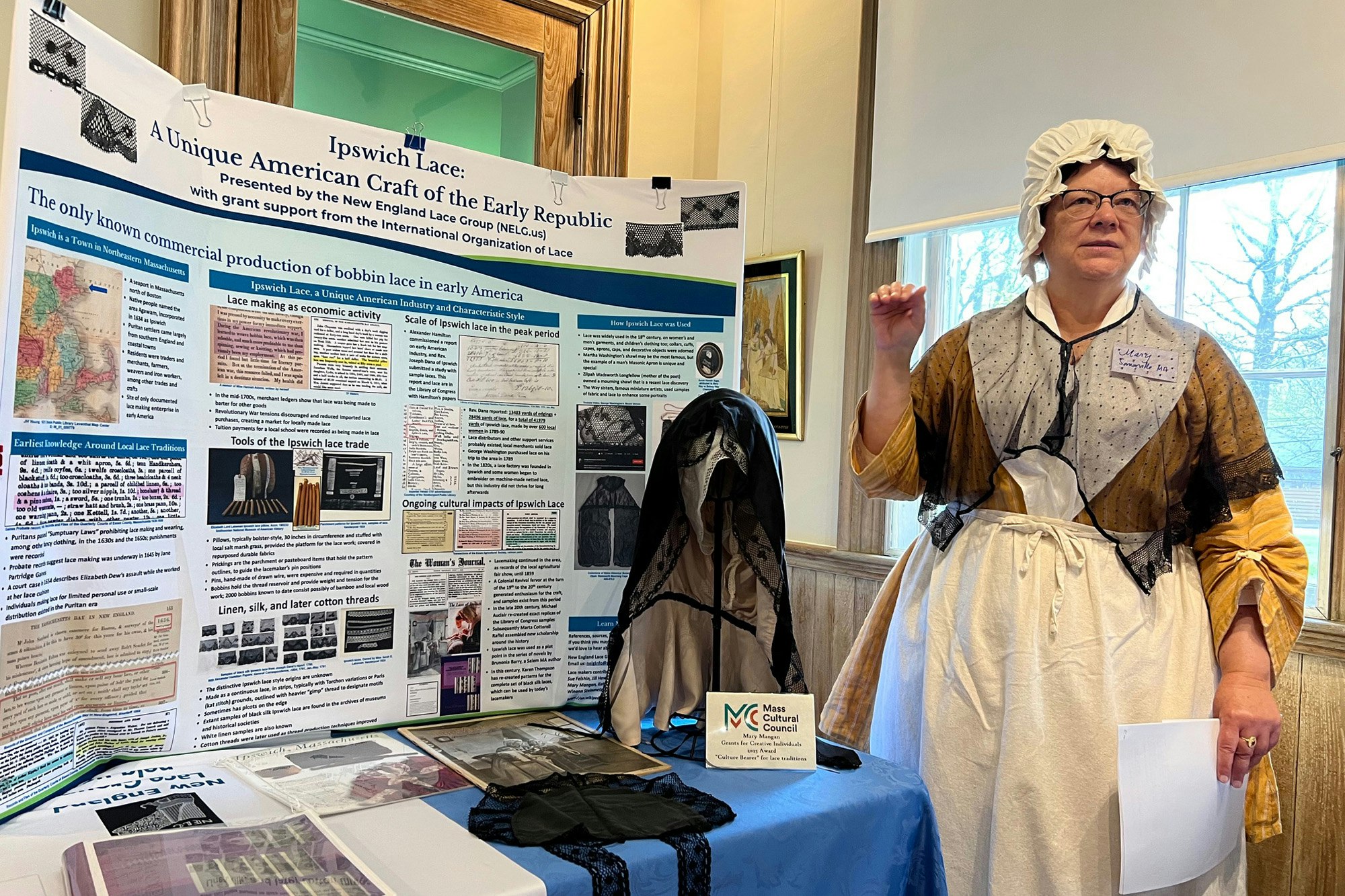
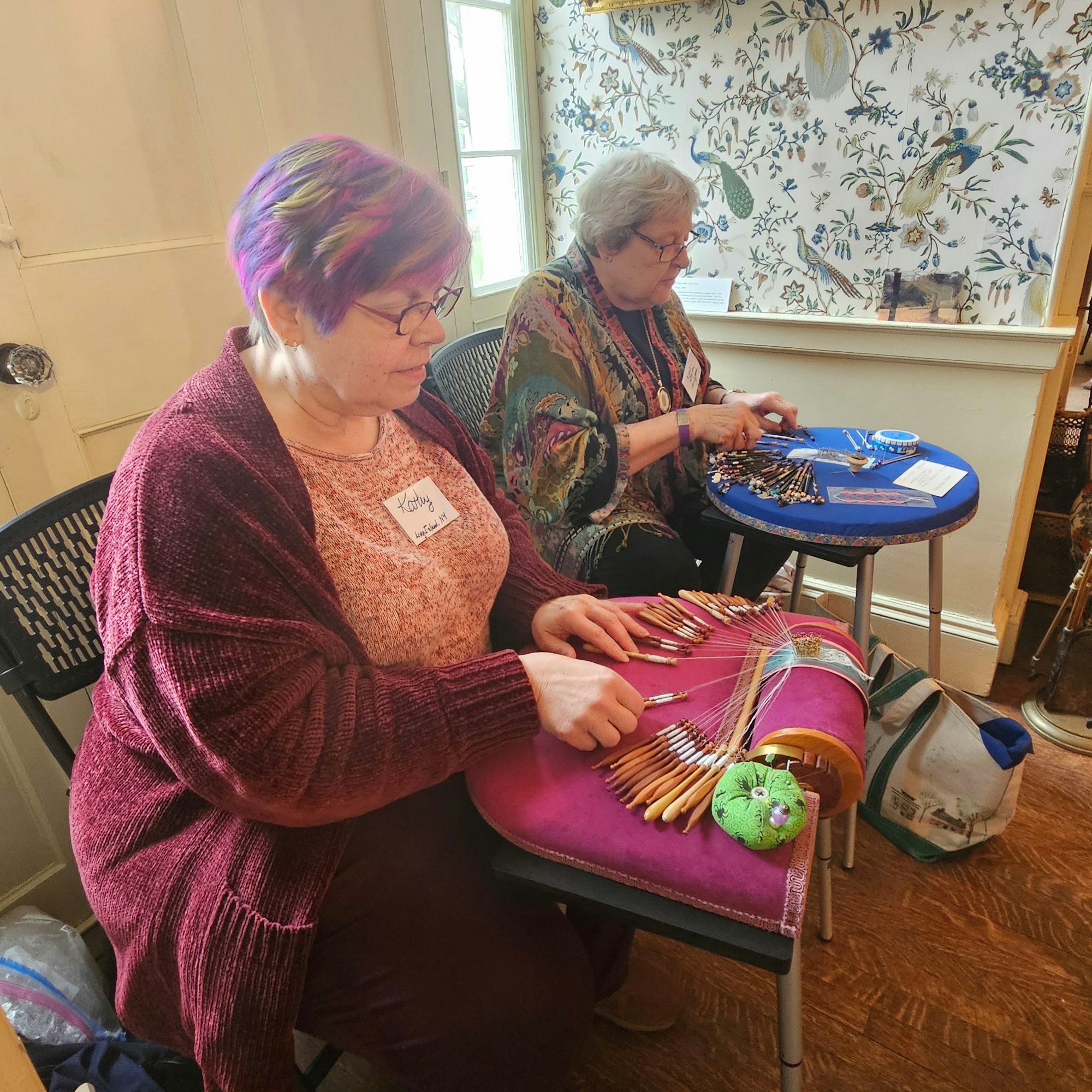
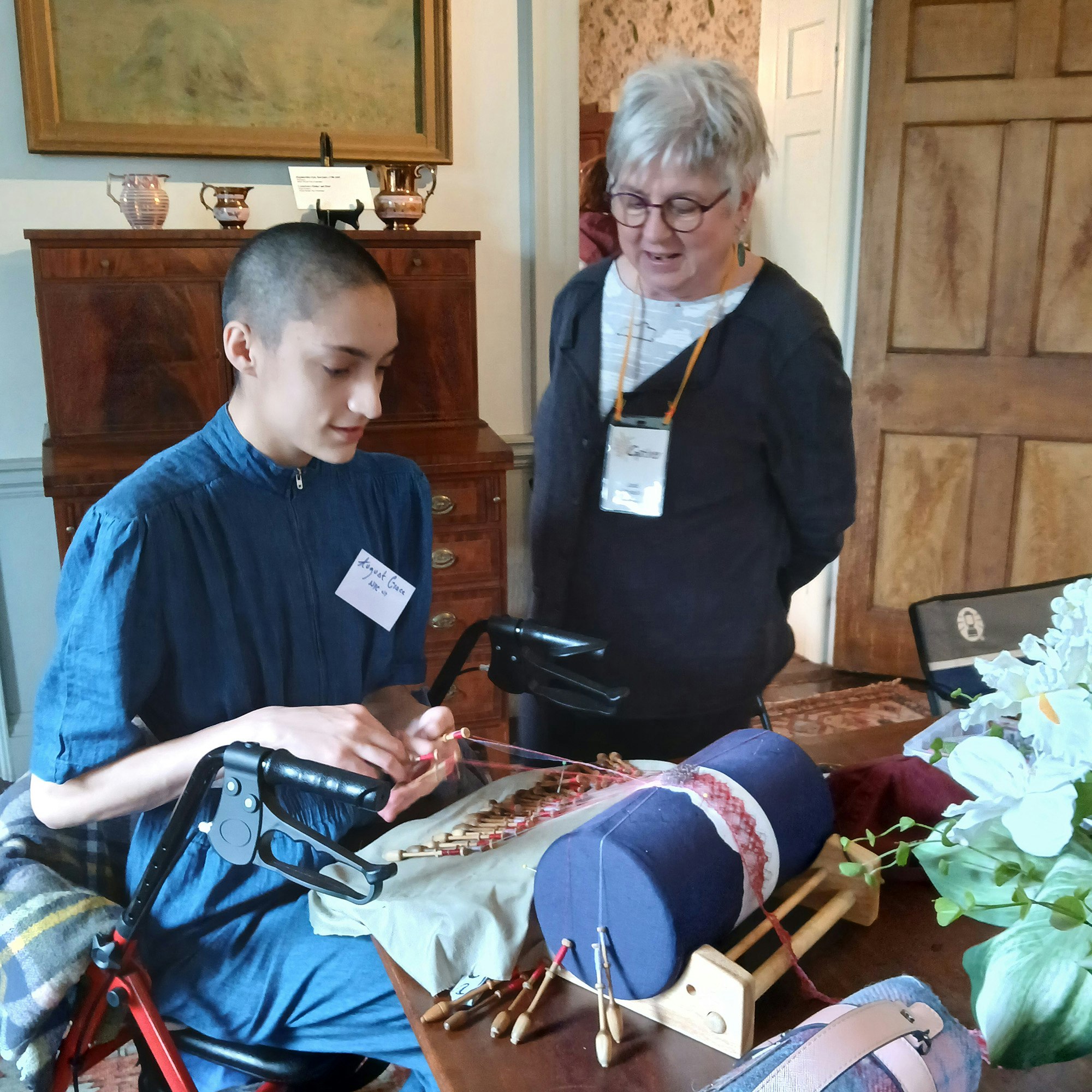
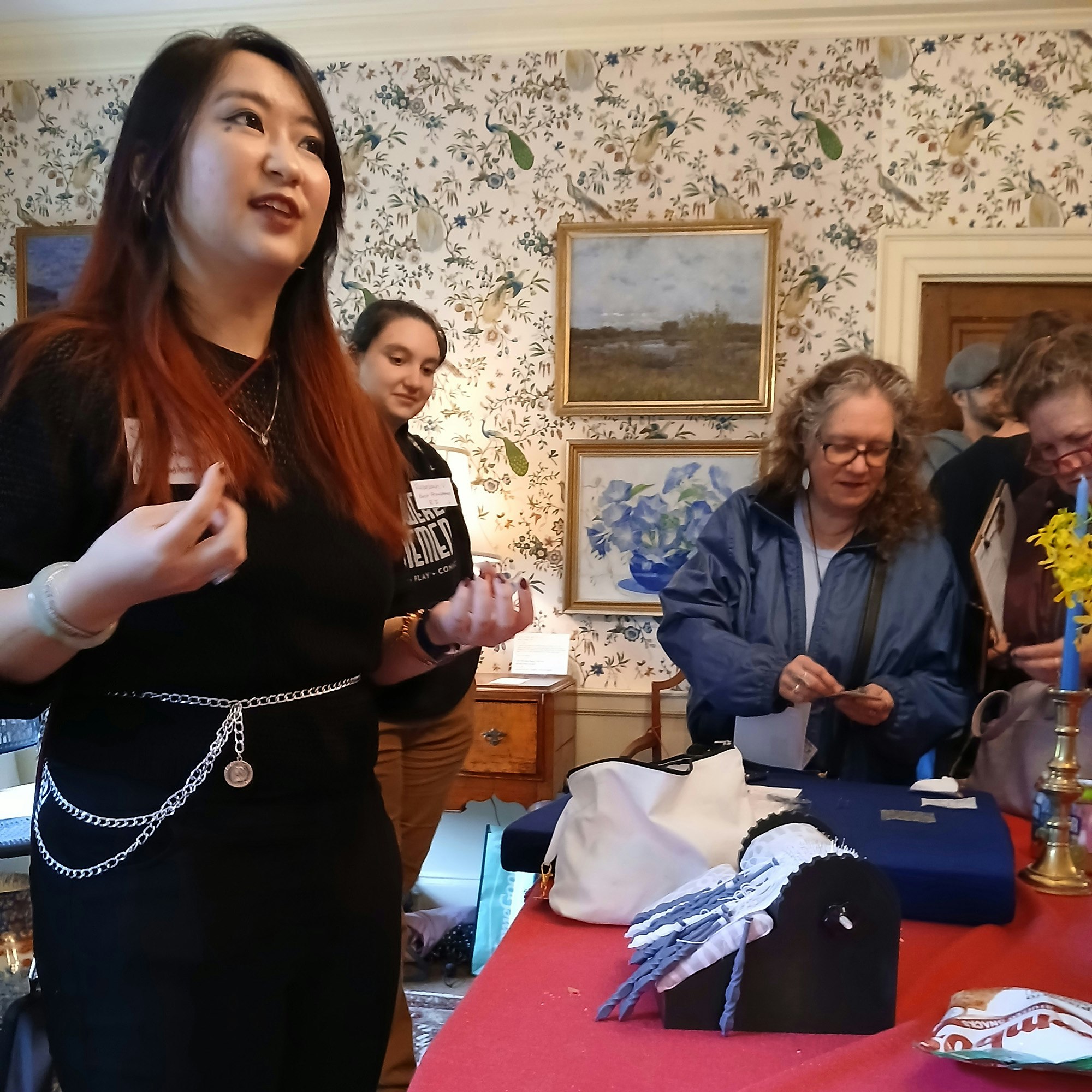
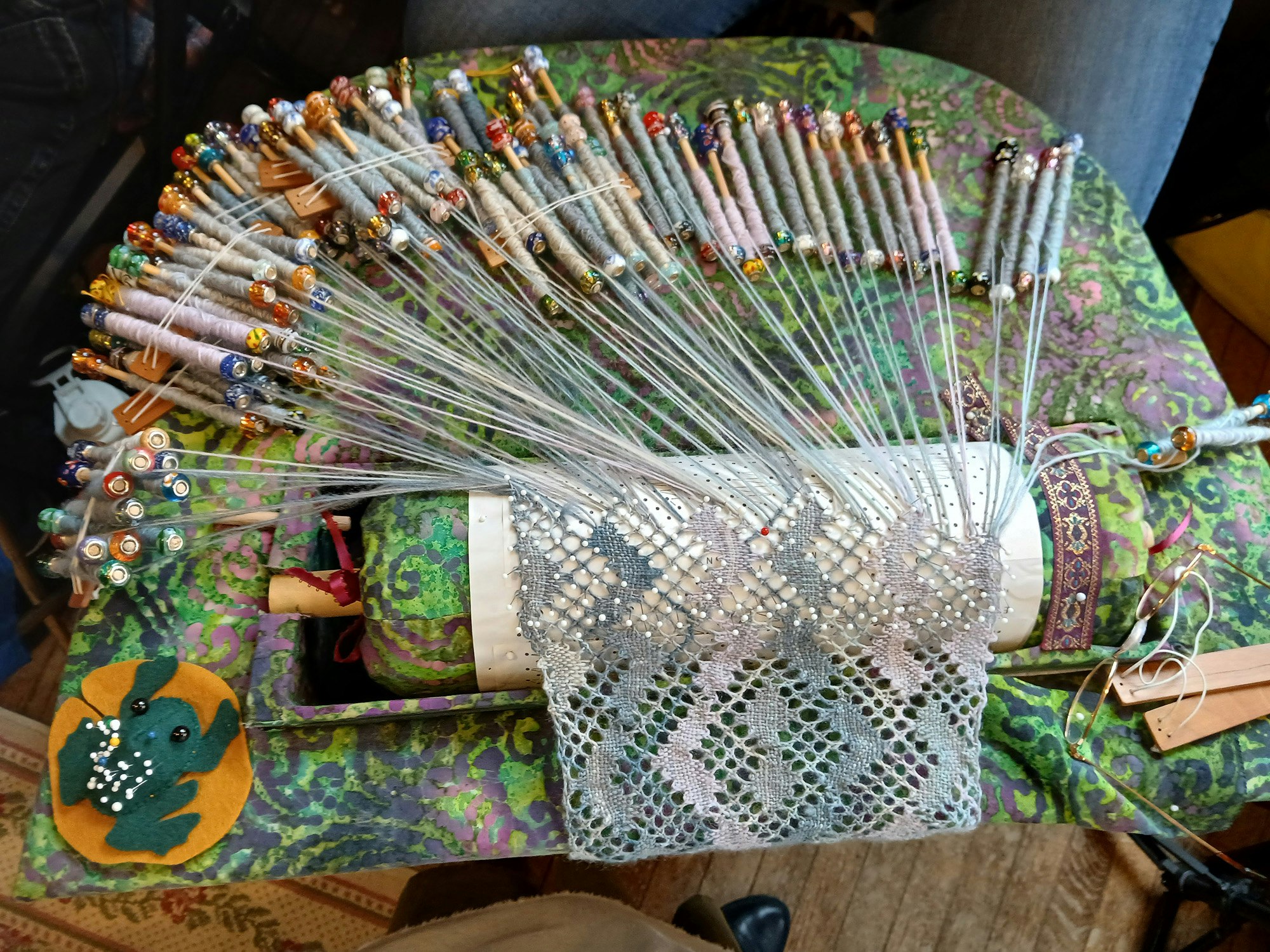
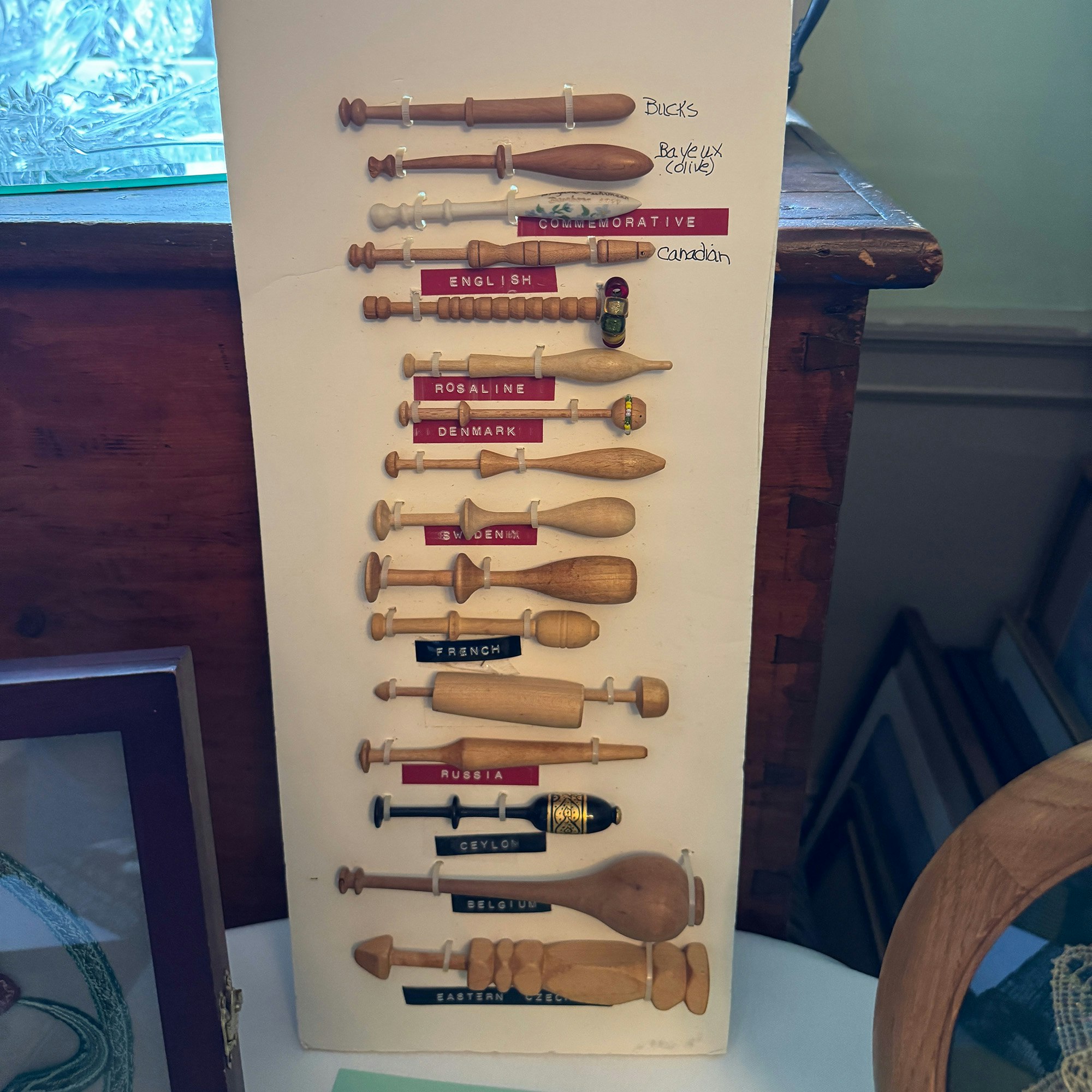
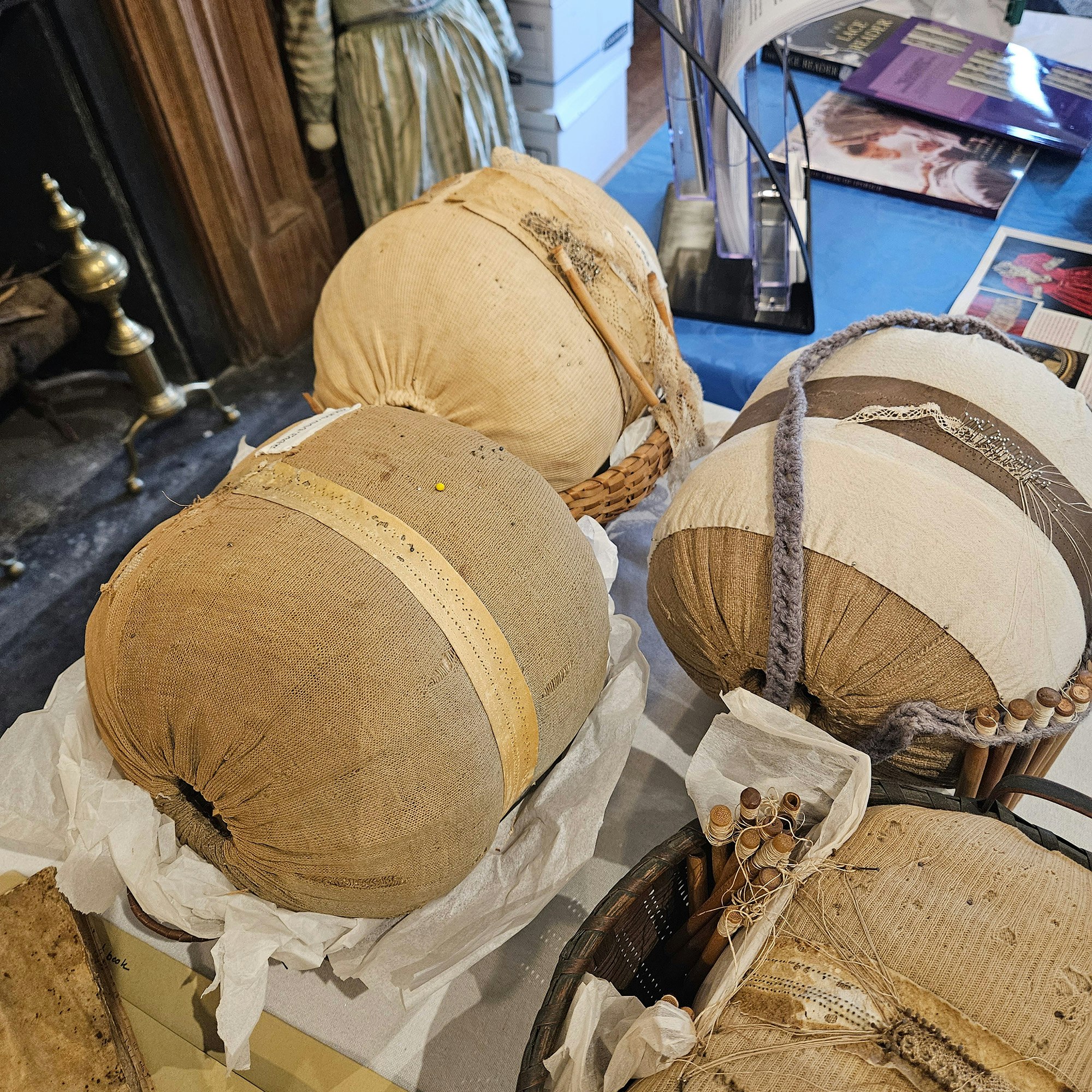
Hosted jointly by the Ipswich Museum and NELG, the event celebrated both historic and contemporary lacemakers. With a gathering of nearly three dozen lacemakers from the Northeast, we believe it was the largest group of active lacemakers in Ipswich in 200 years. The group included colonial reenactors who offered lace demonstrations that illustrated the fashion, economic importance, and artistry in period costumes of this highly skilled work. Contemporary lace artists and lacemakers also attended, along with many visitors who viewed lacemaking in progress and talked with makers about their tools, patterns, and processes.
The Ipswich Museum provided access to their collection of lacemaking tools and patterns of the past. Jill Hawkins of NELG coordinated the work to bridge the past and the present story of lace. Presentations by Stephanie Gaskins of the Ipswich Museum and Mary E. Mangan of NELG outlined our research on the lace industry, as well as noting where we have knowledge gaps about the work and the participants in the lace community of the eighteenth and nineteenth centuries. We will continue to investigate.
Get a closer look! Click any image in the gallery below to open it in full-screen mode and read the detailed caption.
Fashion Forward
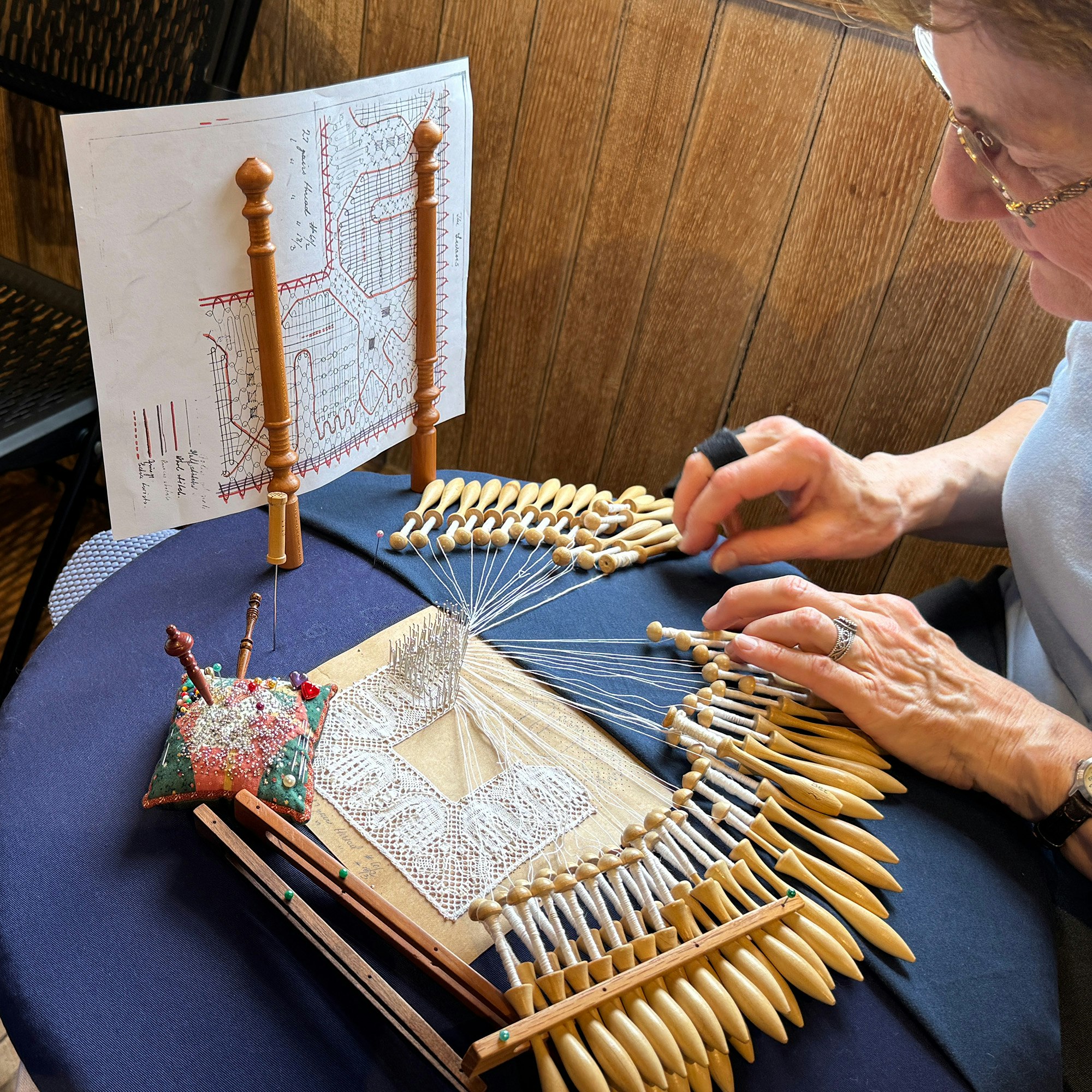
While many lacemakers worked on their traditional Ipswich lace on pillows, other participants demonstrated current designs and techniques, showing that today’s lace is a vibrant collection of fibers, colors, and styles. Lacemakers of the future brought 3D printed lacemaking gear and are studying the materials science aspects of lacemaking. Lace of the past can be celebrated for its intricacy, beauty, and historical economic importance—while we demonstrate that lace is alive and thriving in America today.
Resources
- 3D printed lace pillow.
- 3D printed lace bobbins.
- Shayna Ahteck’s “Generative AI for Textile Engineering: Blending Tradition and Functionality Through Lace.”
- The story of John Brewster whose portrait of Lucy Gallup Eldredge,1795, features Ipswich Lace.
- Mary E. Mangan’s “Unforgotten Revolutionary Lacemakers of Ipswich,” PieceWork, Spring 2026.
- Martha Washington’s shawl videos: Preserving Martha Washington's Shawl and RARE LOOK: Martha Washington's Shawl