
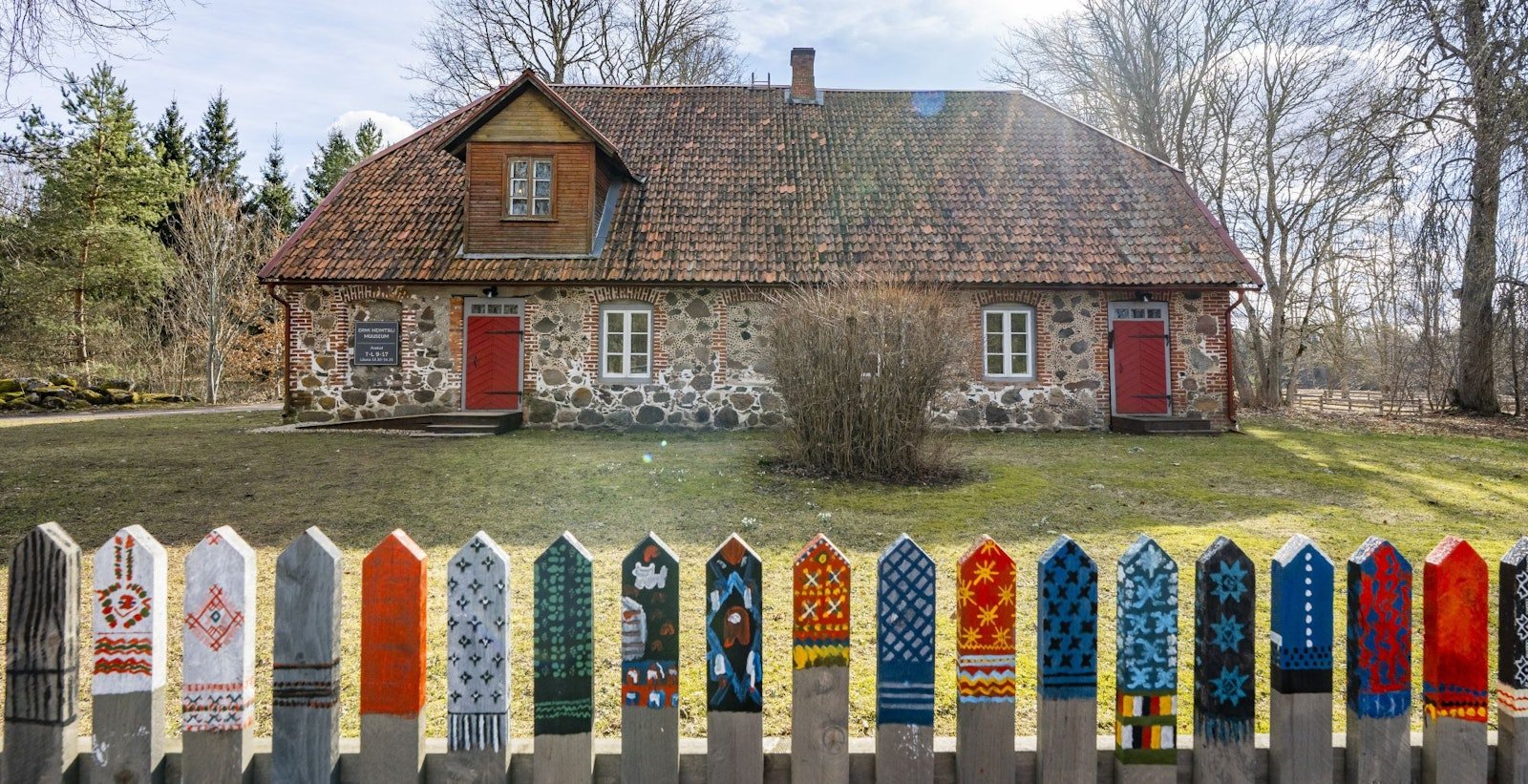
I was privileged to spend two days with Anu Raud in November 2024 at her farm in Mulgimaa, one of the southern counties of Estonia. Heimtali Museum is a short walk from Anu’s farm and feels more like an extension of her home rather than a separate place. In many ways, the museum is a culmination of her life’s work saving Estonia’s material culture from extinction.
Heimtali Museum was originally founded in an old school by local folklore researcher Johannes Kokk in the mid-1980s. He created it as a place to celebrate the rural folklife of the area, a suitably positive mission during Soviet times. In 1991, the year Estonia gained independence from the Soviet Union, Anu pulled out the boxes of ethnographic textiles she had collected from her travels throughout the country as an art teacher and set up a small museum in the barn at her farm. Because Heimtali Museum had fallen into disrepair, she first assumed the task of repairing it and later moved her collection from the barn to the museum and has maintained care of it since. She has created a welcoming space for visitors and researchers, but also for children who arrive in school groups. In 2009, Anu gifted the museum to the people of Estonia during the 100-year anniversary celebration of the founding of the Estonian National Museum in Tartu.
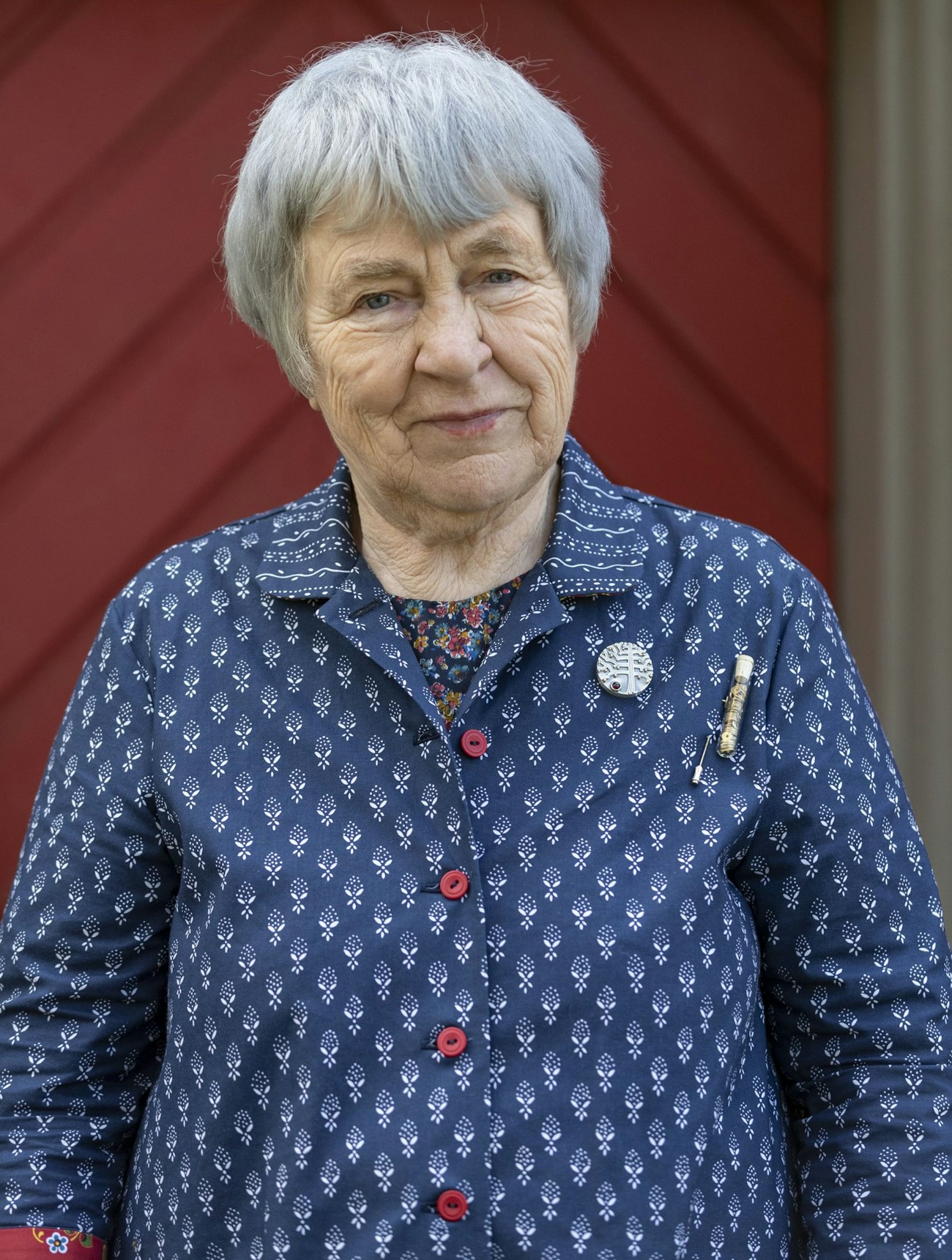
Anu Raud in front of the Heimtali Museum. Photo by Anu Ansu, courtesy of Heimtali Museum
Anu Raud was born May 10, 1943, and is a textile artist renowned for her tapestries filled with ethnographic symbols recalling Estonian mythology, the trauma of exile, and the dream of restoring pastoral life. Less known outside of Estonia is her unwavering concern for the education of Estonian children. Anu has written books, designed toys, and held an annual summer camp for children at Heimtali Museum and next door at her farm, Kääriku, in Heimtali village.
A Place for Children, A Home for Heritage
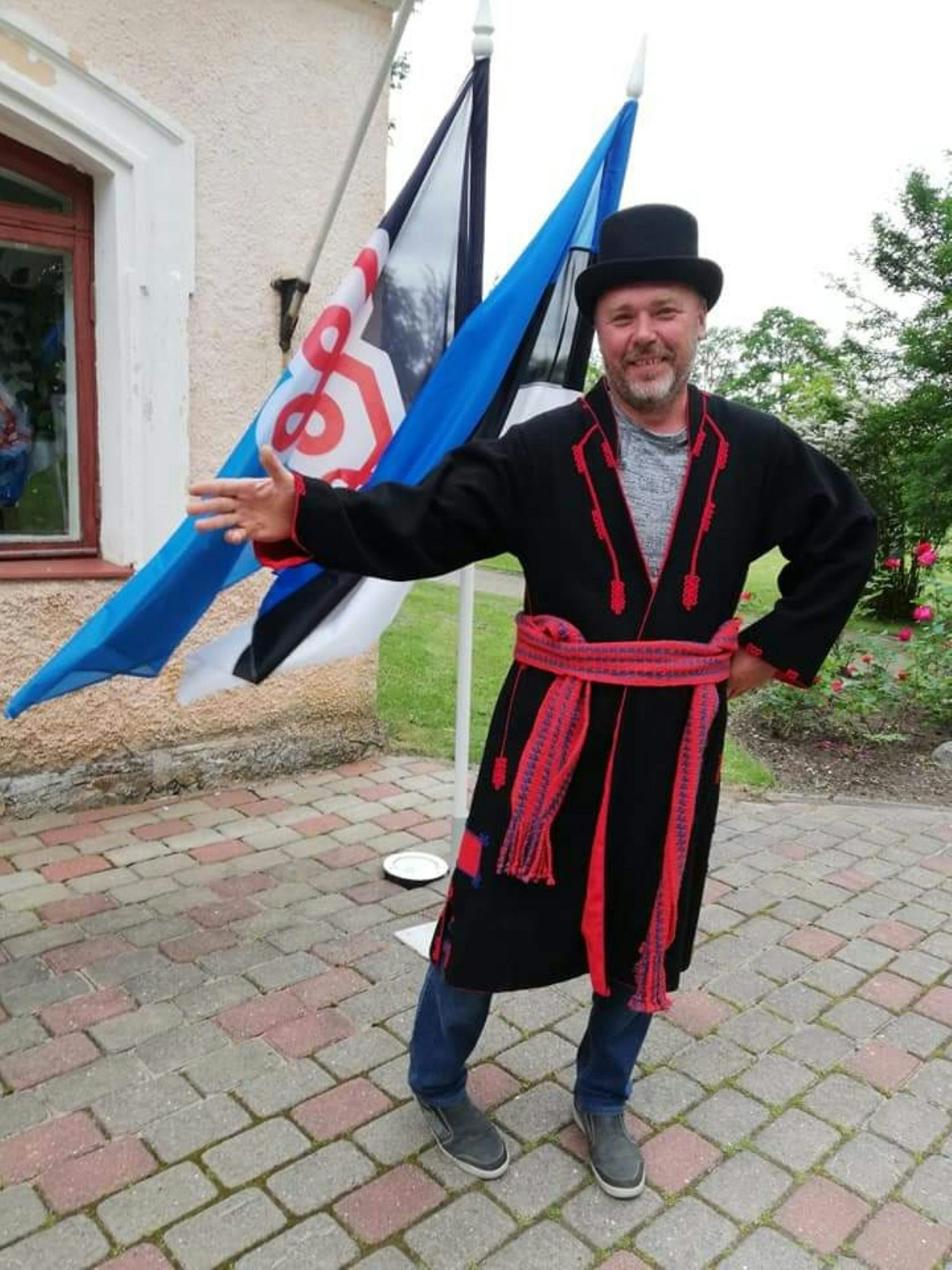
During my visit, Anu gave me a book commemorating the 25th anniversary of the summer camp. On the cover are images from a quilt made by children at the camp. They appear to be line drawings of simple scenes, predominantly red, but some blue, green, and white. They were created using an old decorative technique of stitching red cord to wool fabric in a series of loops. This embellishment is closely associated with the Mulks, the people of Mulgimaa, who traditionally wore long, black wool outer coats embellished with loops of bright red cord. So popular is this style and so bound up in the national consciousness with the Mulks that the flag of this area is also made of black wool with red cord.
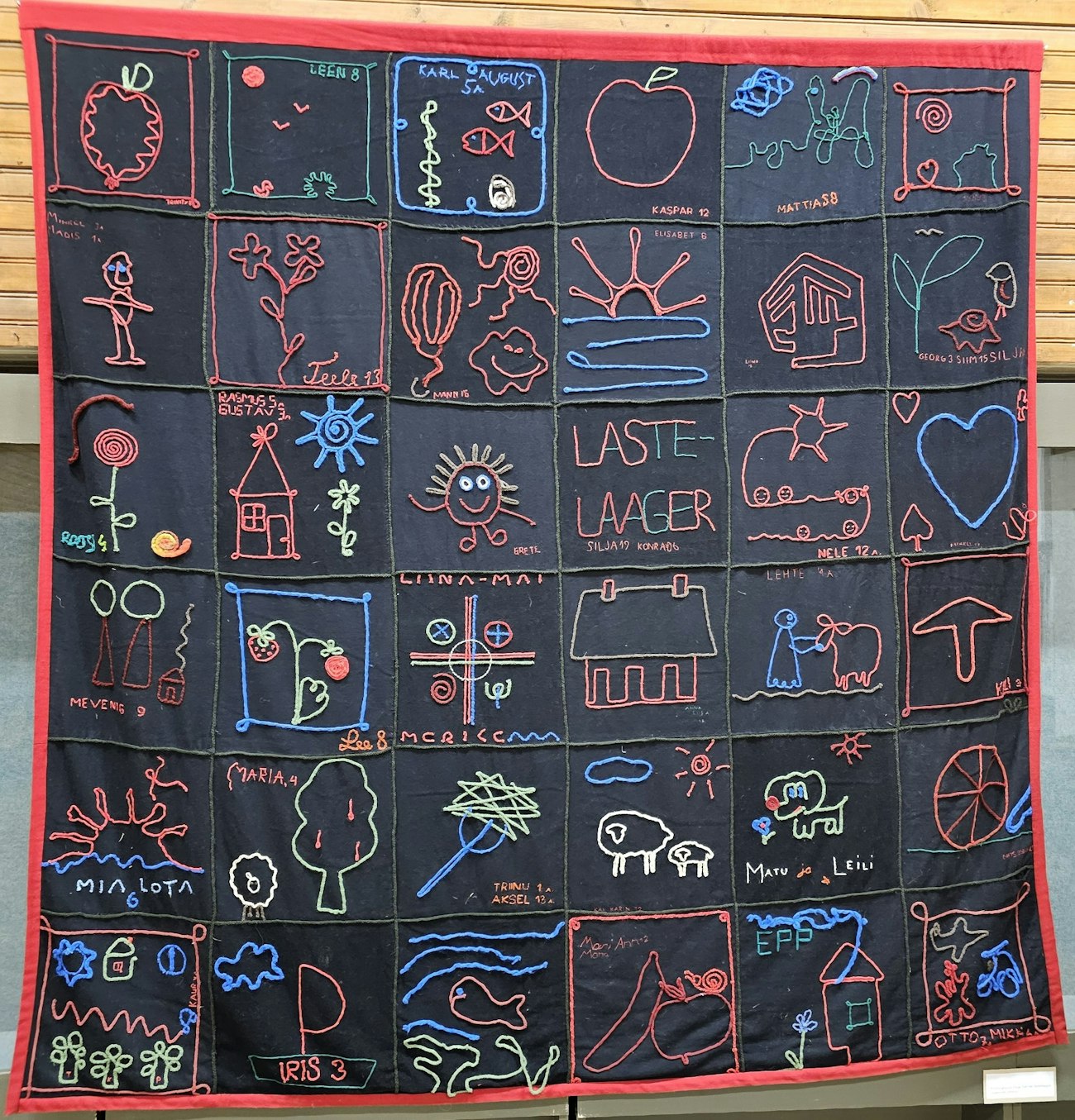
Photo of a quilt made by children at the Heimtali Museum’s summer camp featuring the traditional decorative technique of stitching cord to wool fabric. Photo courtesy of the author
The cord, typically made with a lucet fork or by knitting I-cord or crocheting a square chain, is tacked to the background fabric with small stitches, techniques easily mastered. The photo of the quilt shows several blocks embellished with finger-crocheted cord that the children made at the summer camp. The scenes they portrayed were delightful, while honoring the technique of their ancestors. What a clever way to incorporate traditions into the literal fabric of a child’s life.
If you find yourself at Heimtali, you will feel the intention to create a museum that celebrates the child. The fence, painted by children to have pickets resembling the mittens of Estonia, the re-created schoolroom inside, the piles of animals knitted in the local patterns, all evoke the imagination of an artist who remembers clearly the wonder of childhood.
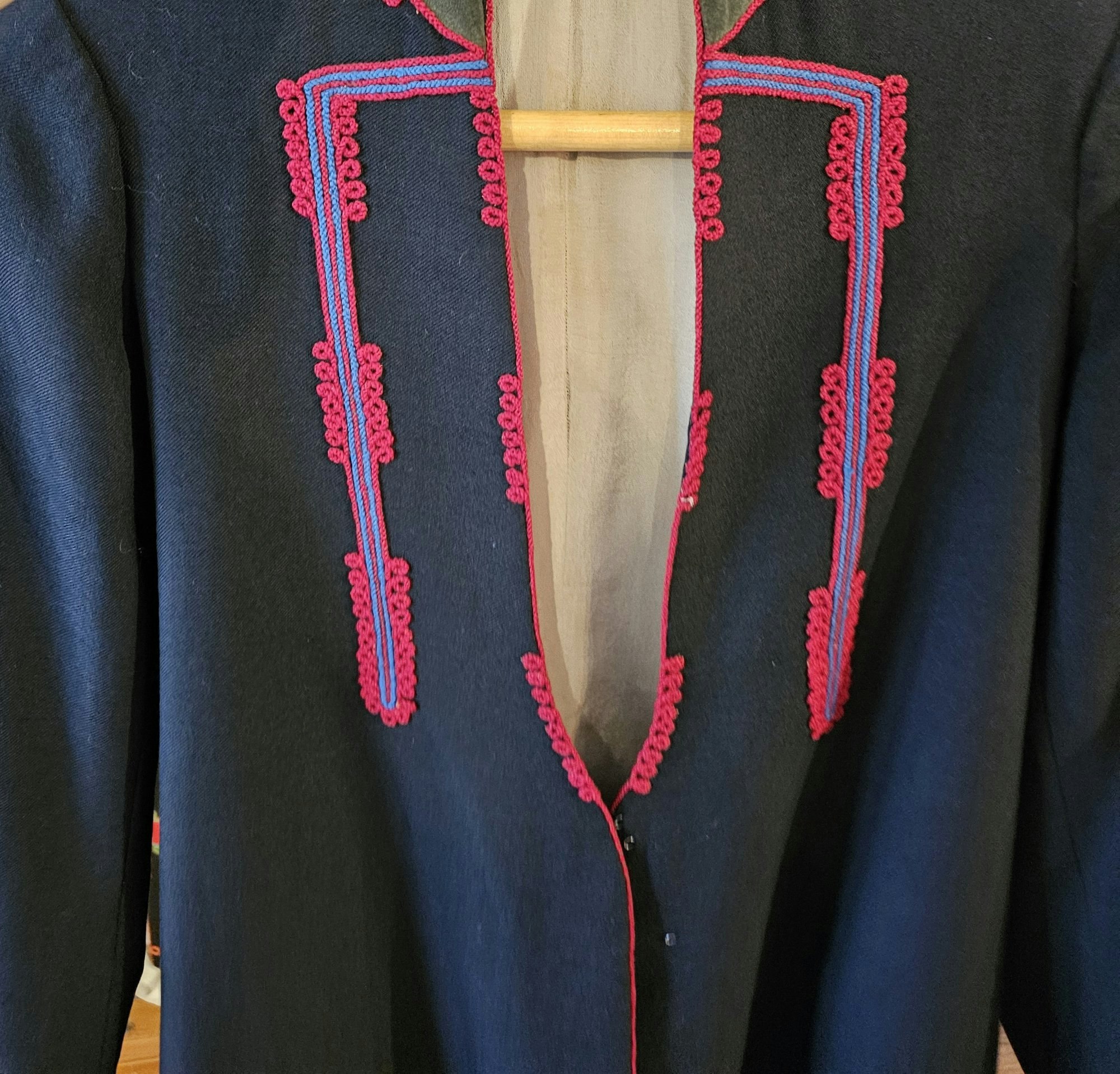
A Heimtali-Inspired Pattern
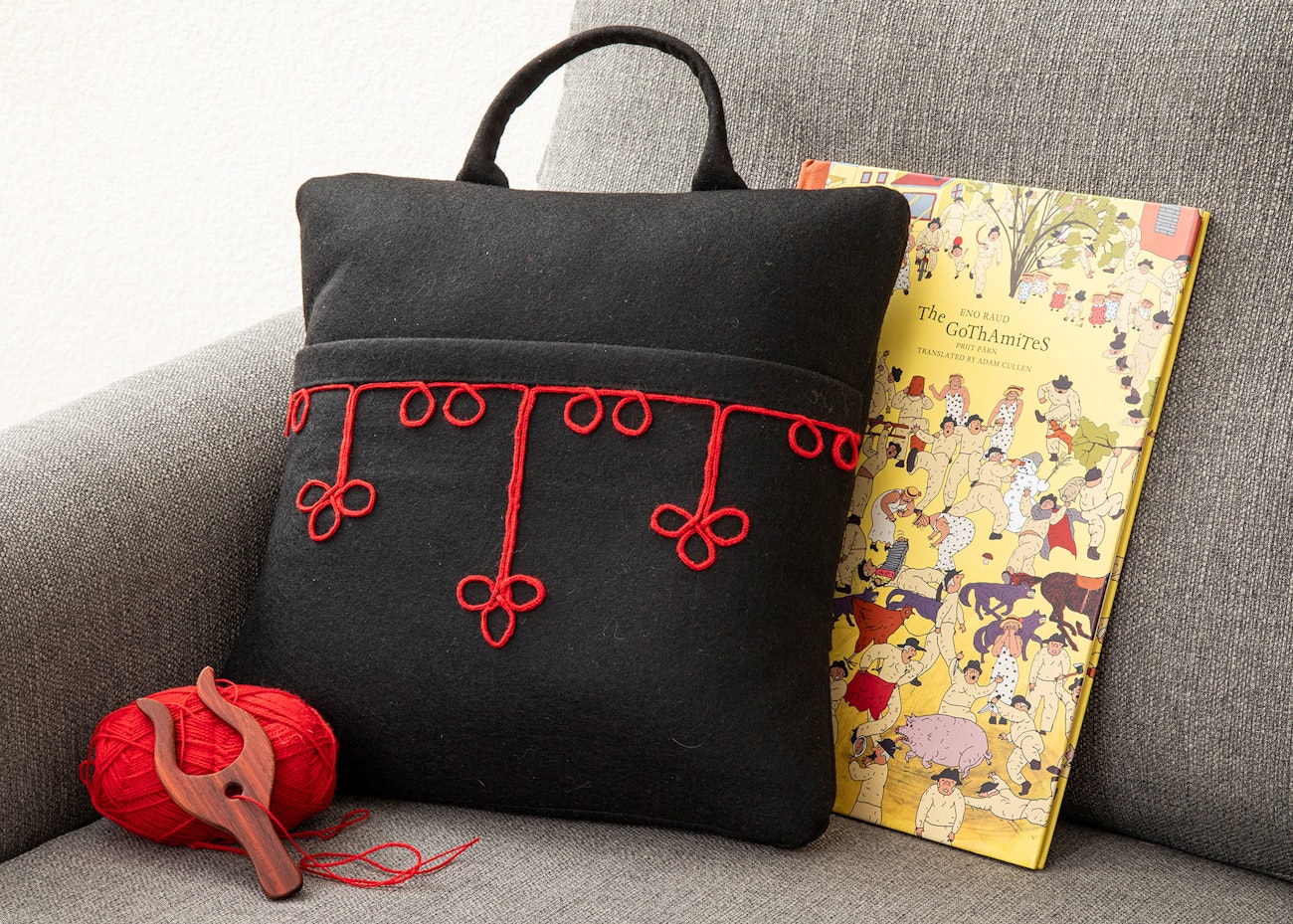
To honor Anu Raud’s lifelong devotion to the children of Estonia and her commitment to preserving the nation’s textile traditions, Michele designed A Child's Mulgi Reading Pillow. Crafted in traditional black and red, the pillow is embellished with wool cord made using a lucet fork and features a sturdy handle for easy carrying. This sweet, portable little pillow holds a book or two in its front pocket and turns any space into a cozy reading nook.
If you enjoyed this article about the Heimtali Museum, then you'll want to know more about our Fall 2026 Museum Tribute Issue.
Michele Phillips Barden has deepened her study of Estonian textiles through visits to many of the remarkable craftspeople who generously share their time and knowledge. She is studying Estonian through the Language Workshop at Indiana University, Bloomington. She wishes to thank the Association for the Advancement of Baltic Studies for the generous scholarship that has made this opportunity possible.