
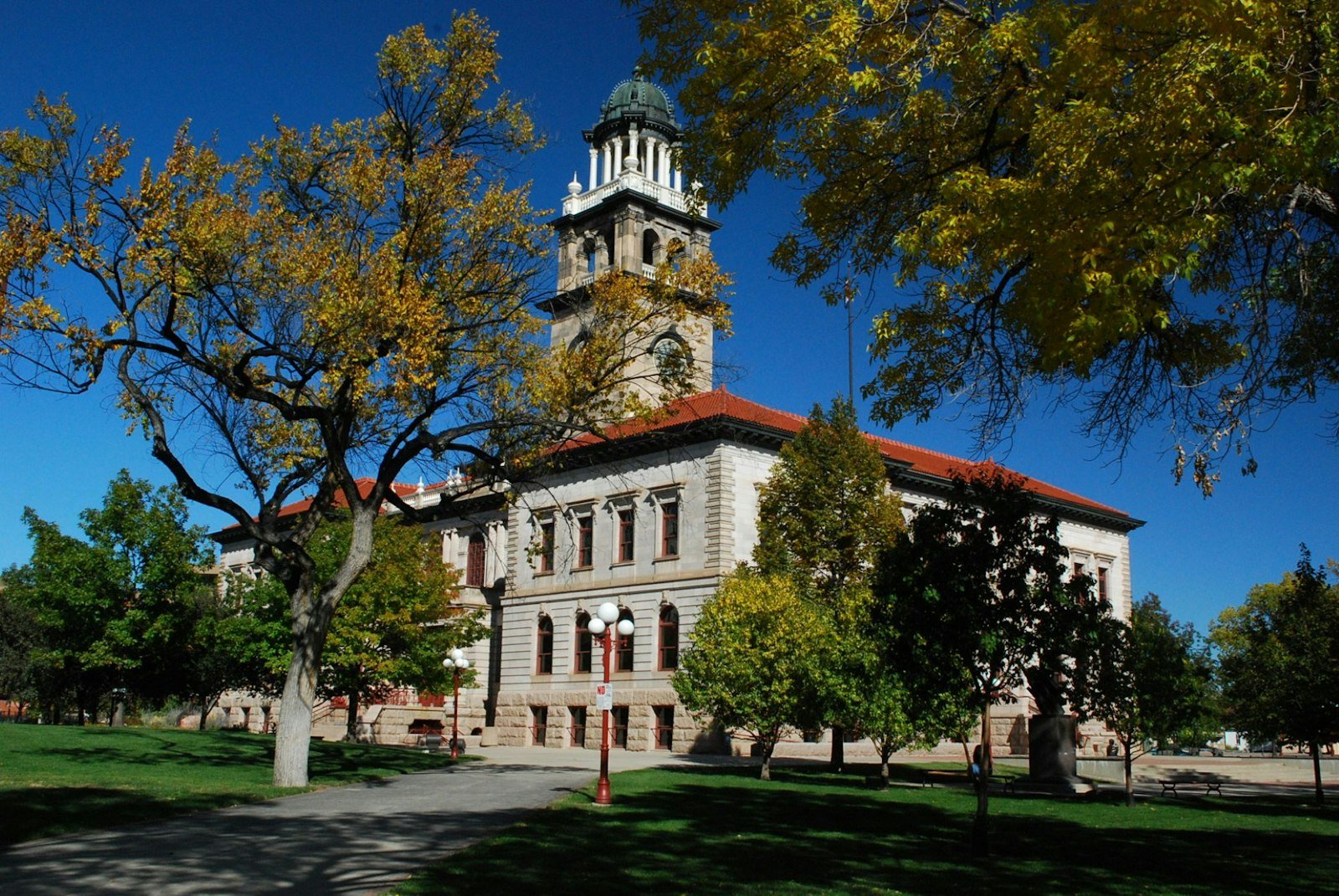
The mission of a hometown museum is to celebrate the stories of local people by keeping their memories alive and sharing the everyday objects that shaped life in the community. The Colorado Springs Pioneers Museum (CSPM) is one such museum. Its current motto is “Ignite Your Curiosity; Discover Your Story,” and it fosters that attitude with a variety of temporary and permanent exhibits.
The museum recently reopened after an extensive, $8.6 million renovation project. At the opening, visitors noted the presence of a golden graduation gown that acts as an anchor piece for a new exhibit. The gown belonged to pioneer Joyce B. Gilmer, a Colorado Springs woman whose journey to her hard-earned, long-delayed college degree became a story of creativity, resilience, ingenuity, and humor.
A Different Kind of Pioneer
It was 1983 (not all pioneers of the West made their mark in the nineteenth century), and after the 20-plus years of personal setbacks and triumphs, Joyce Gilmer, my mother, was finally preparing to walk the stage to receive her bachelor’s degree from the University of Colorado at Colorado Springs (UCCS). Everything was fine until she learned the company supplying graduation gowns had sent her the wrong size.
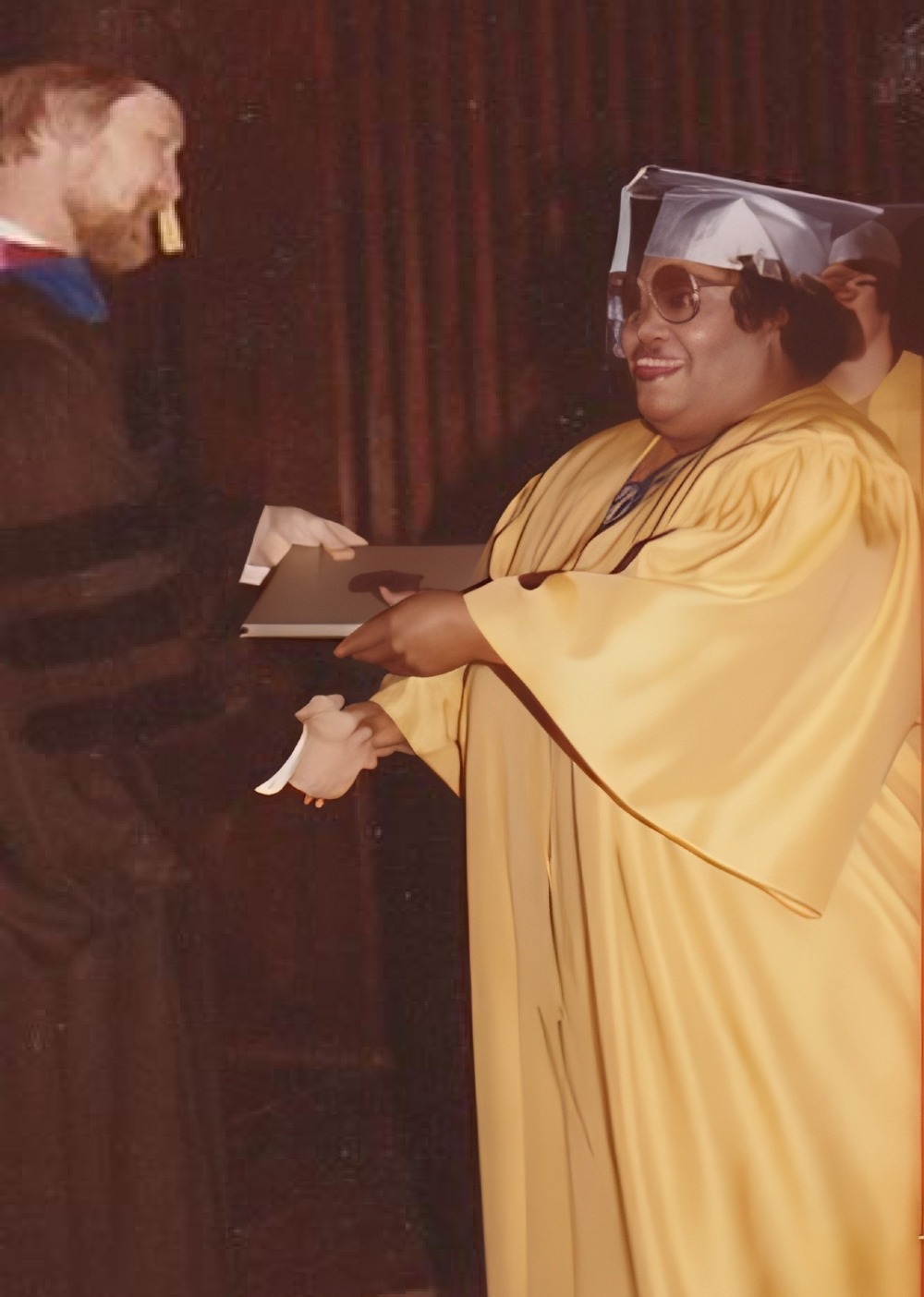 She faced two alternatives: attend the ceremony without a gown, or not at all. Neither of these choices was acceptable to her.
“My sister came here for the graduation, and my son who was in medical school had flown back,” my mother recalled. “I came home, got in my bed, and said I wasn’t going to graduation, laid back and looked up. My draperies in my bedroom were the exact gold, antique satin [of the graduation gowns]. I jumped up and pulled the draperies down!”
My mother described this as her own “Scarlett O’Hara moment,” a moment, not born of vanity as is typically attributed to the character in Margaret Mitchell’s Gone with the Wind, but of inspiration and ingenuity. She took her draperies to a seamstress that night, who turned them into the custom graduation gown my mother wore when she received her diploma the next day.
Freedom to Thrive
My mother died just 11 years later (December 4, 1994) and did not see how her story has been stitched into the fabric of the CSPM exhibition history. The gown was originally displayed as part of the Voices and Visions: Pikes Peak Women of the Twentieth Century 1996–1997 exhibit, an oral history project initiated by CSPM and the Gazette Telegraph of Colorado Springs that documented the history of the Pikes Peak region as seen through the eyes of its women. The stories were published in the Gazette Telegraph and celebrated the hundredth anniversary of women’s right to vote in Colorado (in 1893, Colorado became the second state to grant women’s suffrage and the first to do so through a voter referendum).
The gown was displayed again from 2012 to 2026 in the Any Place North and West gallery that focused on the experiences of African Americans who migrated to Colorado Springs as part of the Great Migration when some five million African Americans moved out of the rural southern United States. The robe is now exhibited once again as a part of the Freedom to Thrive: The American Experiment in Colorado Springs exhibit, part of the museum’s grand reopening. The reopening of the museum and the new exhibit is CSPM’s contribution to the 250/150 commemoration of the 250th birthday of America and the 150th birthday of Colorado’s statehood.
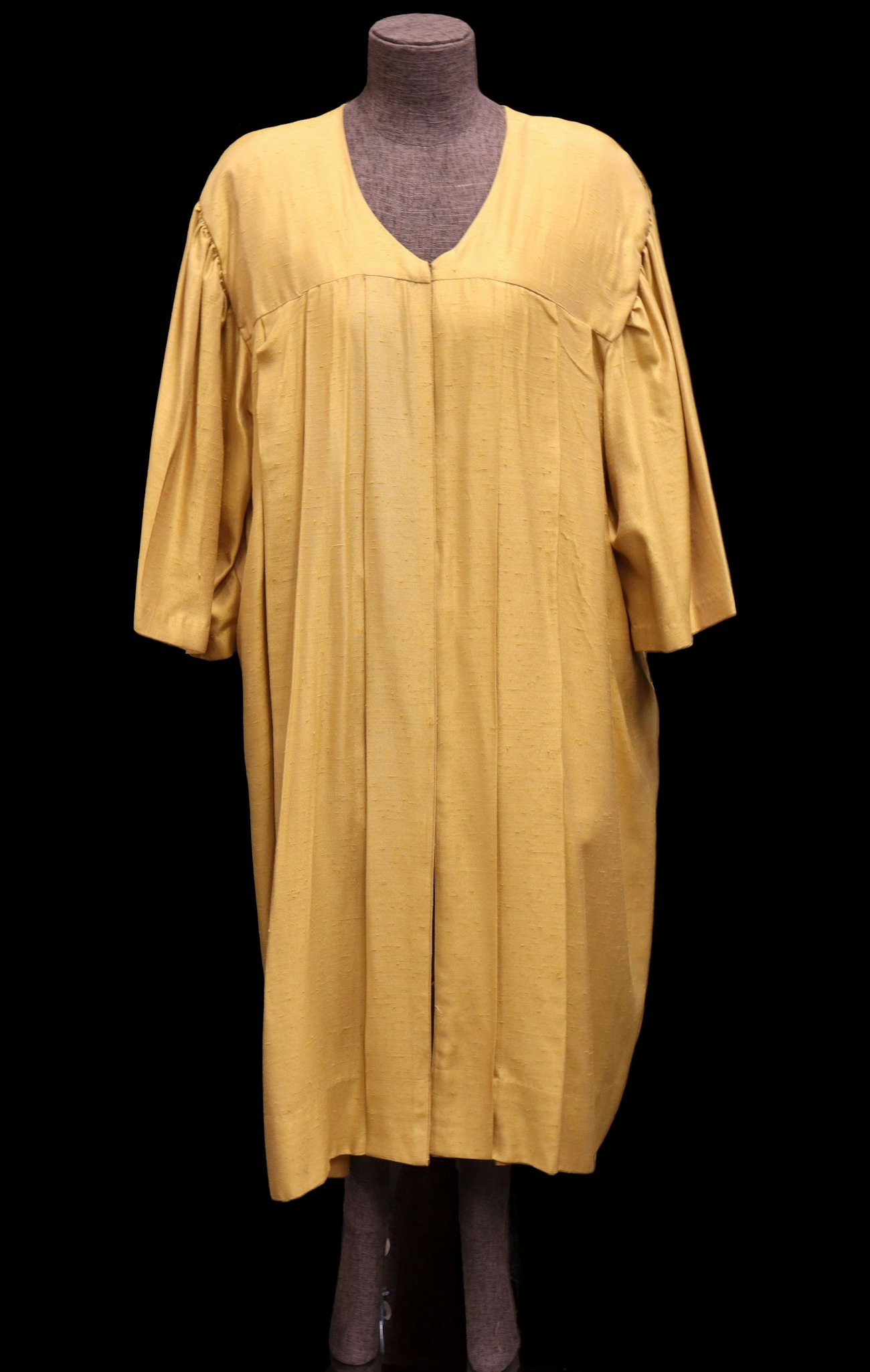
The golden gown made from Joyce Gilmer's bedroom curtains, now displayed at Colorado Springs Pioneers Museum. Photo courtesy of the Colorado Springs Pioneers Museum
Docents of the museum share Joyce Gilmer’s story as an example of creativity, perseverance, strength through adversity, and cultural continuity. “The gown embodies the exquisite ability of an object to connect visitors to a story,” says Leah Davis Witherow, curator of history at the museum. “Whether they are a woman, a mother, a single parent, an entrepreneur, a college graduate, or someone aspiring to go to college, they all connect to this story.” “Gilmer’s story is deeply inspiring,” Witherow goes on to say:
She turned obstacles into challenges; her life was an amazing testimony of having a long-term goal, and despite having survived Jim Crow, having to reinvent herself after a divorce by becoming the first African American woman real estate broker in the city of Colorado Springs, having raised three children by herself during the recession of the 1970s, despite all of these things and over 20 years of intervening life, she completed her goal!
A Love of Learning
A story that delights teachers when they bring students to the museum is my mother’s love of the public library. Learning about the gown prompts a story that helps children understand the privilege of reading and learning, and the luxury of being able to do so in a library. As a young girl, my mother was allowed to check out books from the library, but only white children could sit in the library and read. As docents recount my mother’s story of how she stood outside, watching those children comfortably lounging in tall wing-backed chairs and perfect reading light, flipping the pages of the book they had just checked out, students begin to internalize the privilege and importance of access to a public library. That feeling of exclusion never left my mother and would fuel her determination to give her own children access to all the experiences and opportunities from which she was restricted.
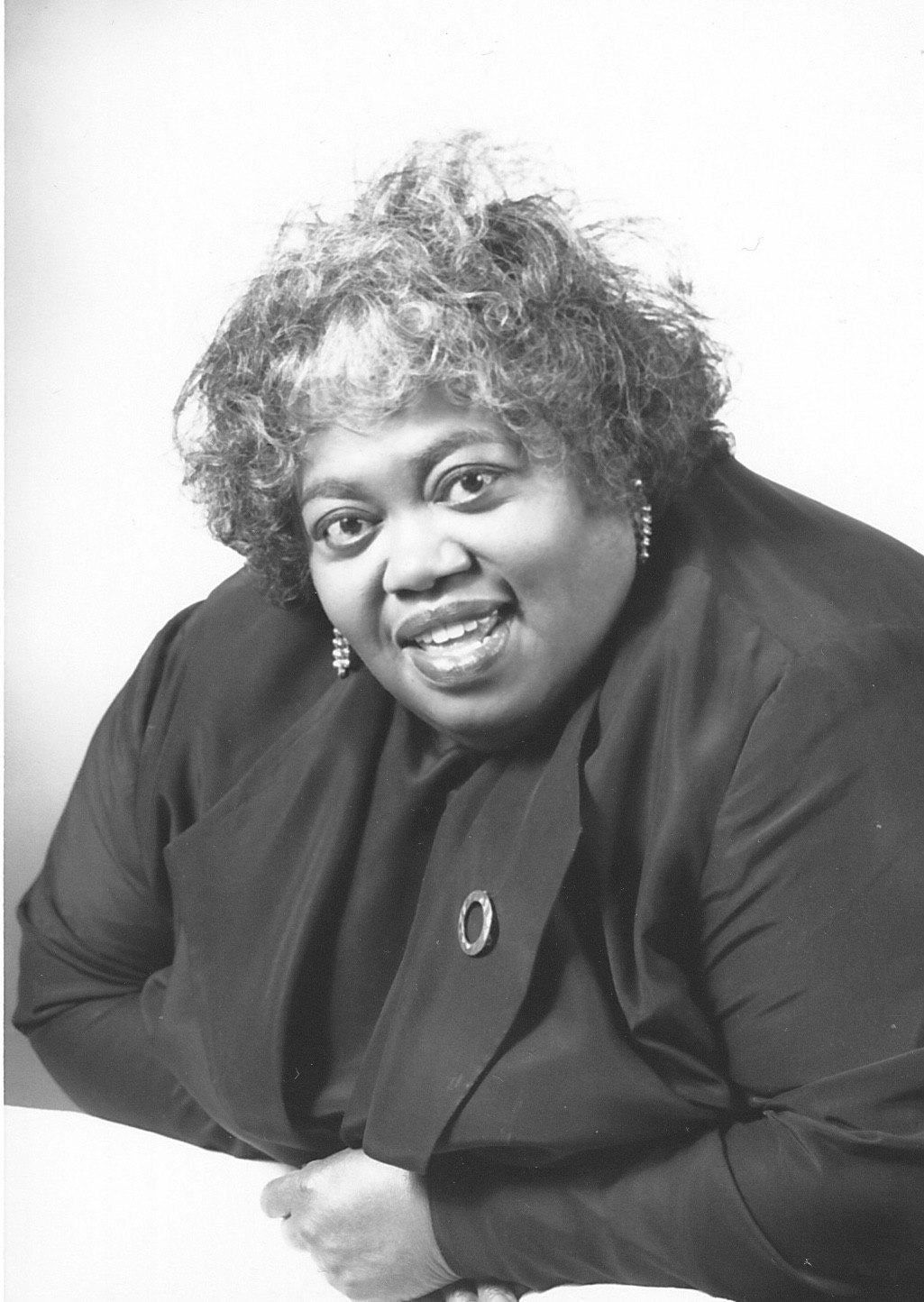
Joyce Gilmer, an extraordinary woman, whose life continues to inspire. Photo courtesy of the author
Objects, like my mother’s graduation gown, help museums tell the story of a place, its people, and its history. They serve as tangible reminders that history isn’t made only by great events but also by the ingenuity of extraordinary people who live seemingly ordinary lives.
I encourage you to visit local museums as often as you can. Donate your time (and money!), visit their archives, take your out-of-town visitors; you may be surprised at what you discover. Pay special attention to the textiles—a baby’s bonnet, a family quilt, a military uniform, a graduation gown—they are more than threads. They have stories to tell. They encapsulate pivotal moments, powerful life lessons, inspiring tales, and often humility and humor. They carry stories of who we are, who we hope to be, and who we can become.
Visit the Colorado Springs Pioneers Museum and enjoy its newest exhibition Freedom to Thrive that celebrates the semiquincentennial of America and the sesquicentennial of Colorado’s statehood, highlighting opportunities and obstacles to freedom in the community.
Meet more keepers of stitch and story from museums around the world in PieceWork's Fall 2026 issue