
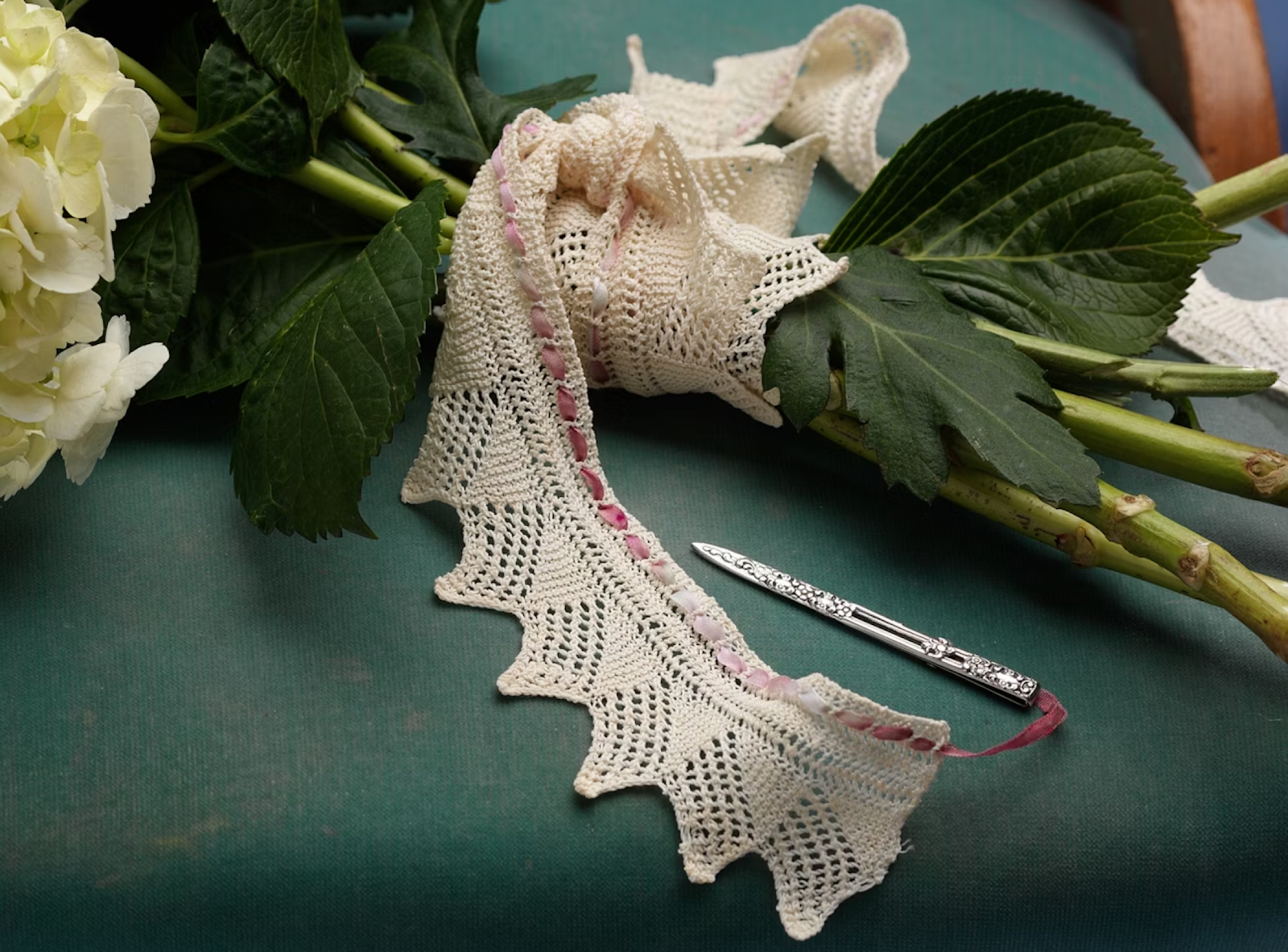
For PieceWork’s Spring 2027 issue, we’re gathering stories, research, and projects that explore the world of ceremonial needlework, with a special focus on weddings and celebratory traditions. Across cultures and centuries, handmade textiles have marked life’s most meaningful transitions. From knitted bridal veils and embroidered dowry linens to festive garments and ritual cloths, these textiles carry stories of devotion, identity, craftsmanship, and community.
Ideas and Inspiration
We welcome a wide range of perspectives, including historical research and personal reflections, and aim for a diverse cultural representation. We imagine pages filled with photos of Hungarian men’s elaborately embroidered wedding shirts, Tibetan wedding robes, or ceremonial ensembles from Nigeria. Perhaps a quinceañera gown or an Indonesian ship cloth and their stories of celebration. And the account of your great-grandmother’s lace wedding shawl arriving in time for your own ceremony, or the Victorian knitting pattern you used to knit your granddaughter’s christening gown.
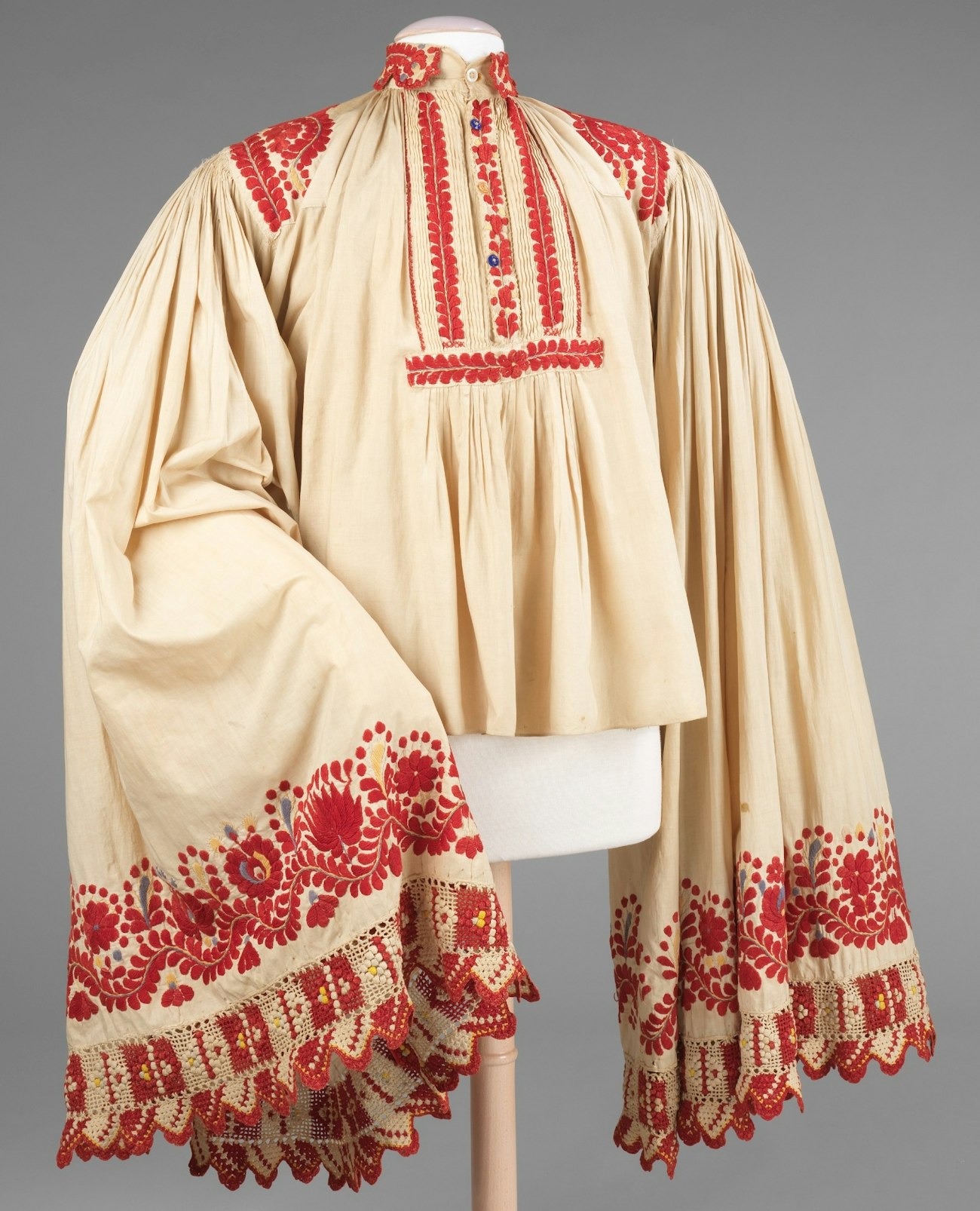
Late nineteenth-century men's Hungarian wedding Shirt. Brooklyn Museum Costume Collection at The Metropolitan Museum of Art, Gift of the Brooklyn Museum, 2009. Museum Expedition 1920, Robert B. Woodward Memorial Fund, 1924. Photo courtesy of the Metropolitan Museum of Art
Feature Articles
We welcome deeply researched pieces, cultural studies, and personal narratives. Possible topics (but surprise us!):
- Cultural or social significance of dowries and bridal textiles in different regions of the world.
- Material culture studies of heirloom pieces, trousseaux, or ceremonial cloth.
- Personal or family histories centered on inherited wedding or ceremonial textiles.
- Items women have been expected to create for their prospective groom.
- Needlework related to coming-of-age ceremonies or traditions.
- Ritual cloths used in ceremonies (henna cloths, mantillas, hanboks, saris).
- An exploration of specific ceremonial dress or festival costumes.
 Palepai maju (ceremonial banner) eighteenth to nineteenth century Indonesia, Sumatra, Lampung fiber, ceramic and glass beads, cloth, nassa shells. Gift of Anita E. Spertus and Robert J. Holmgren, in honor of Douglas Newton, 1990 Photo courtesy of the Metropolitan Museum of Art
Historical and historically inspired projects
- Knitted veils, gloves, purses, stockings, or christening garments
- Embroidered gloves, suspenders, pillows, or handkerchiefs
- Tatted or bobbin lace edgings, trims, and jewelry
- Embellished coming-of-age memory box
- Beaded jewelry or beadwork on ceremonial garments
 Mehndi-inspired wedding mitts knitted by Katrina King. Photo by Matt Graves
How-to articles
- Explorations of specific techniques (lacework, whitework, goldwork, bead embroidery, oya) or special stitches, motifs, and symbols traditionally used for ceremonial textiles.
- Advice for preserving heirloom textiles.
- Conservation and the afterlives of wedding garments and ritual cloths.
We are also always looking for content for our website. If you have an idea for a short piece, about 300 to 500 words, please submit your proposal to us.
Submission Process and Forms
Online Submissions Form for PieceWork Spring 2027
PieceWork Contributor’s Guidelines
PieceWork Photo Guidelines
Questions? Contact us at [email protected] .
Do you want to be added to the PieceWork Call for Submissions email list? Sign up here
 A late nineteenth-century mosen, a type of rug used in Japanese tea ceremonies, made from felted wool patterned with tied resist dyeing. Museum purchase from General Acquisitions Endowment Fund. Photo courtesy of the Cooper Hewitt, Smithsonian Design Museum
Key Dates
Submissions due: April 20, 2027
We will notify you of our decision: The week of May 4, 2027
If selected, finished articles and projects will be due: July 27, 2027
Happy planning!
Karen