
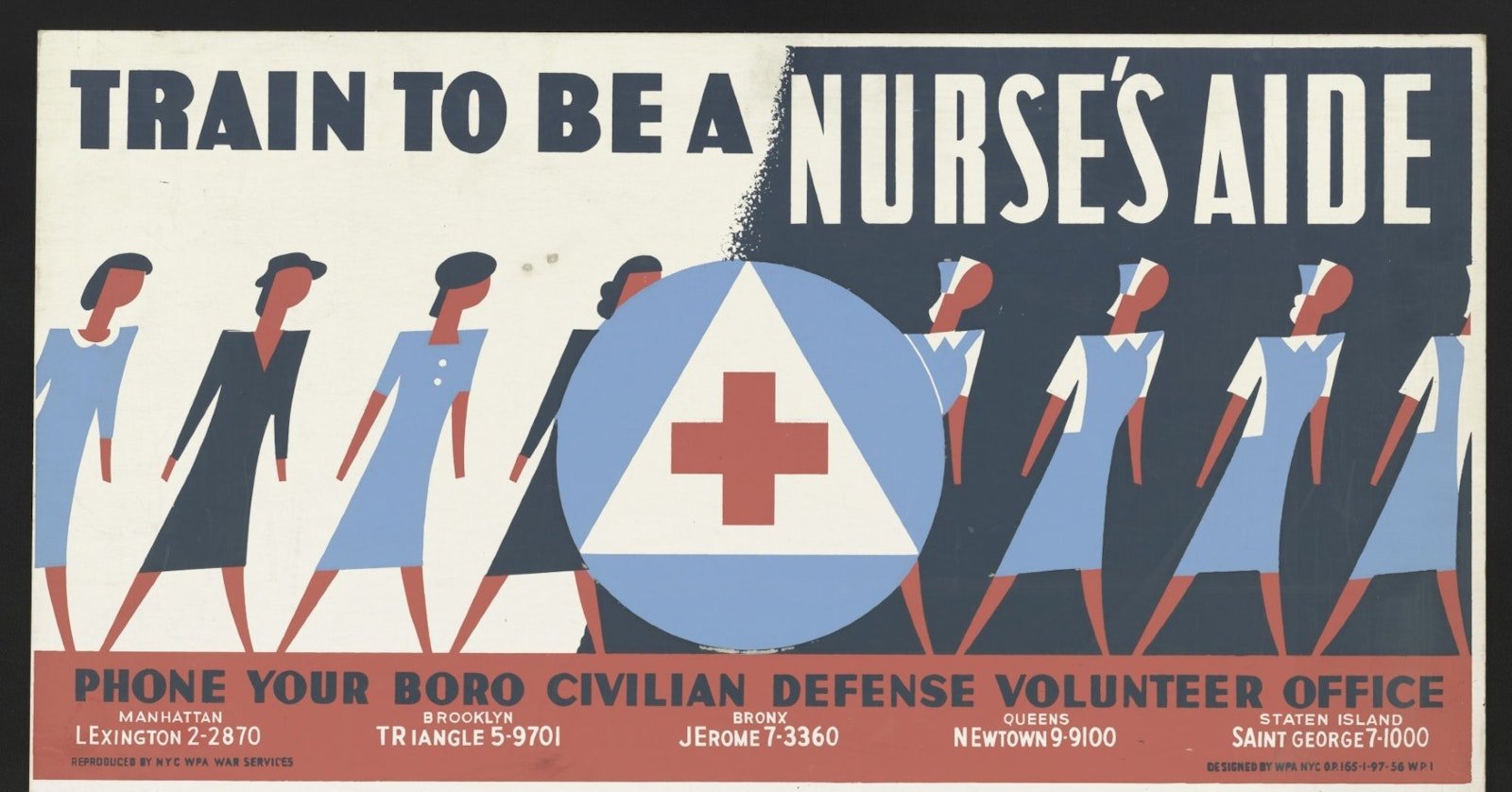
Close your eyes. Picture a nurse or a doctor. What are they wearing?
Your answer may depend on where you live, the TV and movies you’ve watched, and what the people who cared for you and your loved ones looked like as you grew up.
Ask me this question and two images spring to mind. First, George Clooney in his 1990s ER glory days, dashing through a trauma bay in a white coat over crisp scrubs. Then, a very different scene: a twenty-something nurse from BBC’s Call the Midwife, pedaling through London’s East End in a sensible blue dress, medical bag strapped to her bicycle.
The uniforms doctors and nurses wear carry hidden meaning. They signal professional identity, shape expectations, and communicate who holds expertise and how care will be delivered. Research has shown that medical garb conveys a powerful, nonverbal message—one that is inseparable from the work clinicians perform (see note 1).
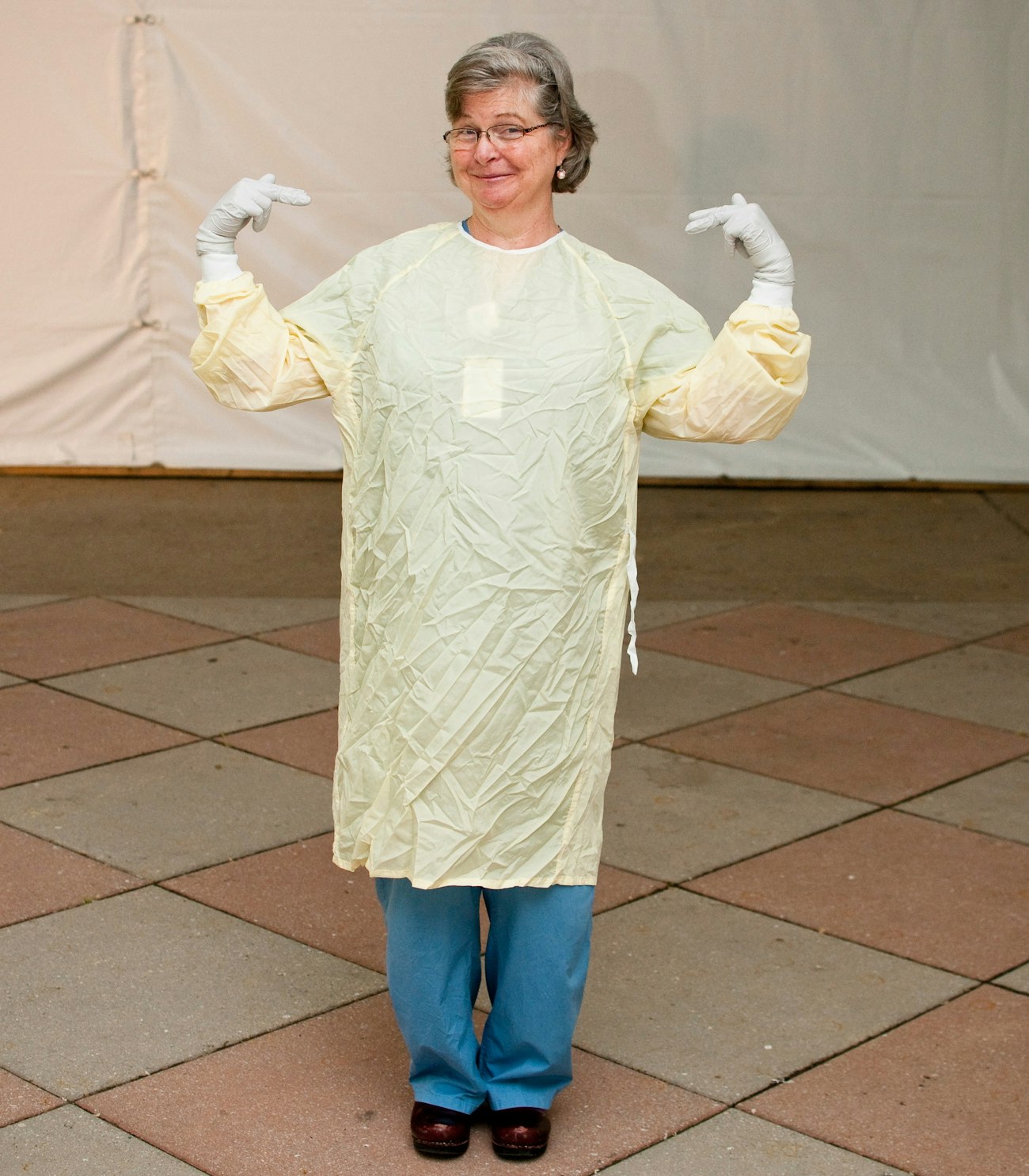
A doctor models a full surgical gown and gloves, 2012, Massachusetts General Hospital. All photos courtesy of Massachusetts General Hospital, Russell Museum unless otherwise noted
Across much of the world, patients have come to expect doctors and nurses to wear blue and white. Over time, these colors have become shorthand for cleanliness, calm, and authority in medicine. We may not notice them on a conscious level, but they influence how safe we feel, how seriously we take health advice, and how much trust we place in the medical professional standing in front of us.
But why blue and white? And how did those colors become so deeply tied to our beliefs about trust and professionalism in medicine?
A Note on Perspective: As I wrote this piece, I was aware of the viewpoint it reflects. Much of this story draws from Western contexts, particularly English-language sources rooted in Euro-American medical traditions. That perspective shapes what is documented, what is studied, and what is visible in the historical record. But it is not the only lens. Across cultures and regions, medical uniforms carry their own meanings shaped by local history, climate, culture, and colonial legacies. This essay offers one view, not a complete picture. I hope it sparks curiosity and invites further exploration.
The Origin of Nurse and Doctor Uniforms
Where did our cultural ideas of medical dress come from? Surprisingly, many of the garments we now associate so closely with healthcare were not originally designed for medicine at all.
In Western Europe, early nurse’s clothing was often religious in origin. Many nurses adapted the dark, modest habits worn by nuns, garments that sprang from a religious calling rather than professional demands (see note 2). These clothes served a dual purpose. They were practical for everyday work, but they also conveyed moral authority, humility, and trustworthiness at a time when nursing was understood as a calling as much as an occupation.
Physicians, by contrast, did not have uniforms in any formal sense. Instead, they dressed according to their social standing, personal means and preferences, and practical needs. In Victorian Britain, this often meant dark frock coats, formal cravats, and other sartorial markers of the learned professional man. Dress signaled intellect and respectability, but not necessarily cleanliness or scientific rigor.
 Doctors perform an operation under ether sedation,circa 1883, Massachusetts General
Hospital collection.
Doctors perform an operation under ether sedation,circa 1883, Massachusetts General
Hospital collection.
This began to change in the late nineteenth century with the rise of antisepsis and germ theory. As medical practice evolved, so did the clothing. White coats, surgical gowns, and other standardized garments became more common, serving both practical and symbolic functions. White fabric made dirt and stains visible, reinforcing new standards of hygiene, while signaling trustworthiness and alignment with the ideals of scientific progress (see note 3).
 Florence Nightingale, portrait of the founder of modern nursing who served as an inspiration for American nurses in the Civil War, circa 1856. Photograph by Henry Lenthall, courtesy of the Library of Congress Prints and Photographs Division
The enduring association of blue and white with medicine owes much to the influence of Florence Nightingale (1820–1910). When she established her training schools in the 1860s, Nightingale selected sober blue dresses paired with white aprons and caps, a style that evolved from the religious garments people were already accustomed to. These uniforms were chosen to communicate humility and respectability, steadiness and authority, cleanliness and purity. Just as important, they helped define the emerging identity of the “reformed nurse,” deliberately distinguishing trained professionals from domestic servants or informal caregivers (see note 4).
The Case for Blue and White
By the early twentieth century, white had begun to dominate the visual language of Western medicine. The shift was about more than aesthetics. White fabric could be bleached and laundered to a level of cleanliness that darker garments could not, aligning with emerging principles of antisepsis and infection control.

Evolution of crisp white nurses’ caps at Massachusetts General Hospital, in 1888 and 1953.
In the United States, this transformation coincided with a broad push toward standardization and professionalization. The 1910 Flexner Report reshaped medical education, emphasizing scientific rigor, institutional training, and uniform standards of practice. The white coat emerged as the symbol of modern medicine—visible proof of alignment with science, discipline, and progress (see note 5).
The change was gradual. At Massachusetts General Hospital, it was not until 1912 that a newly appointed chief of medicine required staff to exchange their dark coats for clinical gowns, a decision that marked a symbolic, generational shift.
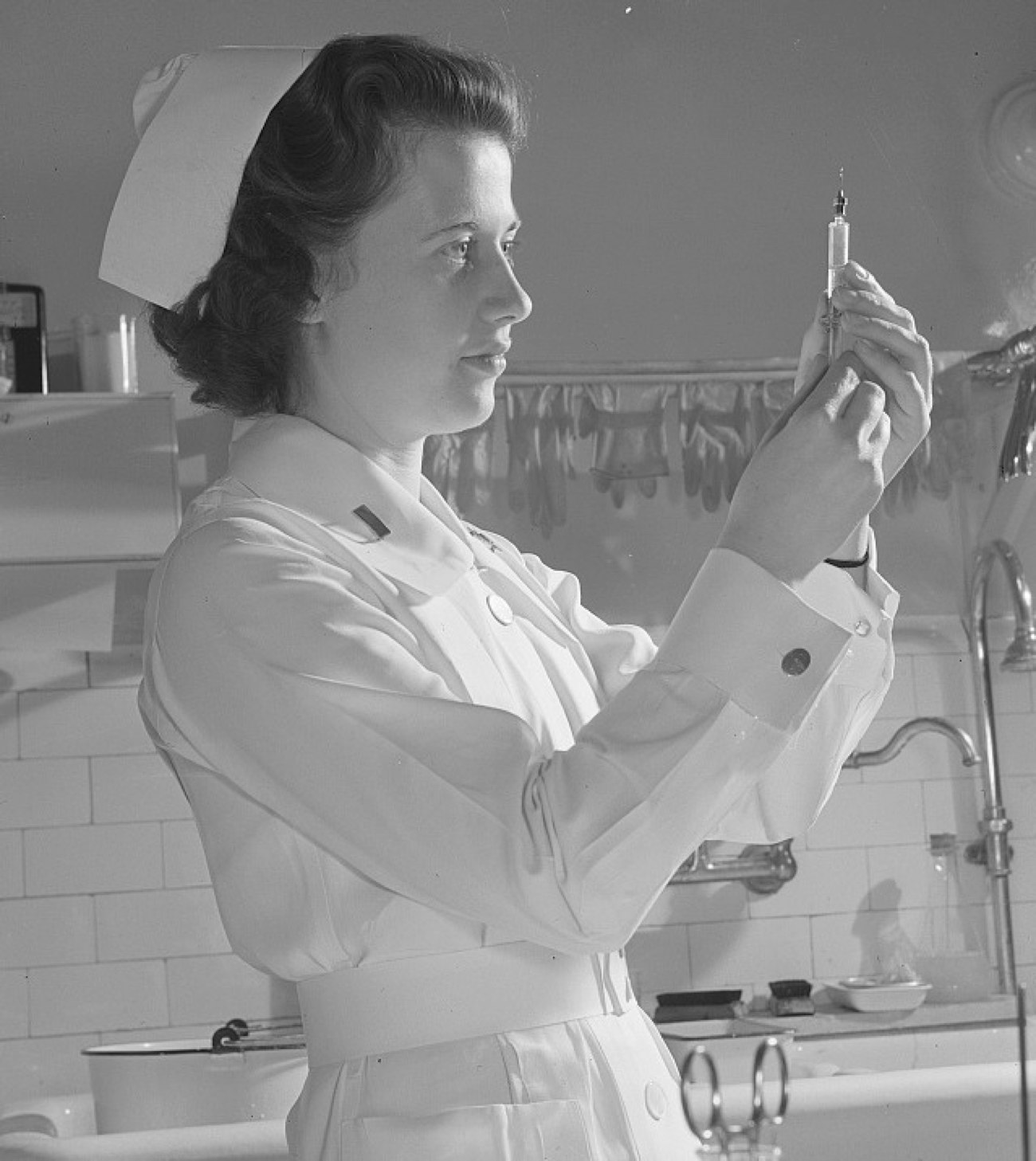
Lieutenant Frances Bullock of the Army Medical Center in Washington, D.C., 1943, in crisp whites. Photograph by Ann Rosener, courtesy of the Library of Congress Prints and Photographs Division
Meanwhile, blue maintained its place alongside white in medicine for both practical and symbolic reasons. In operating rooms, surgeons found that blue and green fabrics reduced eye strain and provided visual contrast against red blood. These colors continued to find a home in nursing uniforms and general hospital attire. Blue conveyed calmness, steadiness, and approachability—qualities patients find reassuring. White remained clinical, and blue felt human. Together, they formed a palette that balanced authority and comfort (see note 6).
Scrubs, introduced in the mid-twentieth century, marked another step toward practicality. They were designed to be washable, economical and easy to standardize, reflecting a healthcare system focused on efficiency as well as cleanliness.
A doctor scrubs in for surgery, 1979, Massachusetts General Hospital.
Adoption of this new attire took time. Some institutions were slow to embrace the use of scrubs and gloves, long after adopting other sterile practices—a reminder that medicine, for all its focus on scientific progress, can also be conservative. Today, colored scrubs are nearly universal in clinical settings, while white coats persist in supervisory, academic, and ceremonial roles.
Why Color Still Matters Today
In modern clinical settings, color does quiet, essential work. White continues to signal authority and cleanliness, while blue conveys steadiness and calm. These colors shape how patients orient themselves in moments of uncertainty, helping them decide whom to trust, whom to approach, and who makes decisions.
Color preferences sometimes shift with context. In pediatric care, doctors and nurses often avoid white coats in favor of softer colors or playful cartoon prints to soften fear and appear more friendly (see note 7). When caring for adults, more traditional color choices persist: solid white scrubs continue to be rated as the most professional, while red ranks lowest (see note 8).

Image courtesy of Pixabay
How would you feel if your nurse or doctor wore red? The question sparks a reaction. That response reveals the enduring power of color in medicine. Uniforms are never just functional bits of fabric: trust, authority, and care are stitched into every seam. Close your eyes again. Picture a nurse or doctor. Has the image changed? The next time you see blue scrubs or a white coat, consider the story being told without words.
As care increasingly moves beyond the exam room into telehealth visits and digital tools, the question may become even more pressing. How do we earn and signal trust when the caregiver is no longer physically present?
Color may no longer serve a practical purpose, but its symbolic role may matter more than ever.
NOTES
- Mary Kaser, Linda Bugle, Elaine W. Jackson, “Dress Code Debate,” Nursing Management. 2009; 40 [1] 33–38.
- American Journal of Nursing 1936; 36 [4]: 367–372.
- Victoria Rodrigues O'Donnell, Lucas Albuquerque Chinelatto, Cristina Rodrigues, Flavio Carneiro Hojaij, “A brief history of medical uniforms: from ancient history to the COVID-19 time,” Revista do Colégio Brasileiro de Cirurgiõe, 2020; 47: e20202597
- Lynn Houweling, “Image, function, and style. A history of the nursing uniform,” American Journal of Nursing, 2004; 104 [4]: 40–48.
- Flexner, Medical Education in the U.S. and Canada, 1910; Thomas Duffy, Yale Journal of Biology and Medicine, 2011.
- Mary Kaser, Linda Bugle, Elaine W. Jackson, “Dress Code Debate.”
- Steve Campbell, Christine O’Malley Dip, Don Watson, Jan Charlwood, and Susan M. Lowson, “The image of the children’s nurse: a study of the qualities required by families of children’s nurses’ uniform” Journal of Clinical Nursing. 2000; 9 [1]: 71–82.
- Mary Kaser, Linda Bugle, Elaine W. Jackson, “Dress Code Debate.”
With gratitude to Lucy Ross, Archivist at Massachusetts General Hospital, for her generous help in locating references and photographs for this article.
To discover more about the world of blue-and-white textiles, have a look at our Summer 2026 issue.