
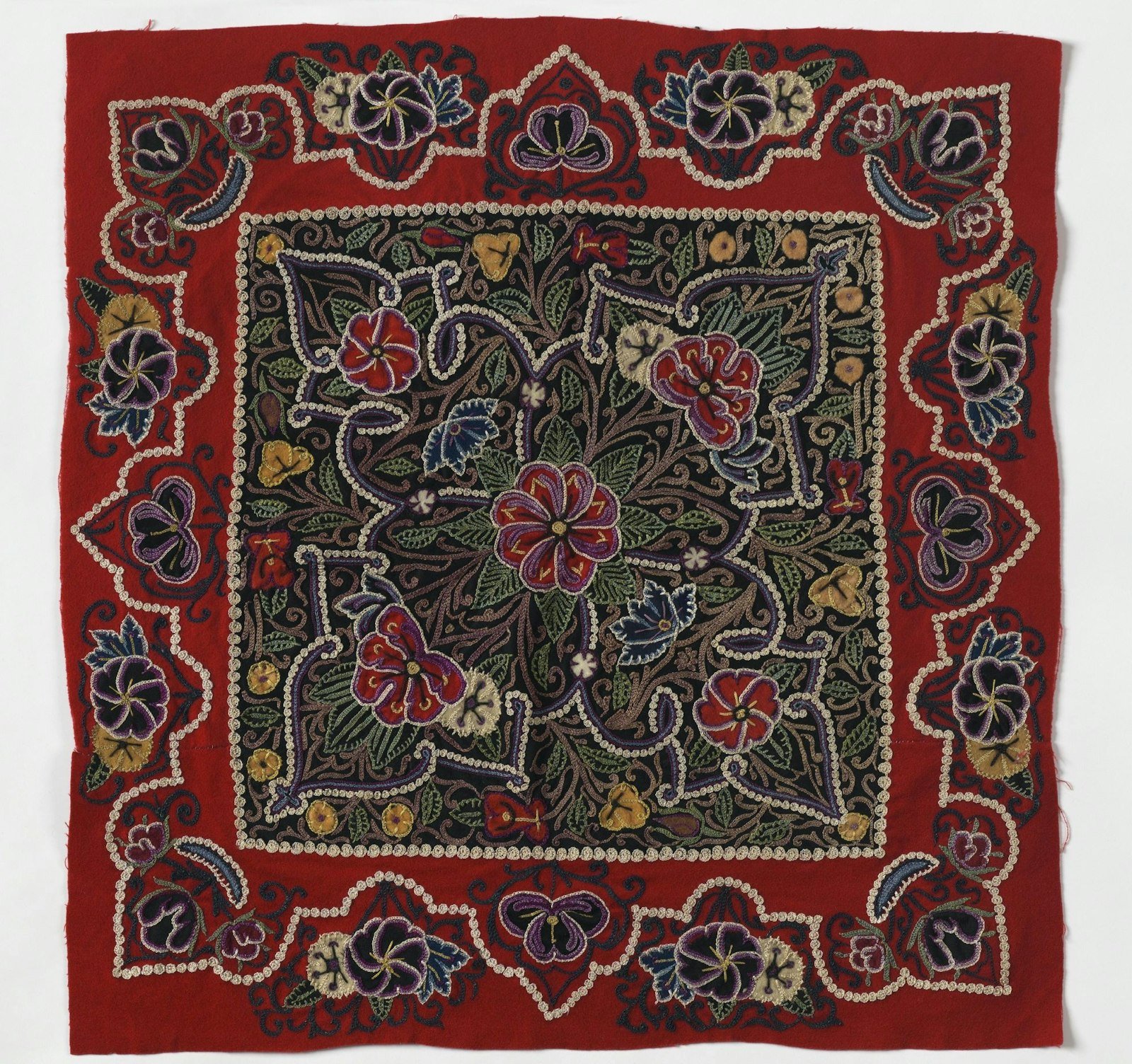
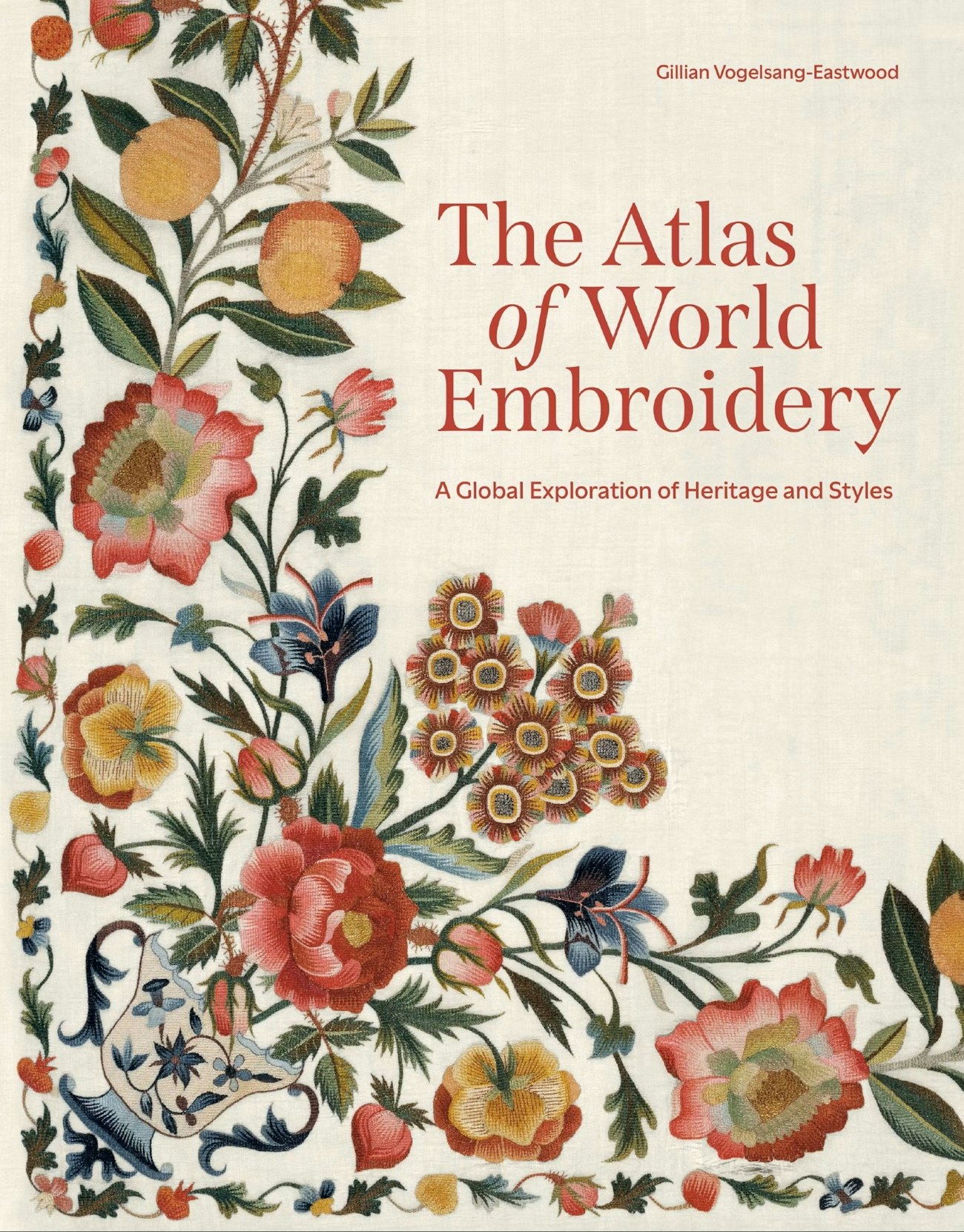
My inner narrative was loud with oohs, aahs, and gasps as I read The Atlas of World Embroidery: A Global Exploration of Heritage and Styles by Gillian Vogelsang-Eastwood, my eyes wide at the stunning photography of embroidery traditions and practices from around the world. I was awestruck staring at a photo of Chinese thread painting. “Woah,” slipped through my thoughts when I reached the woven cranes on wall hangings from Kathmandu, Nepal. I even peppered in a few “No ways!” for densely embroidered garments of the Wodaabe of Niger and Chad, a Turkish bindalli dress, and a gold-embroidered mwashma garment from Tunisia.
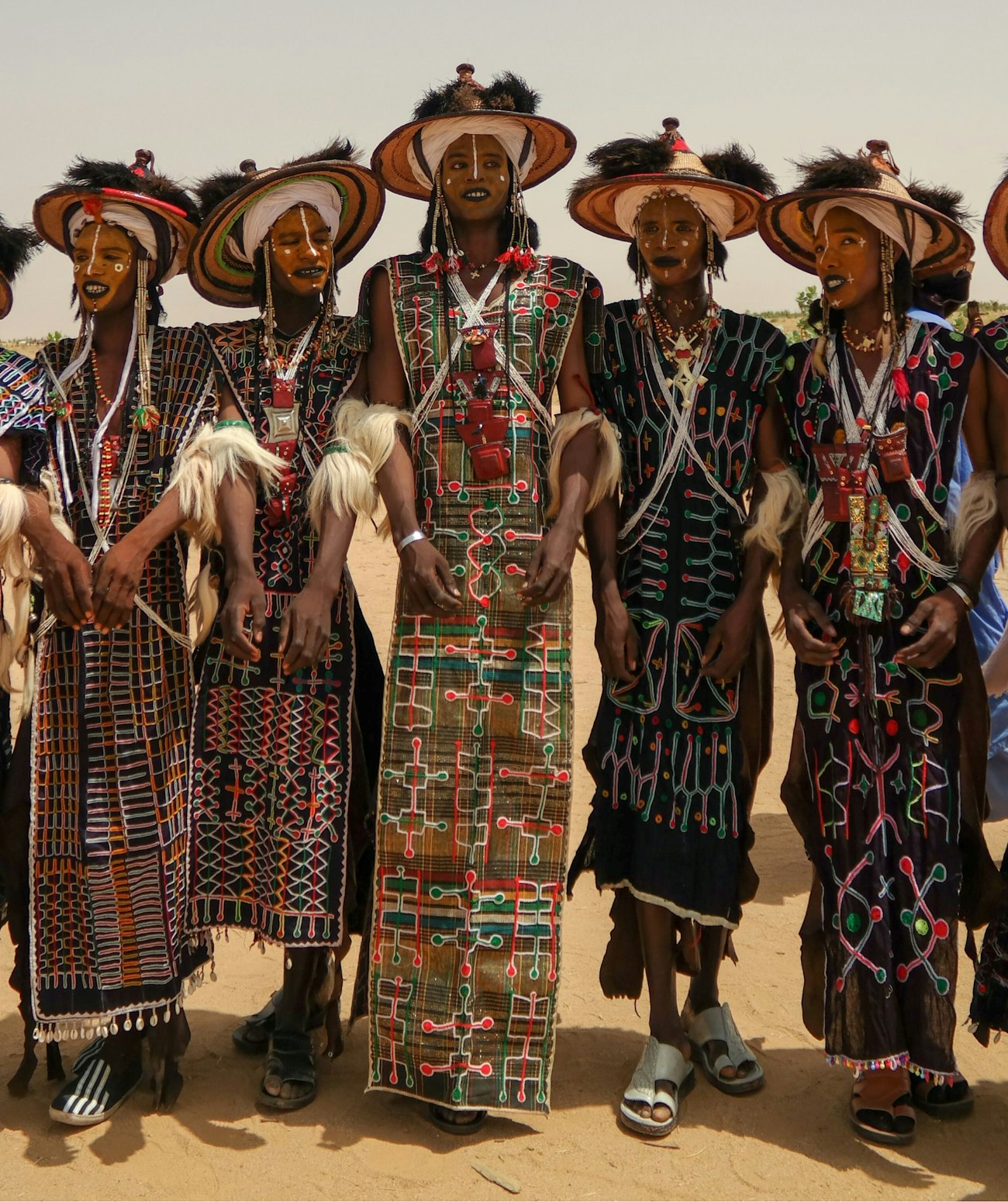
A late-twentieth-century group of Wodaabe men in Niger wear long tabards, some of which are woven, while others (to the left) are embroidered. Photo courtesy of Shutterstock.com (Homo Cosmicos)
All fiber artists should have The Atlas of World Embroidery in their libraries. What better place to be introduced to the colorful and creative worlds of both historic and contemporary embroiderers? Author Gillian Vogelsang-Eastwood is a design historian and textile archaeologist, as well as director of the Textile Research Centre in Leiden, the Netherlands. She has perfected the art of introduction, using beautiful photos and short descriptions to explain different regions of the world and associated fiber techniques, leaving readers with enough information for deep dives if they feel inspired. Of course, the atlas is arranged geographically and includes the Americas; Europe; Sub-Saharan Africa; North Africa and the Middle East; Turkey, the Iranian Plateau, and Central Asia; the Indian subcontinent; East Asia; and Southeast Asian and Oceana.
Throughout the book, we discover embroidery not only as a decorative art, but also as a critical form of communication. Specific stitches worked into a garment let others know what region the wearer came from, or their community status, or even their hopes and dreams for the future.
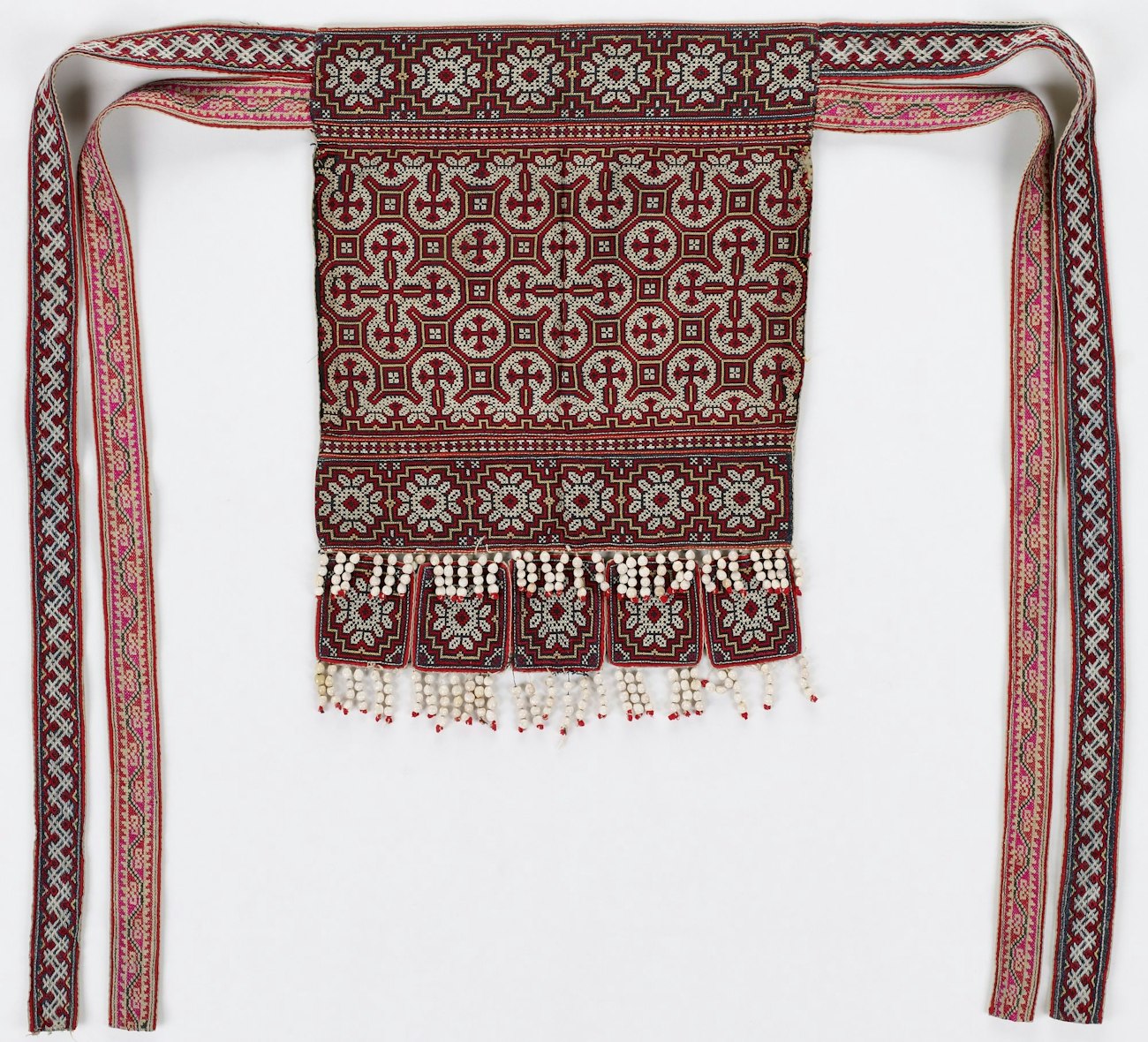
A twentieth-century Miao woman’s apron decorated with embroidery and applied shells and seeds. Photo courtesy of the Minneapolis Institute of Art (the Suzanne S. Roberts Fund for Asian Art)
As I flipped from colorful page to colorful page, I realized how drab some of our modern clothes have become. What do I usually wear? Unadorned knit or woven clothing in dark colors.
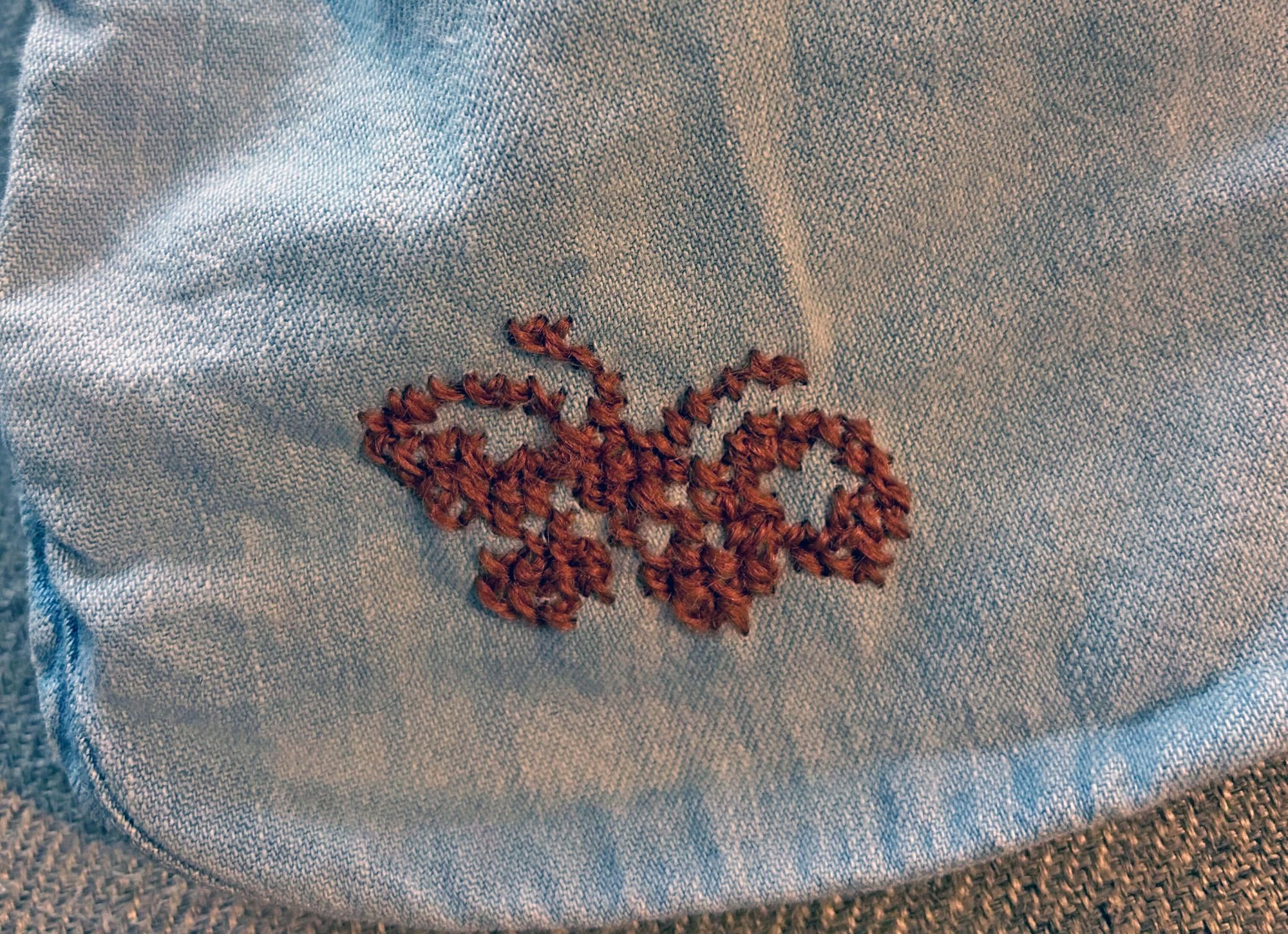
Well, I could fix that. Using a photograph of embroidered shoe inserts from the Dong people of China, I zoomed in on the cross-stitch pattern of a moth. Eyeballing it, I stitched an imperfect but lovely representation of the pattern on a pair of hand-me-down jean shorts that my three-year-old daughter wears to school. (Photo at right.)And you know what? It really did make those shorts look more fun! Through the pages of The Atlas of World Embroidery, I connected my family with embroiderers thousands of miles away and decades or even centuries ago.
Vogelsang-Eastwood concludes with a motif directory of 50 designs drawn from the embroidery traditions featured in the book. I would like to try her representation of a lovely flower from a Hawaiian quilt next; I have a black skirt that is just begging for embellishment.
A recommendation for readers: Get a paper copy of this beautiful book, or, if you are like me and want to read the digital version, read on a large screen such as a computer or an iPad. Phones and e-readers will just not do justice to the level of detail on the photographs provided.
The Atlas of World Embroidery
Gillian Vogelsang-Eastwood
Princeton University Press, 2026
Hardcover, 400 pages, 200 color illustrations, $60.00
ISBN 9780691261911
Happy reading!