
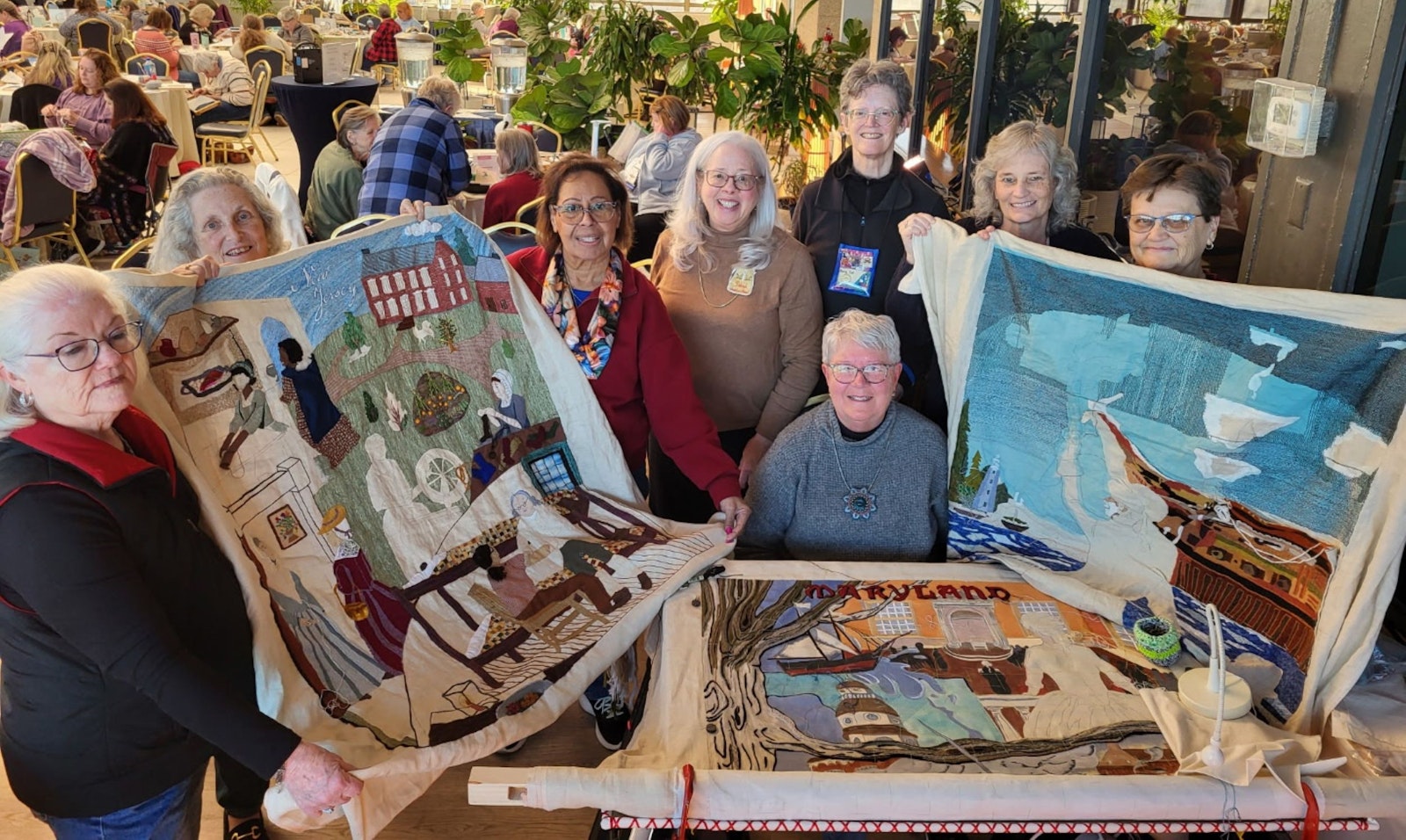
As part of America’s semiquincentennial, we’re spotlighting needlework projects and exhibitions that contribute to the celebration. One we’re especially excited about is America’s Tapestry.
America’s Tapestry is a national storytelling project that consists of 13 embroidered panels, each about 35" × 45". The panels are designed and stitched to tell lesser-known, often overlooked stories from early American history—especially around the American Revolution and the founding era. Over an 18‑month period, each panel is created by local teams of stitchers, under the guidance of state directors and historical partners, combining art, research, and community craft. The completed tapestry will be exhibited in several venues throughout 2026 and 2027.
Meet the Teams
A robust team composed of a director, historical partner(s), illustrator, and stitching groups carries out the work for each state’s tapestry. Stefan Romero is the founder and artistic lead. He directs the overall vision, manages coordination across the 13 panels, and leads creative and historical collaboration. He is the illustrator for two panels. Stefan’s previous work has spanned stage, film, and international study, including a Fulbright year in Glasgow focused on dress and textiles, exhibition work in Scotland, and archival research in Georgia.
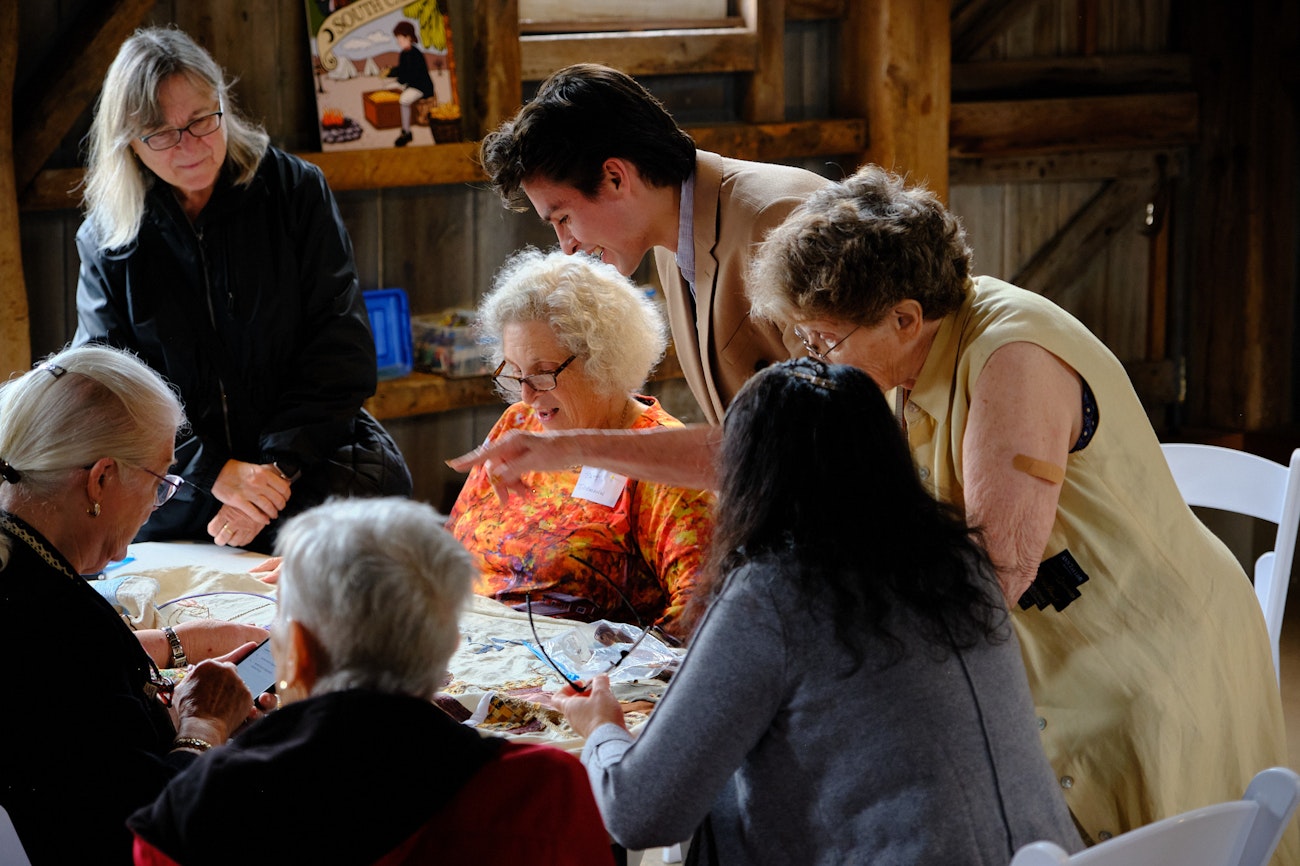
Embroiderers from the Colonial West Jersey Chapter of the Embroiderers’ Guild of America and members of the community work on the New Jersey tapestry panel at the Princeton Historical Society. They're visiting here with project director Stefan Romero.
Each panel has a state director who leads the stitching team for that state’s panel, coordinates volunteers and local stitching events, and works with historical partners to ensure accuracy and storytelling in the design and execution. Museums, archives, historical organizations, and colonial heritage institutions partner with the project to provide research, imagery, and context for each state’s tapestry design. Illustrators create the detailed, research-based designs that anchor each tapestry panel. They strive to balance an artistic vision with the practical demands of needlework.
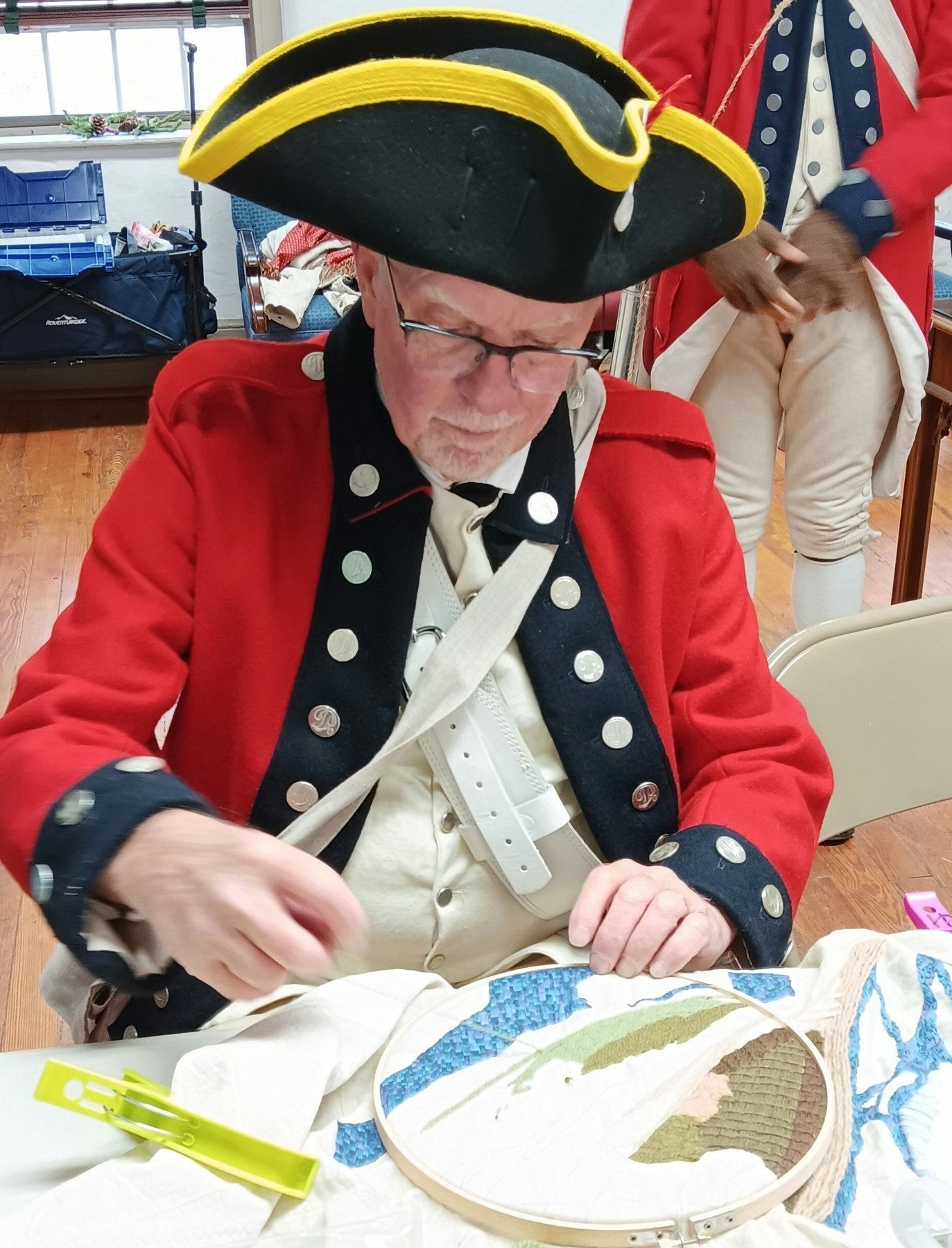
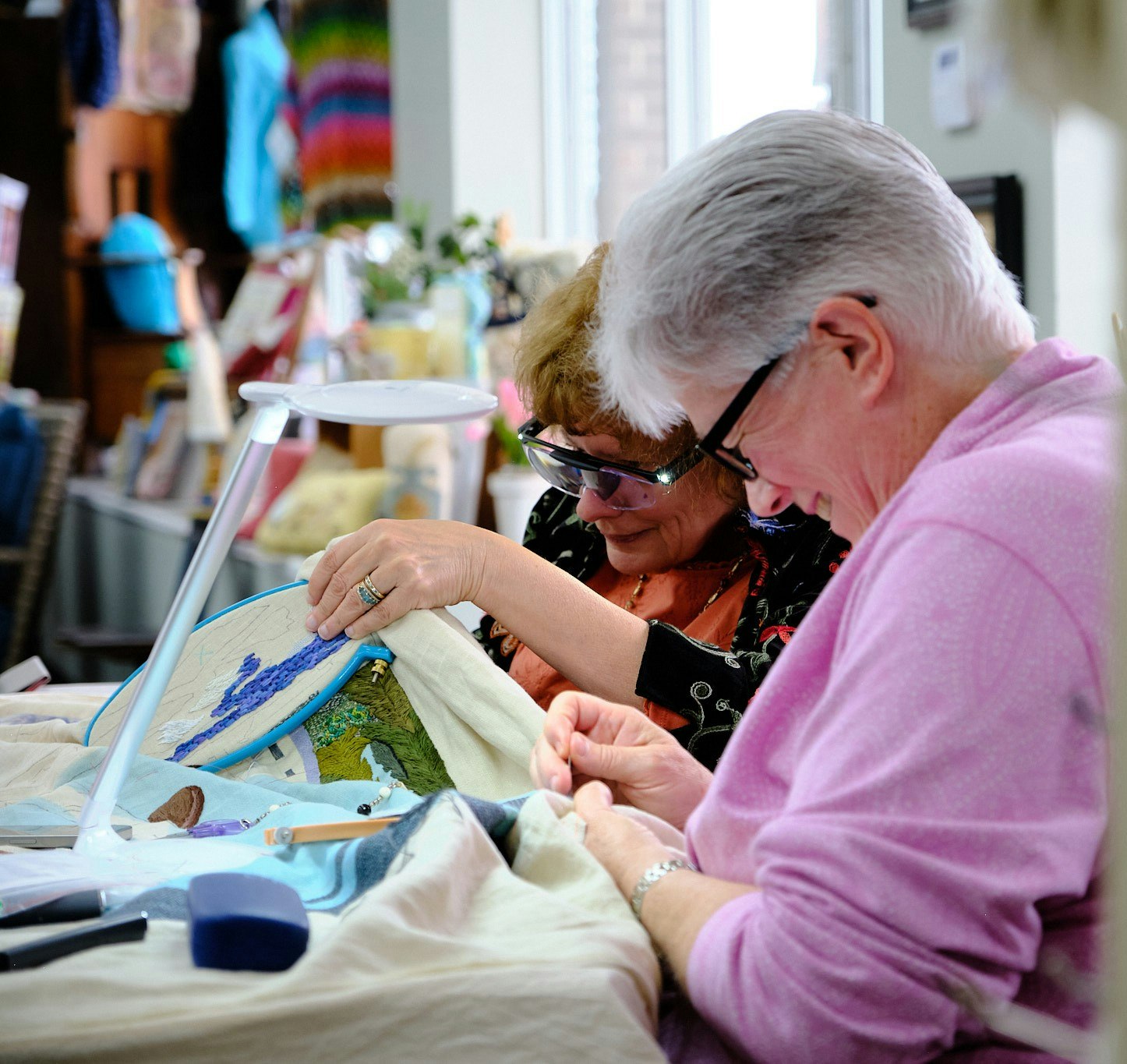
Individual needlework artisans from communities across the eastern United States are stitching the panels along with members of local collectives and Embroiderers’ Guild of America chapters. They gather at local historical sites and cultural institutions that host the stitching sessions, so they can work on panels in community spaces. These venues also help engage the public with the project as it progresses. Enjoy hearing stitchers for the New Jersey tapestry talk about their stitching experiences in this video.
Come closer! Click on each photo below to expand the picture and learn more.
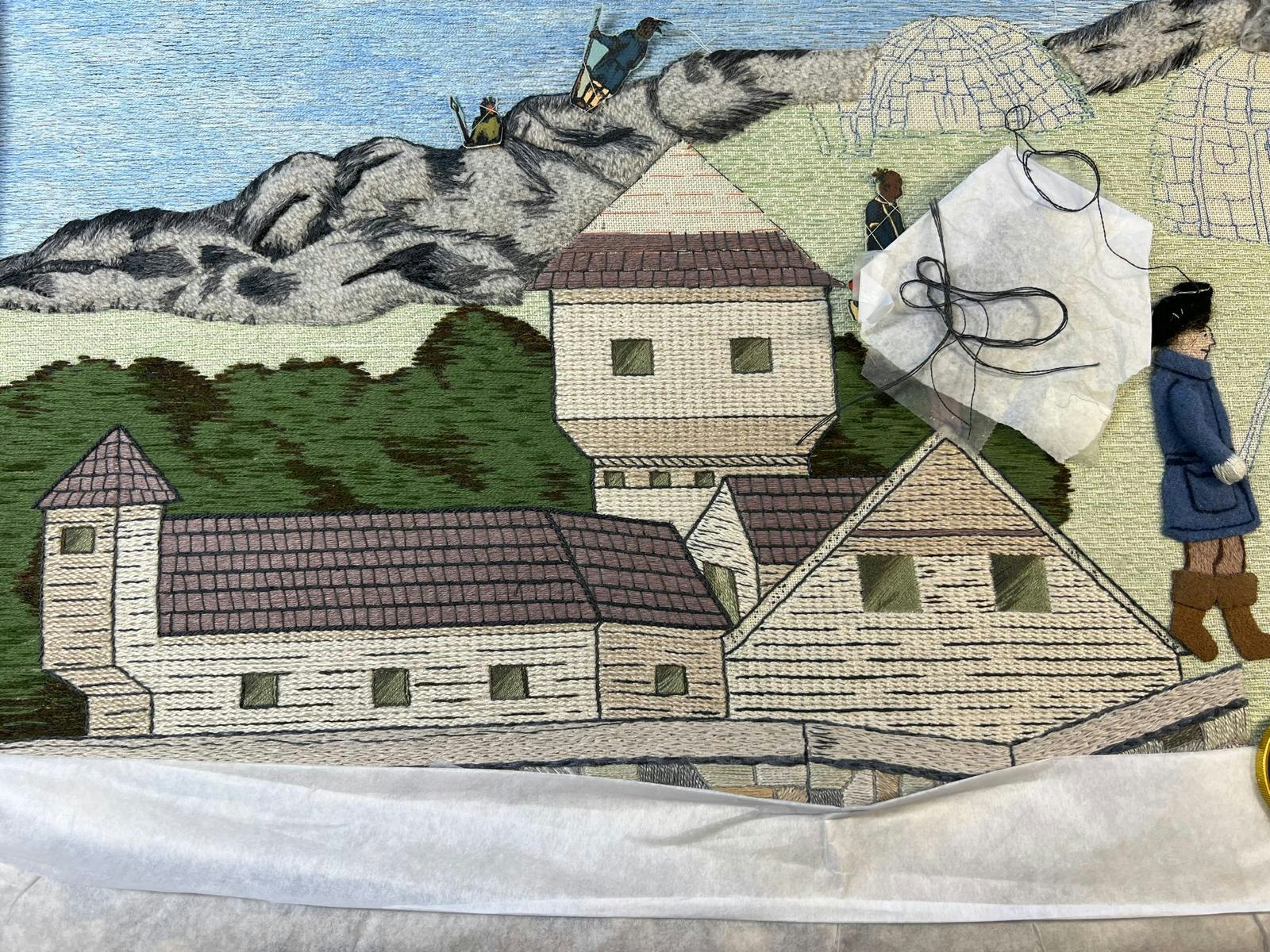
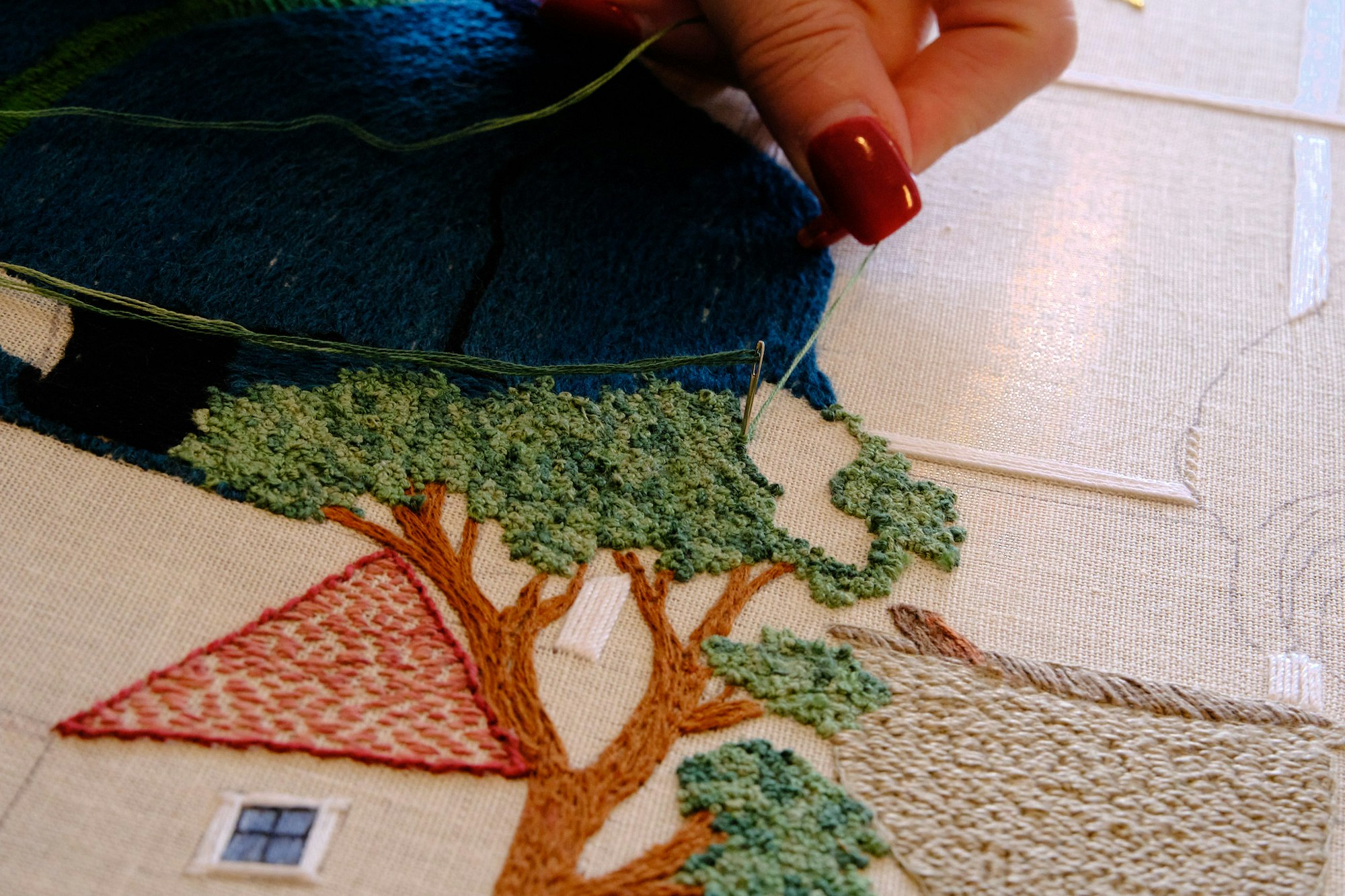
The Tapestries
All 13 tapestries depict unexpected and meaningful stories. Massachusetts includes a quirky, lesser-known Revolutionary tale about chocolate making and how this sweet treat became an unlikely symbol of patriotism. North Carolina spotlights the bold Edenton Tea Party, when women organized one of the earliest political boycotts against British goods. Virginia digs into history with scenes of Wythe County lead mines that supplied musket balls, while also acknowledging the essential, often overlooked labor of enslaved people supporting the Continental Army. And Maryland proudly salutes the legendary Maryland 400, whose bravery and sacrifice helped turn the tide when it mattered most.
Click on each photo below to expand the picture and learn more.
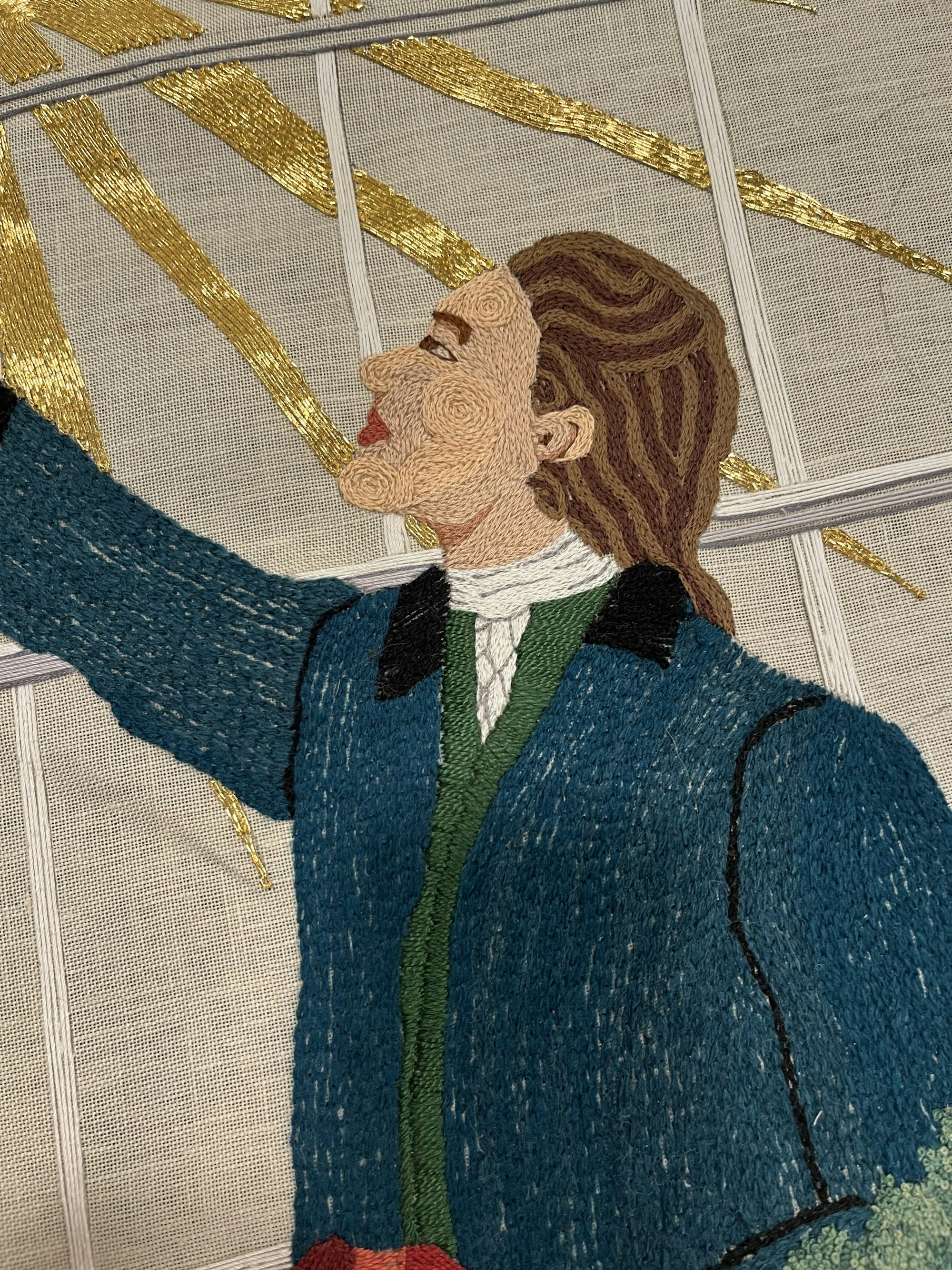
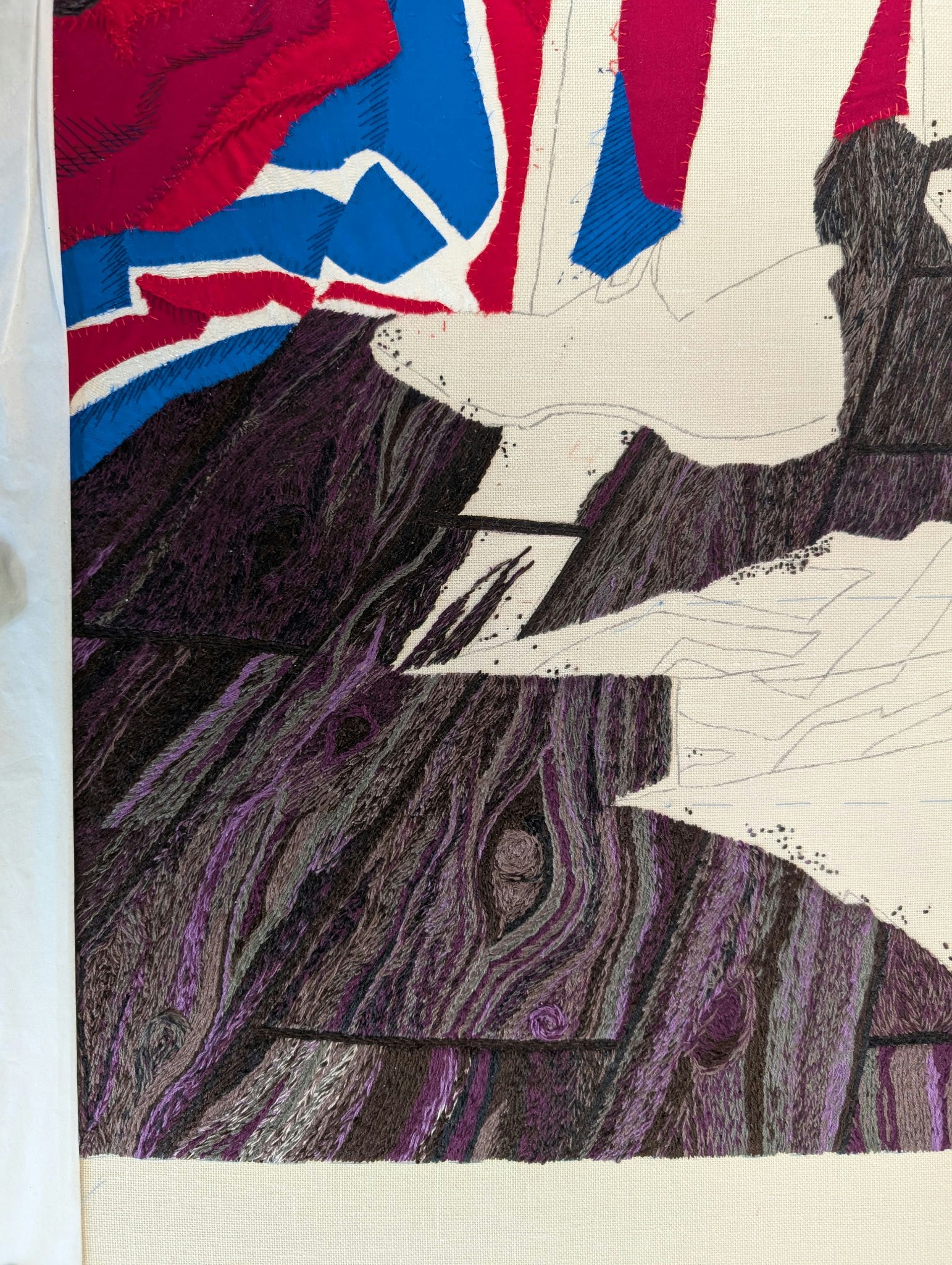
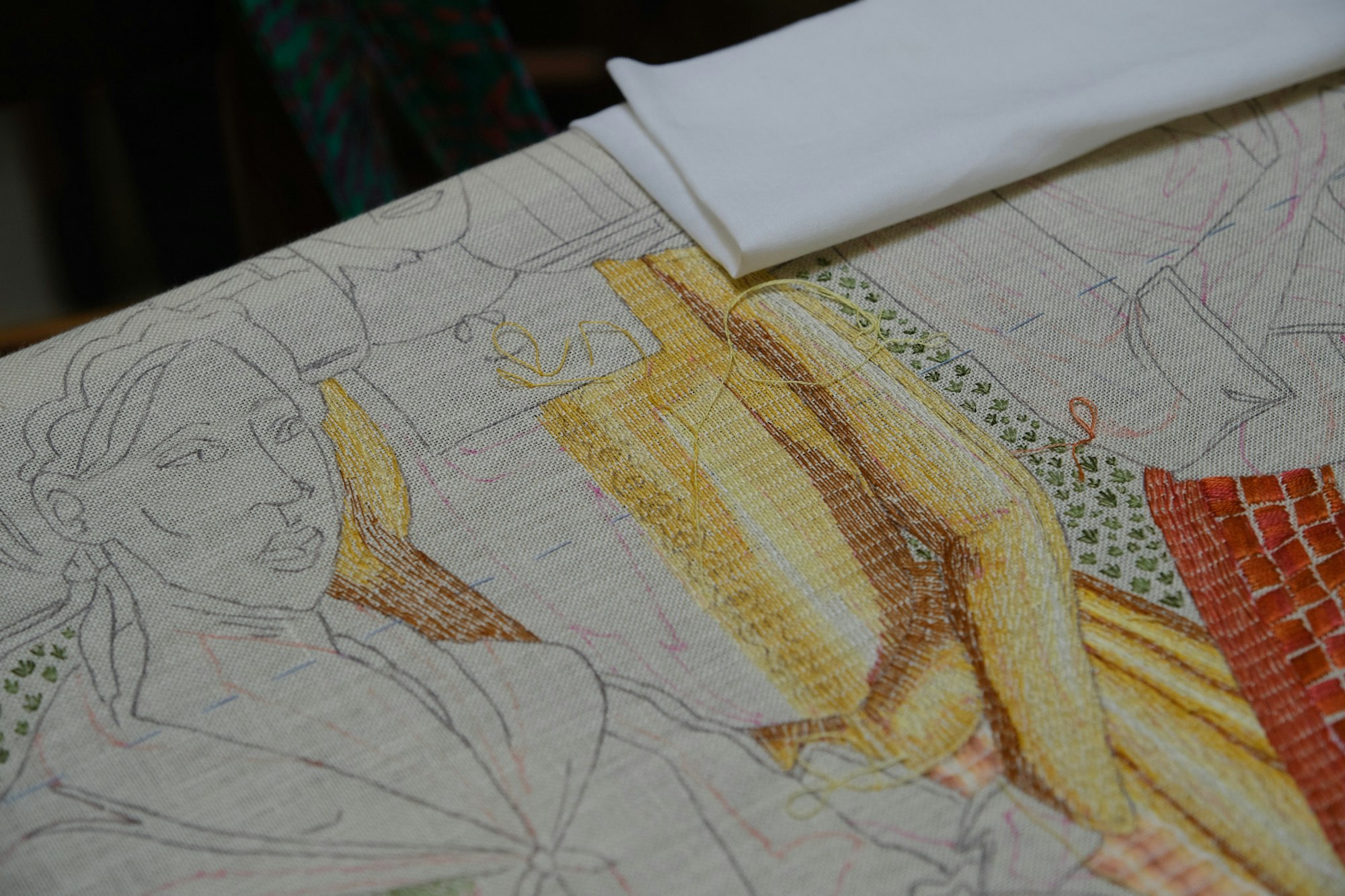
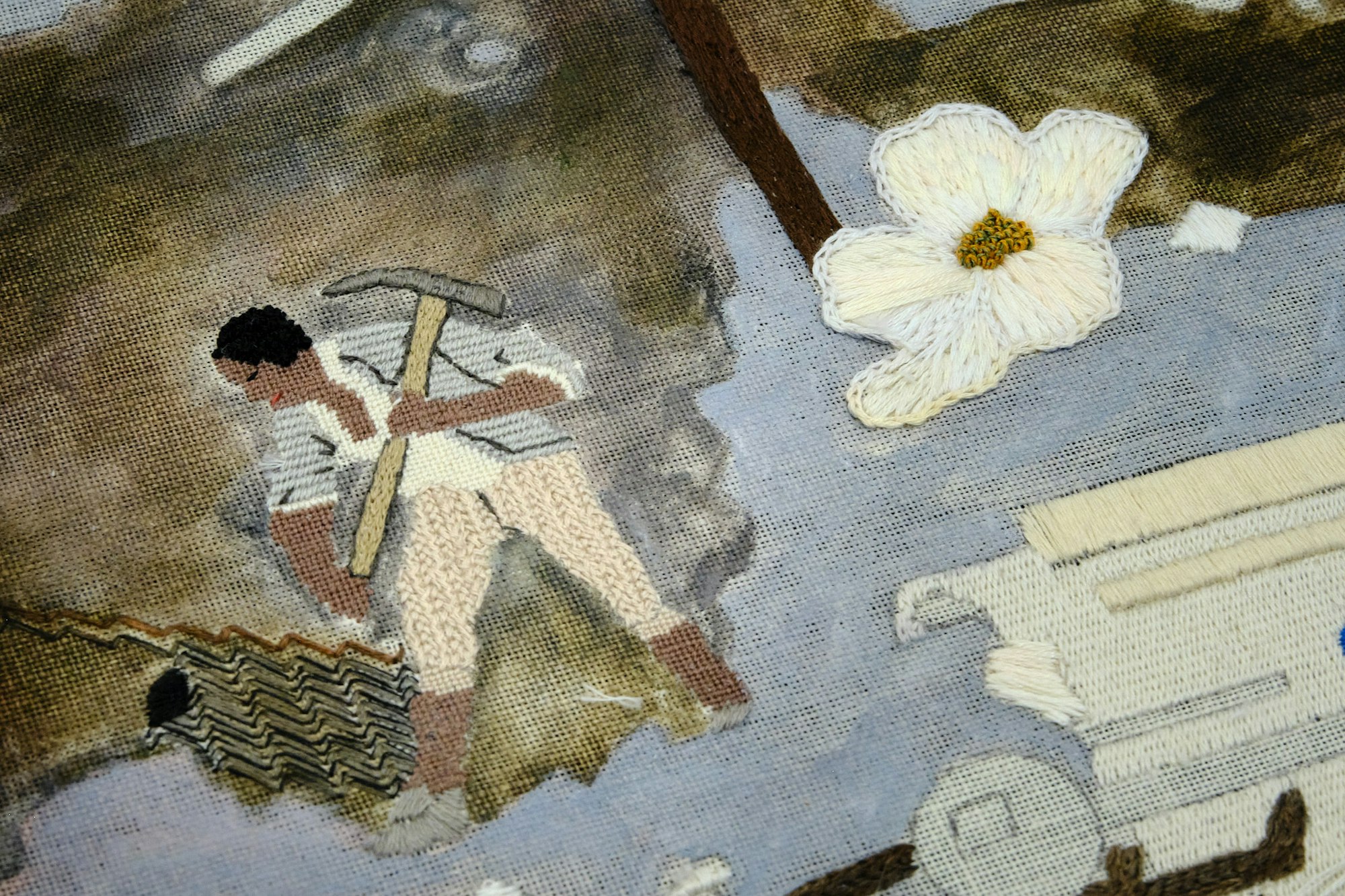
Ultimately, America’s Tapestry is more than a collection of stories—it’s an invitation. An invitation to listen, to reflect, and to recognize that the nation’s strength lies in the rich interplay of its many voices. By weaving these stories together, the project reminds us that America’s tapestry is still being made, one thread at a time.
To learn more about the project and how you can support it, and to see the progress for each of the 13 panels, meet the stitchers, and watch videos from each location, visit America’s Tapestry.
Enjoy more stories celebrating needlework in America in PieceWork's Spring 2026 issue.
If you know of a semiquincentennial celebration the PieceWork community would like to know about, please write to us with all the details so we can share it in a future post.
Happy stitching,
Karen